Categories
Americana Music

Joe Ely RIP

It’s getting sad that I keep having to talk about the death of a talented musical artist every week, but here we are again.

Joe Ely flew under the radar when it came to the mainstream country and rock worlds, but he was revered in the Americana, roots-rock, and even punk music crowds. His live shows were powerful, yet it was his songwriting and vocal performances, so soulful and gritty, that hit the listener hard in a good way.

Ely passed away on December 15th at the age of 78. Although his final residence was in New Mexico, he was a Texan blood and bones. His first legendary work came in 1971 when he joined two other Texas troubadours, Jimmie Dale Gilmore and Butch Hancock, to form The Flatlanders. They recorded an album the next year, but broke up soon after its release. That album, All American Music, was only released as a limited 8-track tape for contractual obligations, but became a cult classic among roots music audiophiles. There was such a high demand for the music that Rounder Records re-issued it in 1990 as More a Legend Than a Band. The trio reunited occasionally throughout the years, but began recording again, beginning in 1998 for The Horse Whisperer in 1998 (director Robert Redford had asked Ely to write music for the soundtrack).

Ely began touring and recording full-time around 1977. During a tour of London, he became friends with the punk band The Clash. Besides performing together, The Clash mentioned Ely in their song “If Music Could Talk,” while Ely donated background vocals to the band’s hit “Should I Stay Or Should I Go.”

Along with the long solo career and work with The Flatlanders, Ely was also a member of Los Super Seven, along with Raul Malo who passed away two weeks ago. That band won a Grammy in 1999 for its self-titled album in the Best Mexican/Mexican-American category.

In 2007, Ely received a Lifetime Achievement Award from the Americana Music Association. In 2016, he was crowned Texas State Musician for that year, and was entered into the Austin City Limits Hall of Fame in 2022.

In 2002, The Flatlanders appeared at the Americana Music Association’s conference and awards show. This is where I got to meet Ely, and he was one of those guys who appreciated people appreciating him and his work. We talked for a while, and I hung out with the trio for a while after their private performance. It was a prayer answered to be able to meet the man who recorded one of my favorite roots-rock songs, “Musta Notta Gotta Lotta.” Talk about showing your love and respect for the pioneers like Jerry Lee Lewis!

Joe, thank you for all the wild and fun music that you have given us, and I hope that God is giving you a honky-tonk to perform at up there.

Chew on it and comment.

Categories
Americana Music Country Music

Raul Malo RIP

One of the greatest voices in music today unfortunately passed away on December 8th. Raul Malo, lead singer for the country/Americana group The Mavericks, died from colon cancer at the age of 60. His voice was undescribable, up there with Roy Orbison, Elvis Presley, and even Luciano Pavoratti.

Born of Cuban immigrants, he co-founded The Mavericks in the late 1980s in Miami, fusing country music with rockabilly, pop, and Cuban/Latin influences. The band had a totally unique sound that made them not only popular in the country music scene, but in the alternative music scene as well.

It was that VOICE, one of those that no matter what Malo was singing, the emotion was there. It was often said that he could sing the phone book and make it sound romantic. The band had a few country chart hits, and won awards early in its career, but like most country acts, its star fizzled. As the band descended in interest with country fans, the emerging Americana music fan base embraced it wholeheartedly.

The Mavericks went on a hiatus in the early 2000s, and Malo recorded a number of solo albums that still stand the test of time when it comes to passionate vocals. He also fronted an Americana supergroup Los Super Seven. He also got heavily involved with the Americana Music Association, serving on its board for a few years. This is where I got to know him and work with him on a number of occasions. The man was one of the friendliest, most humble people in the music industry, never turning away from a fan or fellow music lover.

The Mavericks reunited around 2010, and toured extensively for the next decade and a half to packed houses. Every time I saw them, Malo was up in front, enjoying the hell out of the situation. And that voice, I swear, it could melt women in the crowd like a candle. In a way, he knew he had that tool, that weapon, but he never used it, being faithful to his wife for decades.

Malo announced his fight with cancer this past summer, but continued to tour and perform up until a few weeks ago when the fight had taken its toll. He left Nashville for treatment in Houston. Just days before his death, the remaining members of The Mavericks came to his hospital room to play for him one last time.

The music industry has lost an amazing voice, to be sure. I have been pulling up YouTube videos of Malo and The Mavericks all week, still knocked out by his singing. I know that no one lives forever, and that we all must meet our Maker, but I feel that he still had some more to give us. I will truly miss Raul Malo, as there will never be another voice like that for decades to come, if ever.

Chew on it and comment.

Categories
Guitars Rock Music

Steve Cropper RIP

On December 3rd, one of the coolest rock and R&B musicians passed away. Steve Cropper was was 84, but he gave the music world enough joy to come from four or five lives. He was a guitarist, songwriter, and producer during a time when pop music was exploding in the 1960s, and his stamp can still be heard in the grooves of modern performances.

My first experience (as well as many others) was seeing and hearing him play guitar with John Belushi and Dan Ackroyd in the Blues Brothers Band. When they were forming the band originally as a skit for Saturday Night Live, Belushi wanted to have the best available R&B studio musicians to re-establish that original powerful sound. Thus, he nabbed Cropper and bassist Duck Dunn, who were two of the most stable musicians from the Stax Records studio.

After hearing the band’s version, I sought out the original version performed by Sam &Dave. Belushi even copied the “play it, Steve” shout to Cropper that’s on the original. That Sam & Dave song got me to look more into Stax artists, and with Otis Redding, Wilson Pickett, Rufus Thomas and others, Cropper laid down the guitar tracks on almost all of them.

Cropper, along with Dunn, Al Jackson, and Booker T. Jones, made up the instrumental supergroup Booker T and the MG’s, which not only served as the basic Stax studio band, but also had a number of instrumental hits, including, “Green Onions” and “Time is Tight.” They also worked with the Memphis Horns as the moniker the Mar-Keys. Cropper was so influential during the mid-1960s that the Beatles wanted to record with him in Memphis at the Stax studio. Unfortunately, manager Brian Epstein put a halt to that due to security reasons. Ringo Starr would have Cropper appear on a number of his solo albums during the 1970s.

Besides his guitar skills, Cropper was also a prolific songwriter. His best-known writes and co-writes include Eddie Floyd’s “Knock on Wood,” Wilson Pickett’s “In the Midnight Hour,” and Otis Redding’s “(Sittin’ on) the Dock of the Bay” (which also includes some of the most beautiful guitar licks Cropper ever performed).

Stax was highly influential, as it was one of the few record companies that had both black and white musicians working together to create a unique R&B sound. Unfortunately, by the end of the 60s, tensions grew within the organization, and in 1970 Cropper had left Stax to open his own TMI Studios in Memphis. There he would work with Starr, Rod Stewart, and Jeff Beck among others.

In 1975, Cropper moved to Los Angles for continued studio work, and was in the works to re-form Booker T and the MG’s until drummer Jackson was murdered. In 1978 he and Dunn would work with Levon Helm. This soon led to the duo becoming members of the Blues Brothers Band, and appearing in the two films (The Blues Brothers and Blues Brothers 2000, playing themselves).

In 1992, Booker T and the MG’s were inducted into the Rock & Roll Hall of Fame, and Cropper would then tour with Bob Dylan for Dylan’s 30th Anniversary Tour. In 1996, Mojo Magazine named him ‘the greatest living guitar player. Keith Richards was quoted as saying that Cropper was “Perfect, Man!” In 1998, Cropper made a video autobiography entitled The Interview – Play It, Steve! In 2004, he and Dunn worked with Eric Clapton at the Crossroads Guitar Festival in Dallas. The following year, he was inducted into the Songwriters Hall of Fame.

Over the following two decades, Cropper would continue to produce albums for other artists and perform live. At this time, the cause of his death is unknown, but the music world had definitely lost one of its star performers.

For any musician, especially guitarists, wanting to know how to perfectly blend rock, blues, country and R&B, I implore you to seek out recordings that Cropper was on, most notably his guitar work on those early Stax sessions., He was one of the few guitarist to take the Fender Telecaster beyond its twangy country roots and give it an all-encompassing sound. He will surely be missed, but he has left us a truckload of music to enjoy and learn from.

Chew on it and comment.

Categories
Bluegrass Dobro

A Little Bit About the Dobro

First off, I hope that everyone here in the US had a good and safe Thanksgiving!

So because I do a lot of web searching for both musical instruments and bluegrass-related material, I get a lot of pop-ups on items for sale that (by a long shot) have some connection to these two areas due to my algorithms. I usually just delete them and move on, but recently I got one that piqued my curiosity.

It stated that a bluegrass resonator guitar was on sale for $159.00. Now reso guitars, better known with the bluegrass crowd as a dobro (one of the original manufacturers was a company called Dobro, formed by the Dopyera brothers), are not as “affordable” as beginner acoustic guitars. Even low-end dobros are rarely under $300.00, and many of them are used models. So I clicked on the ad.

It turned out to be what I expected. This was round-neck reso guitar set up for guitar players. Some blues and folk guitarists like to play a reso guitar to get a swampy sound from it, courtesy of the metal cone that replaces where the soundhole would be on a regular acoustic guitar. They have a brighter, more metallic tone, but can be louder than a normal acoustic. Players like to use a bottleneck-style slide on them to get that bluesy slide sound. The brand name is Pyle, better known for high-fidelity and guitar amplifier speakers, so I am sure it is just contracted with them. I am also certain that these are probably made in some Asian country with very cheap labor. The funny thing is, the actual item is listed as an acoustic-electric guitar with built-in preamp.

The dobro models that are used by bluegrass players almost always have a square neck. This is for stability, but also serves as a better anchor for a dobro capo. This type of capo, rather than clamping down on the fretboard, rests solely on the strings. The string height on a dobro is much higher than a regular guitar so that the slide will move freely along the strings and not come in contact with the frets (which only serve as a note marker). While it is easily possible to play a round neck by raising the strings at the nut with a special nut (available from sources like Elderly Instruments, Guitar Center or Sweetwater for under $20.00), you are still limited if you want to play upon strings in a different key than the standard G tuning on a Dobro.

Another aspect of a bluegrass dobro player is that they almost always use fingerpicks and a thumbpick, similar to a banjo player. Tut Taylor was one of the few dobro players that used a flatpick, but he is an exception. The finger/thumb combination allows for rolls on the strings like a banjo player, but with the different G tuning than a banjo, the rolls sound much different.

I have seen a few bluegrass dobro players use a round-neck model, but again, they were usually having to stick to playing barred strings when in different keys. Now I am not saying that a round-neck reso guitar would be a good starter model for the beginner, especially if one of those raised nuts is installed over the regular nut. Most beginner dobro lesson books and videos are going to instruct the basics in the key of G anyways.

When I was working at the musical instrument petting zoo at the Charlotte Bluegrass Festival last June, one young girl was very interested in trying out and playing the dobro. I explained to her parents that while the cost of a good dobro may be high, there are many low-cost alternatives for beginners, including converting a regular acoustic guitar with the nut-raiser and playing it sideways like a dobro. In such a case, if the student takes a true interest in playing the dobro, money can be saved up for a regular square-neck model.

I was fortunate years ago to get my hands on a Regal dobro for a very good price. I still have it, and althoughj I don’t play it as much as I would like, it is a great sounding dobro that I use to embellish some demos of mine. If I ever got the time, I definitely would like to work more on it.

The dobro is often thought of as a minor instrument in the bluegrass field. Josh Graves and a very few others were the purveyors, and the greatest dobro player out there today, Jerry Douglas, has helped to promote it in the bluegrass and country music fields more than anyone. It has a unique sound that does change the overall composition of a bluegrass band, whether you like that sound or not. However, it does make a great bluegrass instrument for beginners to consider if not interested in the sometimes complex fretting of a banjo or mandolin, or the coordination of a fiddle. I would encourage parents to offer the dobro up as a possible instrument to play to their children interested in bluegrass.

Chew on it and comment.

Categories
Bluegrass Music

Bluegrass Unlimited’s Annual Talent Directory

Every November, Bluegrass Unlimited puts out its Annual Talent Directory. This lists a number of bands, artists, and songwriters that request appearance. I have been included for a number of years, and every July I get sent an application which I take five minutes to fill out and email back.

The Directory takes up about 12 pages of the magazine, and includes from around the globe, although the international representation is quite small. However, what surprises me the most about the listings is that there are so many bands and artists that do not take the time to request inclusion.

I can understand some of the A-list bluegrass bands such as Alison Krauss & Union Station, The Del McCoury Band, and Ricky Skaggs choosing not to, as they are well enough established that they do not need any type of recognition in the listings. However, looking through list, there are plenty of bands that I am familiar with that have performed at festivals and conventions I have attended that do not appear.

I am sure that it has little to do with not knowing about the directory. Bluegrass Unlimited is pretty much the only print publication exclusively covering bluegrass, and if anyone in any bluegrass band subscribes to the magazine, he/she would be aware of the Directory submission usually appearing in a summer issue. The listing is free of charge, and bands/artists are able to enhance their listing by submitting a photo for a small charge, as well as note that they are available for school programs.

I do see that managers/publicists such as Penni McDaniel and Wilson Pickens Promotions take full advantage of the Directory, listing all of the artists that they represent. This is great on both fronts, as it allows them to show who they represent, as well as any interested festival organizers to contact a single source for a few acts.

I highly doubt that the following is the reason, but perhaps a lot of bands do not want to promote themselves that much, preferring to playing occasional parties and VFW halls. I would think that any band that takes the time to continually practice in order to sound professional would take that five minutes to have themselves listed in the Directory, if only to show some reader that there is a bluegrass band that is in his/her vicinity, so that he/she can keep an eye out for a possible show in the near future.

As I do not do much performing these days, I choose to list myself in the Directory more for networking with bands and other songwriters for possible collaboration. Moreover, some promoter/manager may get in touch with me to find a location for he/her band to perform in the area.

The Directory should be filled with a lot more artists than it is, but Bluegrass Unlimited can lead a horse to water but not make it drink. Bands and artists themselves need to be more productive on their end and take the few minutes to fill out the form. I do not see how in any way that it can hurt the band.

Chew on it and comment.

Categories
Bluegrass Music Nashville

A Short Trip to Nashville

I got back from Nashville late Thursday evening, and while I was there for only two days, there is some stuff that we can talk about.

  • I rented a car so that I could put my car in the shop that needed a few days of work. While I requested an economy car, I was given a small SUV. Comfortable, but it was a 2025 model that had way too many bells and whistles that was confusing me while on the road. The auto-bright-lights feature was throwing me off, as I thought that I was turning them on when going around a curve. Just give me four wheels, an engine and a steering wheel.
  • Sirius/XM Radio. It was on the rental car, and trying to find decent radio stations through Ohio is a pain, so I kept the satellite radio on. I dropped my subscription with Sirius/XM a few years back, and now I realize one of the reasons that I did. I kept the radio on the Bluegrass Junction station the whole time. I swear, they have a rotating playlist of about 12-15 songs that seem to get played every two hours, sparsely interspersed with a few classics by Bill Monroe or Jim & Jesse. The repeat ones were all modern songs, and as I listened, they were less like bluegrass and more like acoustic country/folk/pop. They also played a lot of Billy Strings, but at least they varied the song selection. No, not worth the cost for me.
  • Songwriter sessions. One got canceled (I’m not going to get mad, as I hope to reschedule in January when I go down for the SPBGMA conference), and the other, which was more of a Q&A session, I was late due to a stalled train at a crossing. The session was helpful to say the least as Brent (who runs SongwritingPro.com) got me interested in Suno.com, a website that helps make demos sound a lot better by providing instruments and vocals mixed in at the songwriter’s discretion. I haven’t used it yet, but plan on it soon!
  • Jack’s BBQ/Frugal MacDoogal. Two places that I can never pass up while in Music City. Jack’s has the best pulled pork I have ever eaten. I always order the three-meat special so I get the pork, beef brisket and smoked sausage, while dipping in six difference sauces! Enough to have lunch the next day. Frugal MacDoogal is the Wal-Mart of liquor stores! I always pick up a stash for my friends and brother while I’m in town. Prices are way lower than in Detroit.
  • Rosine, Kentucky. For me, it is worth the hour detour to visit the birthplace of Bill Monroe, I always visit his grave and lay a quarter on his stone for myself and one for my buddy Ken. This time, I was running a bit later than usual, so I was able to visit the Bill Monroe Museum. The place is filled with Monroe’s furniture, instruments, and loads of other memorabilia. As I was the only one there, the cashier/manager Christie walked around with me. I ended up telling her more about Monroe than she knew. She insisted that I take a photo with the cardboard cutout of Monroe in front of a microphone. I also went up to his boyhood home on Jerusalem Ridge. The dossier there named Ken was staying in his truck to keep warm, as the house was not fully heated. He told me that Doyle Lawson has been there a few days before just to look around. This town should have so many visitors because of Monroe, but there is no signage on the highways passing by, so really the only people that show up are the true fans like me, and those that come to the annual Bill Monroe Days Festival in September. The authorities that handle the state’s tourist functions need to get their heads in gear!
  • Theresa Kereakes. This is one of my dearest friends, not just in the music scene, but in my life. We text a lot, however, we don’t see each other much due to distance, so we make a plan to meet up whenever I am in Nashville. We worked together in the early days of the AMA AmericanaFest, and I can honestly say, if the Rock and Roll Hall of Fame had a Den Mother category, Theresa would be the first enshrined. I won’t even begin to list the artists she has worked with behind the scenes, but I can say there are a few that are legends in the business. For years I have told her that she needs to write a book of her life stories and anecdotes, and fortunately she recently has started on it. If you want a taste of her adventures, visit her blog at http://punkturns30.blogspot.com . Anyone that loves rock and roll with love her insights.

I won’t get into much else. Road construction down there is worse that here in Detroit, and that is saying a lot! Also, drivers down there are way worse. If they pulled the crap they do up here in Detroit, they would probably have their windows shot out!

As stated, I’ll be heading back down there in January, so the next two months will be busy emailing inquiries and recording a few more demos.

Chew on it and comment.

Categories
Acoustic Guitars Lutherie

Tone Traveler/ToneRite – Are They Worth It?

Have you ever heard of the Tone Traveler? How about the ToneRite? While these products have been around for a few years, they (especially the Tone Traveler) have been in the acoustic guitar news as of late.

Their purpose is to “break in” a brand-new acoustic guitar so that it has the sound and characteristics of a well-worn model. The device basically vibrates the strings by attaching it to the bridge/saddle, let it run for a few hours (even days), which is supposed to translate into months/years of breaking in the guitar so that the wood stretches in its expected way in relation to the strings. The Tone Traveler looks like a microphone head capsule or a small Bluetooth speaker, with the ToneRite module is a square piece about the size of a large pack of gum. Both are plugged in to a power source to operate.

There are a number of reviews of these devices on YouTube, mostly with positive reviews. The player will leave them on for a few hours, then proceed to show before and after video clips. Some show the devices working, which vibrates all six strings by self-vibrating or producing specific tones. Think about how it sounds when you pluck all six strings without forming a chord. Now imagine that dissonant sound going for hours, even days! A few reviewers have said that they put it in another room (or in the basement) with the door closed so as to muffle the irritating sound.

With that said, by listening to the before/after results on both my laptop and phone speakers, I heard absolutely no differences. I don’t plan on hooking up the computer ot a stereo sound system to try and decipher the changes. I guess that one would have to be sitting in front of the guitar’s soundhole to shear any differences.

As readers may know, I recently purchased a Cirrus acoustic guitar. I also have a 1991 Martin D-28, the Sevillana 2208 dreadnought, my Blueridge dreadnaught dating probably from the late 1980s, and a few other lower-cost models. Each has its own distinct tone, but not as diverse as, say, a Gibson Les Paul humbucker and a Fender Stratocaster single-coil played through the same amp. However, there are differences in the woods used, the scale length, and size of the body. Even the string gauge can affect the sound.

The argument for one of these products is that a new guitar sounds too new, not broken in. Yes, that may be true, but is spending $150-$250 just to break in the guitar more important instead of actually playing it for a few months? With my new Cirrus, I want to break it in myself, like raising my son or daughter. The change in sound will be subtle over the months/years, and it will be your work, not some plug-in device.

If the “aging” is that important to anyone, I can perhaps see a guitar dealer or luthier using one of these products to break in the new guitars in their showrooms. It can be a selling point to a customer. However, customers rarely buy more than one guitar at at time, and don’t trade in or buy another for years. It seems to buy one of these for a one-time use and put it away for years may not be worth it. It’s not like a tuner or string winder that will be used often.

I plan to spend a bit more time researching these items and what they actually do. If vibrations is their main purpose, I am wondering if the use of a vibrating hand or body massager laid over the bridge/saddle can serve the same purpose for a lot less money (and has another use, of course). If it is tone generator-oriented, perhaps building a cheap tone generator (there are kits out there) may work.

Chew on it and comment.

Categories
Bluegrass Music Music Instruction Songwriting

SEMBMA Bluegrass Kids Showcase/Songwriting Thoughts

It occurred to me that I forgot to post my thoughts about the Southeast Michigan Bluegrass Music Association’s 2025 Michigan Bluegrass Kids Showcase held on October 19 at the Woldumar Nature Center in Lansing. In short, it was a good time had by all.

The first hour was dedicated to the SEMBMA scholarship sponsored students performing tubes that they have worked on with their instructors, as well as a few past recipients showcasing their now professional-quality skills.

The second hour was held by the Edgar Loudermilk Band, who although from Georgia, have continually been supportive of Michigan bluegrass and the work SEMBMA has done to promote it in the area. Edgar has been a friend for years, and it is always a pleasure to converse with him when he is in town. The band gave a great free performance to those attending the kids showcase.

The third hour was special, in that Edgar and his band hosted a jam session with the kids as well as some adults attending a local jam session in another room of the building. While it was rough aroudn the edges, everyone seemed to have a good time, especially the younger musicians getting a chance to perform with a well-known bluegrass band.

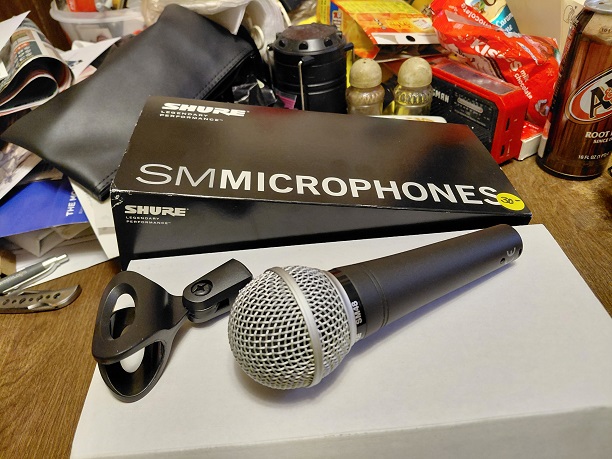
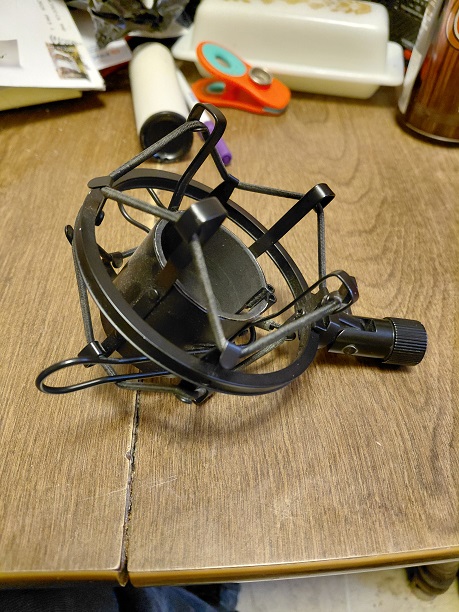
My unfortunate incident involved my camcorder. I had numerous problems with it the last few times that I used it. I finally figured out the video end, but the audio has always recorded with a distortion, no matter if I use the built-in microphone or one of my many other pro mics plugged in I need to perhaps make some kind of attenuator to limit the signal, but as it is, the audio volume is low. Another job to work on during the winter.

For more information on the event, along with go to the article from Bluegrass Today: https://bluegrasstoday.com/2025-michigan-bluegrass-kids-showcase/ .

I will be heading to Nashville next week for a few days. I have a songwriter session scheduled, and hope to snag at least one more while I’m there. If not, I know I will find something to do down there. I have reached that point in my songwriting tenure that I need to definitely do more networking and co-writing with others outside of what is immediately available locally.

Co-writing with David Morris and Dawn Kenney proved to be my most fruitful, with “Something About a Train” winning the Merlefest Chris Austin Songwriting Contest, the IBMA Songwriter Showcase, and being recorded by Valerie Smith. But that was 10 years ago, and not much has happened since. I have done some co-writing over the internet and through mail communications, but nothing that has been breakthrough, although it has been positive. I tried to do some networking at SPBGMA last year, but it was much more limited in possibilities than what is available at the IBMA conference. I still have no real intention of attending IBMA next year, so I need to take alternate steps.

What I need to do most is be more aggressive in introducing myself. I have the business cards, as well as CDs and thumb drives with some demos. I can easily had them out and walk away, hoping that the artist/manager/publisher will take a chance, but I need to PR myself better. The next few days will be spent researching available resources in Nashville that I can at least get my foot in the door.

I’ll be here next weekend, then leaving Monday, so my report will be in two weeks.

Chew on it and comment.

Categories
Bluegrass Music Music Technology

What the … ? Artificial Intelligence Bluegrass Music

As you know, I am always on YouTube searching for bluegrass-related videos. Performances, interviews, documentaries, instrument lessons, and anything else related to bluegrass. So it should be no surprise that YT sends me a number of recommendations based on my algorithms. In many cases, they are worthwhile to watch, as I have found a lot of interesting guitar/banjo/mandolin/fiddle lessons and players that I may have never learned about otherwise.

Then there are the clunkers. Poor performances, unhelpful lessons, and people posting stuff that makes no sense, just tagging it as bluegrass. The worst recommendation, however, has been a recent one that, even though I have tagged the channel as “Do Not Recommend,” YT keeps sending me new videos.

The channel is called Banjo Music AI, and it is exactly what it is says it is. Hours and hours (one video is over 11 hours long) of Artificial Intelligence-generated bluegrass music. The thumbnail and screenshot for most of the videos is of a pretty girl holding a six-string banjitar (not even a true banjo!) sitting on either a motorcycle or the bumper of an old car, which definitely looks AI generated.

Then there is the music itself. Hours of basic chord changes found in standard bluegrass tunes, played by AI-generated banjos, fiddles, dobros, mandolins and guitars. It sounds horrible to say the least. Every instrument sounds like a synthesizer program. Because it is AI, there is no feel to the performance. The songs move in such a robotic way. No groove, no swing, just strict metronome-forced tempo. I’m only posting a clip on here just so you can see haw bad it really is.

Most of the songs are instrumentals, although there are a few vocal tunes. As expected, the lyrics are so cliché and predictable that it literally has the feel that an infant with no musical experience wrote them. Even the worst actual bluegrass band that has never practiced together is 100 times better than listening to this!

What upsets me the most is that this will probably be viewed by people wondering what bluegrass music is like, without researching just a wee bit further to discover Bill Monroe, The Stanley Brothers, Jimmy Martin, or more modern performers like Billy Strings, New Grass Revival, and Alison Krauss. Forget the debates about progressive versus traditional bluegrass, this is truly one concept that every bluegrass fan, no matter what sub-format, can agree that it stinks to high Heaven!

With technology moving faster than humans can keep up, it was inevitable that someone would try to recreate with AI something that is wholly human. When AI started creeping into the music field, I saw many AI examples on the internet of concepts like “What if John Lennon and Beethoven write a song together” and producing a result. Maybe some found it interesting, but personally, I found it insulting to mankind in general. Art forms, including music, are part of the human soul, something that no machine can own 100 percent. Unfortunately, society is relying too much on AI and its advancement to resolve issues. Once that is conquered, then technology will control our emotions, and we will become the robots that we have created earlier.

Bluegrass is raw, unfiltered, and so much a part of the human heart and soul of those who love it. It moves like a human, not like a machine. There are different levels, different attitudes, different outcomes with each song and performance. Once we accept technology to make something like music generic in its presentation, we have lost our will to live as free thinkers.

Chew on it and comment.

Categories
Bluegrass singing Bluegrass vocals

Bluegrass Harmony Singing: Part By Heart App

I have written a few blogs on bluegrass harmony singing (https://luegra.design.blog/2021/03/11/bluegrass-harmony-singing-part-1-either-you-have-it-or-you-can-learn-it/, https://luegra.design.blog/2021/03/19/bluegrass-harmony-singing-part-2-you-gotta-work-on-it-to-be-good/). For some, it can come naturally, but for many, it takes a lot of work training the ear to hit the correct pitch. Unless one is in a position to work with other singers continually, it can be extremely difficult to jump right in and sing another part to harmonize with the lead.

Only this morning, I came across the website Part By Heart (http://www.partbyheart.com/). Bluegrass musician Austin Scelzo has developed an app (also available online) to work on harmonies to many bluegrass standards. Two of the songs (“Angel Band,” “All the Good Times Are Passed”) are available for free, while others are available for $8.00 per month or $35.00 per year as a subscription.

With each song, the chorus is set up with the lead vocals as well at three harmony parts and guitar accompaniment. The student can work on each part by listening to it on its own, muting the other parts, then muting only that part and singing along with the chorus. Additional features include shifting the pitch of the song and panning each part to separate stereo channels.

I was testing it out earlier, and it seemed to work fine on my new Samsung phone, but was shaky on my laptop. As this is a relatively new site, they may be still working out some bugs (the intro YouTube video states that it can be used on cellphones, computers, laptops and tablets). There are currently 16 tunes up with more to be added.

I will check it out again in a few weeks, and hopefully the kinks will be worked out from the computer end. If so, it may be interesting to try out for a few months. At this point, I would recommend anyone wanting to work on harmonies to check out the two songs available to see if it helps. If it does, a subscription may be worthwhile, as it is a lot cheaper than trying to find a vocal coach or getting together with others to practice on your own available time.

In parting, here’s a great video to watch. I have never been a fan of the ukelele, but this brought a smile to my face this past week.

Chew on it and comment.

Design a site like this with WordPress.com
Get started