Categories
Christmas

Polish Christmas Traditions

Well, I’m running a bit late due to the holidays. Today is Christmas Eve, and tonight I will participate in two Polish family traditions.

In the early evening, I will be having the Polish dinner known as Wigilia (veh-GEEL-Yuh). It consists of a number of non-meat dishes, basically practicing abstinence before the birth of Christ. With this being the first Christmas since my mother passed away, my brother has taken over the dinner chores and location. While I have never been a fan of most of the food served, I will go to keep peace in the family.

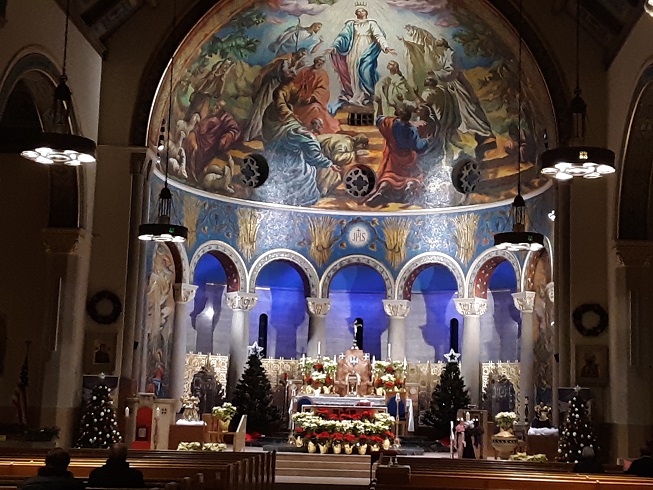
Next will be going to midnight mass, known as Pasterka (pah-STARE-kah). My church does the mass in both English and Polish, with the church choir singing Polish Christmas carols, known as koledy (koh-LEH-dih) a half hour before mass. My parish, Our Lady Queen of Aspostles in Hamtramck, Michigan, is a very traditional Polish church, and goes all out in decorating the altar for the holiday. As I am an early-to-bed person, I hope that I can stay up and not fall asleep in church.

Christmas day will be quiet for me, I will probably treat it as a regular day off, except to go visit my folks at the cemetery. Actually, I could use the rest, considering that I’ve been busy shopping, working, and baking the past few weeks. With mom gone, I’m not as motivated about the holiday to be honest.

I leave you with some koledy performed by the beautiful Polish choir Mazowsze (mah-ZOV-sheh). Merry Christmas to all of you.

Chew on it and comment.

Categories
Folk Music

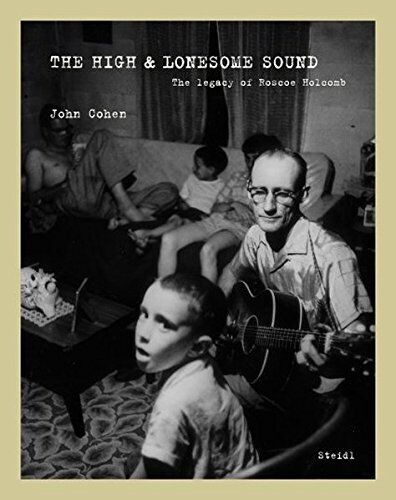
Recommended Book: The High & Lonesome Sound: The Legacy of Roscoe Holcomb

This gem I purchased through Hamilton Books a few years back and came across it recently while sorting books after my move. This one is also authored by John Cohen, whose book Speed Bumps on a Dirt Road I reviewed back in June (https://luegra.design.blog/2023/06/17/recommended-book-speed-bumps-on-a-dirt-road/). Cohen looks at the life of Roscoe Holcomb, a legendary Appalachian musical artist that carried on the tradition of old-time music during the 1950s and 60s while the world around him was slowly modernizing, perhaps not for the better.

Like his other book, this is primarily a photo book, with very little text other than brief captions until the very end of the book. The story can be seen in the powerful photos of Holcomb and the people that he is surrounded by. Many of these photos are also in Speed Bumps, such as Bill Monroe’s performance in Hazard, Kentucky, but they are intermingled nicely and minimally, so that the montage leans more as a personal vision of an individual, namely Holcomb.

This book chronicles Cohen’s 1959 trip to east Kentucky to meet and work with Holcomb, who at the time had left the workforce due to many injuries. He supplemented his income by performing at folk festivals and farming. The black-and-white photos say so much about what Holcomb and his family struggled with in the Appalachian Mountain area. A moving photo is one just showing his hands and how weathered that were, even for a middle-aged man.

The text toward the end of the book includes reflections about Holcomb by those that knew him, as well as a 1978 interview with Holcomb shortly before his passing. However, the icing on the cake is the CD and DVD included with the book. The CD includes 13 tracks of Holcomb performing traditional songs on banjo, guitar, harmonica and vocals. While thumbing through the book, this CD is the perfect soundtrack. The DVD contains two short documentaries on Holcomb, one filmed during a 1964 visit with him, and the other a 2010 look at his life. The 1963 doc is a treasure, like watching a grainy television show from that time period. Not only it gives a back-in-time look at Holcomb, but also a reminder on how we saw documentaries back then.

This book was originally published in 2012, and while going for over $40.00 new, a Google search shows that it can be had for under $10.00 used, although I am not sure if the CD and DVD are included or what the condition is. Like Speed Bumps, it is a worthwhile purchase if you truly appreciate where old-time music was still living while much of the other country was looking at rock-and-roll.

Chew on it and comment.

Categories
Guitars Music Therapy

Three Items Tested for the Arthritic Guitarist Hand

A few weeks back, I blogged about working on my rhythm guitar skills for jamming at the upcoming SPBGMA conference (https://luegra.design.blog/2023/11/11/1255/). I also briefly mentioned that I am feeling slight arthritic pain in my left index finger (the hand that I fret with on guitar). I have tried putting pain-relief creams on the finger, but they are either too messy or just don’t work.

So the next step for me was trying some light therapy at home and at work. I purchased the following three items to see how well they would help.

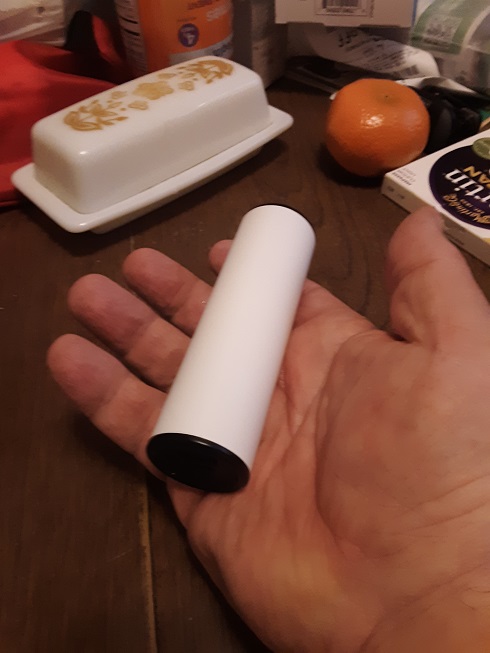
The first is a small, rechargeable hand warmer. I picked it up through Amazon for about $10.00. It is about the size of the roller on a toilet paper dispenser and is charged through a USB connection, either with your computer or an AC outlet adapter. It took a while to first charge it up, and because it is manufactured in some foreign country, the English directions for using, charging, and storing it made absolutely no sense. Once I figured the thing out, it proved to be quite useful. It has three heat settings, which you control by pushing a small button that is embedded into the end. Good luck at controlling it if you have fat fingers. You can see what settings are on by the small LED light next to the switch (which also has the USB port there). Anyway, the low (blue) and medium (green) settings are great, but the high (red) setting is almost too hot to touch. While it seems to be designed to be gripped by the whole hand, I roll the warmer on my finger for a few minutes for fast temporary relief. It re-charges pretty quickly (the heat lasts for about three hours), and can also be used to charge up a low-battery cell phone. People at my workplace have seen it and ordered it for themselves. Overall, a good purchase.

Next, we have the Musician’s Practice Glove, which advertised as being a therapeutic glove for arthritis. It looked to be sort of like the compression socks that I wear for my diabetes condition, but for the hand. Once I put it on, I knew that it was next to useless. While there is a small amount of compression around the palm of the hand, the fingers are loose, and there is stitching at the finger tips. So, trying to press your fingers on the fretboard is troublesome. If you form a chord with your fingers, the cloth on the glove tends to muffle any open strings next to that finger. Moreover, forget any type of solo fingering, as you have to press down even harder to not muffle the plucked string. I think that I paid about $8.00 for this through Amazon, and I would advise anyone to pass on this product.

Lastly, there are the Copper Fit Hand Relief Gloves. I picked up these at the local CVS Pharmacy using a coupon. They regularly go for about $20.00, but I paid about $15.00. These are compression-style gloves that fit tight all along the hand and fingers, while leaving the fingertips bare. The palm area has a rubberized grip to it for non-slipping. These are not designed with the guitarist in mind, of course. Trying to move your fretting hand along the back of the neck smoothly is impossible. However, they do feel good for compressing on my hands and fingers. The recommendation is to wear these for 6-8 hours. My hands are always doing something messy either at work or home, so I put these gloves on before I go to bed and remove them when I wake up. I do notice that my finger does feel better in the morning, so this was a good purchase as well.

I also have been doing some hand and finger exercises for temporary relief from the pain. My advice is that, if you are still young and playing guitar, check with a doctor on how to remain nimble for the longest time possible.

Chew on it and comment.

Categories
Folk Music Rock Music

Shane MacGowan RIP

This past week, one of the most popular vocalists of the punk-rock era passed away. Even if you weren’t a fan of The Pogues, you damned well knew about Shane MacGowan. He was a hero and an anti-hero at the same time. He took The Pogues to international acclaim with his common-man songs that he wrote or co-wrote, along with choice traditional Irish, Celtic, and British Isles folks songs. The band panned away from distorted electric guitars and chose traditional acoustic instruments from Ireland, including accordion, tinwhistle, and four-string banjo. Yet, the sound was heavy, due to the attitude that MacGowan gave with his growling voice as well as what he motivated from his bandmates.

MacGowan formed The Pogues in 1982 after performing in a few punk bands, getting lessons on a traditional Irish music sound from his family members. The Pogues was known for its intense and powerful live shows, motivating fans to pay attention to the folk songs of old and the messages that they conveyed. MacGowan was known physically for his underweight figure, large ears, and extremely poor dental work. Yet he was like a demigod on stage, and his followers would not only pay attention to his vocals, but would sing along with choruses like the fans at a rugby or soccer match.

MacGowan also kept his Irish ancestry up to its fullest, especially when it came to alcohol. More times than not, he would appear on stage completely inebriated, and he gave George Jones a run for his money by not showing up to the gig or being too drunk to perform. It became so bad that he was actually kicked out of his own band in 1991 and The Clash’s Joe Strummer was asked to take over vocals for a time. His reaction was to form another band called Shane MacGowan and The Popes. He would re-join The Pogues in 2001 and perform with the band until 2014.

MacGowan’s addiction was not limited to the drink. He became a heroin addict, and only reformed with the help of Sinead O’Connor, who had him arrested so that he would admit to a judge that he had a problem and sought help. While he was able to kick those habits, injuries from a fall in 2015 had him in a wheelchair for most of his last years. He passed away from pneumonia on November 30 at the age of 65.

MacGowan and The Pogues had a number of songs that, while never hitting big in the US, they became sing-along anthems among the punk and alternative music fans for years. Cover such as Ewan MacColl’s “Dirty Old Town,” Eric Bogle’s “And the Band Played Waltzing Matilda,” and the traditional “Jesse James” brought out with a harsh attack gave them new life. MacGowan also penned a number of memorable tunes, including “The Old Main Drag,” “Lullaby of London,” and “If I Should Fall From Grace with God.” However, what makes it so sad that he has passed away at this time is that his most memorable composition will be now heard on many radio stations for Christmas. “Fairytale of New York” was co-written with bandmate Jen Finer in 1988, and talks of a drunk sitting in a jail cell and thinking about Christmas with his sometime-love, which is sung as a duet with the late Kirsty MacColl. It is also ironic that MacGowan was born on December 25th.

Indie music fans of my age will always hold Shane MacGowan in our hearts, not only for his songs, but for his devil-may-car attitude that kept him going even in the worst of times. We all hope that he is having a pint of Guinness up there in Heaven.

Chew on it and comment.

Categories
Classical Music

The Loss of a Wonderful Young Talent

People who know me know that I am a big supporter of young people learning music. Whether for enjoyment, performance, or eventual teaching, seeing a child or young adult playing an instrument or singing and continually improving is a blessing. It does not matter the genre of music, only that the young student is passionate about it and wants to improve on him/herself to be the best that he/she can be.

That is why, when I read this article a few days ago online, my heart sank into my stomach with sadness, hurt, and grief.

https://slippedisc.com/2023/11/violin-student-21-ended-her-life-tragically/

Veronika Jugasová was a young violin prodigy from Czechia. She started playing the instrument around 6 years of age, and was trained by some of the best violinist/instructors in the country, including at the renown Prague Conservatoire. Even in her youth, she was winning many competitions, receiving international acclaim.

Her death has been determined a suicide, and while it was a shock to so many who loved and admired her, many of her peers and instructors fear that the pressure and stress of performing and heavily disciplined practice was a psychological strain on the girl. Veronika was scheduled to perform at the Prague Music Festival this coming week.

Social media related to classical music has been abuzz regarding this tragedy, with so many other young performers inferring in their comments that they can somewhat understand how Veronika felt. Classical music and opera are genres that require immense determination and extreme hard work. Not only does a passion need to be there, but there is that beyond-normal exertion to become the best, just as what one would see in someone striving to be a professional sports athlete. Unfortunately, young performers in this position sometimes find it hard to balance their time and efforts, and are often surrounded by parents and instructors that pressure them even more. These young people are still children in many ways, and are not fully developed to handle the stress and difficulties of being an adult.

I will not go on about this subject too much. What I will say is that, like a child wanting to be a baseball player, a tennis pro, or a professional musician, give them room to learn, and compassion when they falter. These children have a passion, but they are still human, not something that we can mold into super-humans. Let them know that we are there for them whatever happens, and offer that hug and shoulder to lean on.

Dearest Veronika, you are in so many hearts at this time. Know that you are still loved by so many, that you are still a star in our eyes, and we know that The Lord is enjoying you perform for Him and has given you the most cherished award, the angel wings.

Chew on it and comment.

Categories
Americana Music

Perfect Song #11: “Hasn’t Hit Me Yet” by Blue Rodeo

I can still remember the first time that I heard Blue Rodeo. It was about 1988, I was practicing bass on a Peavey Patriot bass guitar that I just purchased, and I had a Canadian radio station on. I believe that it was CJOM, a CBC public radio station “left of the dial.” The band was being interviewed, then one of their cuts from their first album Outskirts came on. BAM! I was knocked off of my feet, and found a sound that I was looking for in a band!

Since they were out of Toronto, it was hard to find any of their music in a record store here around Detroit, even in the indie stores. I finally secured a cassette of that album, and I pretty much played it until it self-destructed. I soon snagged the second album, Diamond Mine, and kept up with any news that I could about the band. Fortunately, Detroit is just across the river from Windsor, so Canadian rock and country stations, with their 30% Canadian content rule, would often play Blue Rodeo. I couldn’t understand why this band was not getting any attention here in the US. They had that spirit that The Band had – equal servings of rock, country, blues, and folk. They defined the Americana sound!

They got some stateside recognition with their third album, Casino, due to production by Pete Anderson (guitarist for Dwight Yoakam). The band kicked out amazing stuff, to say the least. Two cuts from that album were getting extensive airplay from to Windsor station The River 93.9 FM. The charm came from the songwriting and excellent harmony work of the guitarists Greg Keelor and Jim Cuddy. They seemed to keep coming up with amazing songs that I couldn’t help but keep singing to myself.

Because of their lack of US promotion, they rarely toured here, but would do a few shows along the northern border, including here in Detroit. I can remember them doing a show at the Majestic Theatre and spending the evening chatting with a woman who flew up from Atlanta to see them because it was the closest US show to her. They had that Grateful Dead magnetism with their audience. Everyone there knew all of the words to all of their songs.

This leads me to this installment of the Perfect Song. Blue Rodeo’s fifth album, Five Days in July, had a number of those sing-alongs. However, the most powerful of these, and perhaps the bands most recognized and powerful song, was the second track on the disc, “Hasn’t Hit Me Yet.” Starting off with just acoustic guitar and a mandolin riff, Keelor comes in with his gritty vocals singing about a woman leaving him, and he still hasn’t figured out how to react. Keelor’s and Cuddy’s beautiful harmonies take over during the chorus (Cuddy going from low harmony to high harmony is amazing), then the band comes in like a hurricane for the second verse.

The song continues to chug along like a strong steam locomotive, then comes a fantastic pedal steel solo by Kim Deschamps. This, to me, was when the band sounded its absolute best. Unfortunately, Kim and the band had a falling out shortly thereafter. Anyway, after the solo comes another chorus, then that powerful ending. Keelor really hits it vocally, and Cuddy’s answering to him is just too beautiful.

This song has had such an impact with the fans that, during shows, Keelor lets the audience sing the first verse on its own without his help. I actually have a karaoke CD that a friend gave me with Blue Rodeo songs, and I remember putting this song on repeat and singing Keelor’s part constantly. The song would have fit in to The Band’s catalog easily. To be honest, every time I hear this song, I get choked up, holding back a tear. It just induces vivid memories to me, of lost loves, times when I was enjoying playing in a band, and just appreciating those precious moments in my life.

When reading posts on YouTube of the video for this song, so many people feel the same way. Blue Rodeo will always remain one of my all-time favorite bands. I still cannot understand why the band never got the recognition it deserved here in the US (when I worked with the Americana
Music Association, I begged and pleaded to get the band a showcase, but to no avail), but then again, I think of how perhaps God was giving a few of us a precious gift that others would not receive.

I won’t go into more description of the song or band, just listen and experience it for yourself. Read some of those comments and see how the song has impacted people.

Chew on it and comment.

Categories
Bluegrass Guitar

The Art of Bluegrass Rhythm Guitar

With my hands starting to feel their age (the pointer finger on my left hand is starting to get arthritic), I have to re-train myself in playing guitar. As I am still planning on going to the SPBGMA conference in Nashville in January, I know that I will be participating in some motel room and hallway jamming.

Now my lead guitar skills have pretty much dried up, as they weren’t that great to begin with, but I do still work on my rhythm guitar skills. I try to go back to the basics every few months by starting off slow with a metronome (about 70 beats per minute), then each day bring up the tempo a few notches until I get to about 120 bpm, which is pretty much the most common tempo for most bluegrass songs in 2/4 time.

I also occasionally refer to a DVD that was put out years ago by Musician’s Workshop, The Art of Bluegrass Rhythm Guitar with Chris Jones. He has a pretty laid-back approach to working on the rhythm chops, and while stressing the common “boom-chick” strum, he shows modifications, as well as some more modern strums that work with a 4/4 time signature.

After so many years playing electric guitar in punk and alt-country projects, and even after the past nearly two decades of concentrating on acoustic music, simple bluegrass rhythm guitar is really not that simple. The band (without a drummer) relies on that rhythm guitar to help keep a steady tempo. That basic “boom-chick” strum works with both the bass downbeat as well as the chop from the mandolin. I have worked with a lot of banjo players that have very little control of self-timing while doing their Scruggs rolls, and a rhythm guitarist with great control of tempo is a life saver to a bluegrass band.

I decided to check out what could be found on YouTube for bluegrass rhythm guitar. The search pulled out a few videos, and it seemed that each video had not only a different approach to the task, but even different fingerings altogether. Looking at the basic G chord, which in most beginner guitar books shows the first finger fretting the A string at the 2nd fret (creating a B note), the second finger fretting the low E string at the 3rd fret (creating a G note), and the third finger fretting the high E string at the 3rd fret (again, a G note). A few videos show a different position, with the first finger either muting the A string, or not touching the fingerboard at all and letting the second finger “mute” that A string, Then, the fourth finger frets the B string at the 3rd fret,(creating a D note). What this does is create a G5 chord, which removes the 3rd note (B) from the chord and only gives you G and D notes. This has a chime-like sound, which some bluegrassers prefer. Not me, I like the full sound of the whole major chord. One person actually stated in his video that this G5 is the only chord that a bluegrass rhythm guitarist should be using. Really?

Another video had the instructor forming a basic G chord, but with every strum, he would hammer on the low E string to the G note with the downbeat. It sounded less like a bluegrass strum and more like a surf-rock rhythm! One video states that the “boom” bass note should be stressed more, while another video states that the “chick” strum should be the emphasis. It seems that if you watch 10 videos on bluegrass rhythm guitar, there will be 11 opinions!

I will not get into the do’s and don’ts of bluegrass rhythm guitar. My one complaint about almost all of the videos is that they talk as if the typical bluegrass song (with exceptions of waltzes and those in quick 6/8 time) are all 4/4 time. I prefer to think of these as 2/4 time signatures, since the “boom-chick” action is two counts. Most folk and rock rhythms following a straight pattern usually fall into the 4/4 time signature, with a “boom-a-chick-a” pattern. Of all of the videos that I watched on this topic, I feel that Bryan Sutton says it the best on working with this rhythm pattern.

Chew on it and comment.

Categories
Bluegrass Fiddle

Female Bluegrass Fiddlers

Google and the American Songwriter website must always have me in their cross hairs. Every day when I go online, there is an AS article recommendation. I have stated in previous blogs how I don’t value its content too much due to trying to be too politically correct and implementing the whole DEI thing way too much.

This article popped up a few days ago: https://americansongwriter.com/5-female-fiddle-players-breaking-barriers/

Again, the magazine/website is trying so hard to be “catching the wave” of the whole DEI movement. I highly doubt that they would ever publish an article on five MALE fiddlers pushing the barriers. They listed these five females: Eileen Ivers, Brittany Haas, Sara Watkins, Alison Krauss, and Lucia Micarelli. A good list to be sure, but there are a few women fiddlers that probably should be on here, such as Natalie McMaster and Annie Staninec. I always question why AS chooses such oddball numbers instead of sticking with a Top 10. Perhaps the writers are just too damned lazy to do more than 15 minutes of research.

However, the article did get me to thinking about women and bluegrass music. The fiddle position in bluegrass bands seems to have a great amount of females. Two of my favorite fiddle players (who just happen to be good friends as well) are female – Brittany Haas and Bronwyn Keith-Hynes. Off the cuff, I can name a lot more gal fiddlers along with those already mentioned: Becky Buller, Laurie Lewis, Kimber Ludicker, Rayna Gellert, Maddie Denton, Ivy Phillips, Kitty Amaral, Deanie Richardson, and Mary Rachel Nalley-Norris to start. That doesn’t include other roots-based female fiddlers such as April Verch, Sophie Lavoie, Jenee Fleenor, Lena Jonsson, Stephanie Cadman, and Miranda Mulholland among others.

This made me think about why so many women are playing fiddle in bluegrass bands. First off, I remember when, in elementary school, the early music program had us choosing what instrument we wanted to learn. Boys always seemed to go for saxophones, trumpets, trombones, and drums/percussion, while girls went for flutes, clarinets, and violins. A boy playing a violin was thought to be a sissy, and looking through high school yearbooks, the photos of the orchestra seemed to mirror that choice, with perhaps one or two male cello or bass players.

I was guilty of that thought for all of my school years, and only knew one male violinist and one cellist. I never even thought of playing fiddle until I started playing in acoustic and bluegrass bands. Being already in my late 30s, it was a steep hill to climb to learn a new instrument. I first thought that because I was playing guitar and bass, along with a little mandolin, the move to learning the fiddle would be easy. BAH! I can’t count the number of times that I wish I could turn back the hands of time to my 4th grade class and say that I wanted to learn the violin. Sissy names be damned!

Back in the early days of bluegrass, if there was a female in the band, they were usually regulated to playing the upright bass. Thanks to acts such as Hazel Dickens & Alice Gerrard and The Coon Creek Girls, bluegrass began to recognize women as a driving force in the format. Of course, Alison Krauss helped put women on the bluegrass map fiercely in the mid-1980s, and the format has been encouraging for ladies ever since.

Bluegrass has never really “pigeon holed” female performers like other formats. While you may see a lot of statements such as “the female Elvis” or “the female Jimi Hendrix,” women performing in bluegrass, especially fiddlers, have made a name for themselves without having the press resorting to gender comparisons since the 1980s. Musicians should only be judged on their work, not on their gender, race, or creed.

Here’s a clip from a long time back by Belle Starr, with Stephanie Cadman and Miranda Mulholland. I really miss this trio, they should have hit it big. We’ll follow it up with my friend Brittany Haas (with Chris Thile).

Chew on it and comment.

Categories
Acoustic Guitars

Cirrus Guitars

There is a new acoustic guitar company opening up – and it is near my house!!!

Well, it is about an hour drive from where I live, to be honest. However, this is great news to see another luthier starting up in the Detroit area. Cirrus Guitar (https://www.cirrusguitars.com/) is the partnership of Mike Franks (of M.J. Franks Guitars) and Tobin McGlassion (of McGlassion Guitars) that will make high-quality, hand-made acoustic guitars at an affordable price.

They have opened up shop in Rochester Hills, Michigan, and from the looks at their website, they have a good idea of what is needed in the acoustic guitar market. As of now, they are making three models: a Dreadnaught, an OO body, and a OOO 14-fret version. All will have basic features, with options available at additional costs. Prices for these guitars (with case) will start at $2,150.00.

What caught my attention was that they will offer two scale lengths at no additional cost. There will be the standard 25.4-inch scale, as well as the shorter 24.9-inch scale. Because of my smaller hands and slight arthritis, I have always wanted a shorter scale fretboard on a Dreadnaught body. Martin has offered such models, but the price has been way out of reach for me. This looks like it would be a great alternative.

The guitars will be built in the same shop as M.J. Franks Guitars, but with a different attitude. Of course, they are looking at getting these guitars into a players’ market. A M.J. Franks guitar starts at $3,850.00. At nearly half the price, a Cirrus guitar is a great alternative to the more boutique guitars.

In an interview with Bluegrass Today, Franks states that for Cirrus, he will be buying wood in bulk, and wood that may have some minor blemishes that would not be found on his Franks guitars. Personally, a small blemish can be ignored if the guitar has a great tone and feels comfortable at the same time.

Franks’ bluegrass connection comes from building one of his first guitars for Bobby Osborne’s guitarist Joe Miller, and being good friends with songwriter Pete Goble, who also lived in the Detroit area before passing away in 2018.

I will be checking out this Cirrus over the next few weeks, and seriously considering getting myself that Dreadnaught with a short-scale neck.

Chew on it and comment.

Categories
Gospel Music Old-Time Fiddle

2023 Michigan Old-Time Fiddle Contest/Sister Servants/Christian Youth Singers

Two weekends ago was the 2023 Michigan Old-Time Fiddlers Contest at the Applefest in New Boston. There were only four participants, and when I saw Trae McMaken (last year’s winner) seated near the stage, I knew that he would be this year’s winner as well. The guy is THAT good!

The contest was held later in the afternoon, which did see a bit more people in the audience than in previous years. There are also the problems with scheduling. First and foremost, the contest always goes on after the performance by the local middle school orchestra and choir. Every year, that performance always runs over because they go on late due to poor organization by the school music director. Thus, the contest began about 30 minutes late, and as expected, the blues/rock cover band scheduled to go on after the contest decided to start setting up some of its equipment during the contest.

It is sad that this old-time fiddle music is not as appreciated here in Michigan as it is in other parts of the country. I have preached about Michigan’s fiddle and music history many times, but it seems that very few people outside of the actual musicians care about it. I am glad to see that the Southeast Michigan Bluegrass Music Association has gotten some interest from young musicians recently for the scholarship awards. We have awarded one more student some scholarship money since I last wrote about it (https://luegra.design.blog/2023/08/06/sembma-scholarships-part-2/). I was hoping to see a new young fiddler at this year’s contest, but the four contestants were older fiddlers that have participated a number of times.

GEDSC DIGITAL CAMERA

We can always hope for next October! In the meantime, if any of you know of any young fiddlers (or banjo players, or mandolin players, or acoustic guitarists) playing bluegrass or old-time music, be sure to send them to the SEMBMA website and have them fill out a scholarship application (https://smbluegrass.org/scholarships/).

As many of you know, I am moving out of my house and moving back into my folks’ house as they both have passed away. I have sold the house and will be completely out by November 1st. So every day I have been grabbing a box or two and shipping it back to my new homestead. Yesterday, while in Hamatramck at a stop light, I noticed a group of young people (about eight) on the corner singing standard Gospel songs like “Rock of Ages” and “Amazing Grace.” They were from a Christian youth group connected with Living Waters (http://www.livingwaters.com/). It was extremely strange, as Hamtramck has become a highly populated Muslim community, and of course, tensions due to the Hamas attack on Israel recently has gotten a lot of people on edge. But there they were, being brave, singing old-time Gospel tunes and holding signs requesting looking toward Jesus.

It warmed my heart to see that. While I am a devout Roman Catholic, I have always loved the songs that early bluegrass Gospel brought forth. On my way back down the street, I saw that they were still singing, so I went to the local store, picked up some soft drinks, and gave it to them, letting them know how beautiful the singing was. They were friendly, and while they started to try to get me to be a part of their organization, I felt obliged to let them know of my faith in Catholicism and that my parish was a few blocks from where we were.

Seeing young people so motivated by their Christian beliefs, and what is more to be standing in an area that could prove to be hostile, was extremely moving, Then again, Jesus was not set on preaching to the believers, but to preach to those that were straying from the Lord and help them see the light.

I end this blog with a video that my friend Sister Clare Marie of the Sister Servants of the Eternal Word sent me. I mentioned this group in previous blogs (https://luegra.design.blog/2020/08/07/nuns-performing-bluegrass-and-diversity/ and https://luegra.design.blog/2021/12/04/715/). These wonderful ladies stay in my heart always.

Chew on it and comment.

Design a site like this with WordPress.com
Get started