Categories
Consumer Electronics News

Olson Electronics / Greg Gutfeld

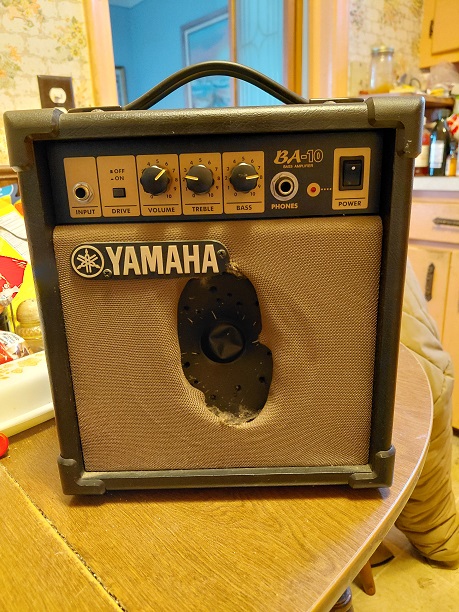
After last week’s nostalgic rant about Radio Shack (https://luegra.design.blog/2020/12/11/i-miss-radio-shack/), I got to thinking a bit more about my younger days in building my own electronics projects for my bass guitar and stereo.

Then I remembered Olson Electronics. They were more of a surplus store than RS, and seemed to only be marketing in the Michigan/Ohio area. But man, that was a cool store! There was only one in my area, and I was at it every chance that I got.

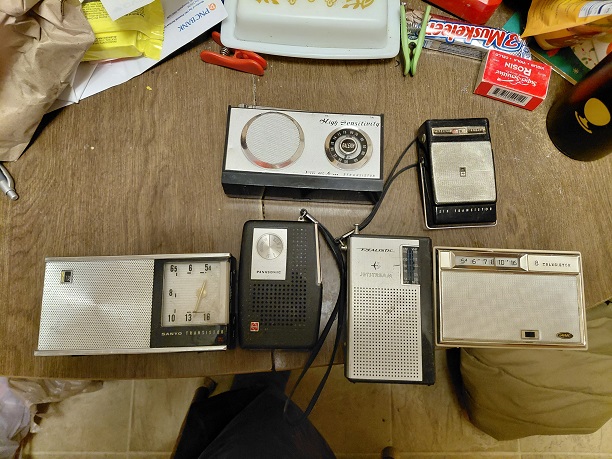
When I mean surplus, I am talking about radios, stereos, car electronics, alarm systems, speakers, and CB radios that were usually reconditioned or purchased from a wholesale place. My first stereo was from there, a AM/FM/8-track receiver with no cabinet. I got it really cheap and built my own cabinet. I remember the cool small VU meters that would move to the beat of the music and though that I was the coolest guy out! I also must have gotten a dozen replacement speakers for either my stereo cabinets or my bass guitar cab.

The place was much more disorganized than RS, but it was a lot more fun because you were always hoping to score a bargain. They didn’t have a catalog like RS, but instead sent out monthly flyers like RS that showed what was on sale or what was available on clearance at selected stores.

Olson went out of business long ago, and I really miss that place. Going there was weird in a cool way. It had its regular stock of CB radio equipment and alarm systems, but then there were the boxes of surplus stuff and a few shelves of used, reconditioned, or discontinued radios and amplifiers that would be in the back of the store. I felt like Mike and Frank on “American Pickers” sometimes, just digging through the boxes hoping to find that unique part that I could make a fuzz pedal for a guitar.

There is a lot from that period of my life (1980-1990-ish) that I miss regarding electronics. There were a number of magazines like Popular Electronics that would have decent articles on DIY projects, although most seemed to be for ham radio and early home computer fanatics. They would also put out supplements once each year that may have 100 or so schematics of simple projects that you could build in an hour or so. Then there were the other lesser-known electronics surplus houses that you would request a catalog and see if they had any old guitar parts like cheap pickups or knobs that you could use.

There are a few electronics surplus places still around on the internet, and I do occasionally order parts from them. However, as a kid, being in contact with these places was like being in another world, one that people around you didn’t understand. You could buy strange and hard-to-find parts and create something that had your personal stamp on it. Yes, these days it’s cheaper to buy the effects pedals made in China than it is to build one. But lost is the education, the personal reward, and the satisfaction that one would have in building it on your own.

To get an idea of how cool it was back then, someone posted a video on YouTube showing an old Olson Electronics catalog and its contents. I had forgotten how much stuff they sold! Enjoy.

If you don’t know who Greg Gutfeld is, you definitely need to check him out. He’s a commentator on the Fox News Network, but his style is completely his own. He’s sarcastic, resentful, mean, funny, and extremely intelligent. Listening to him is like listening to one of the regulars at your local dive that isn’t afraid to give out his opinion on something, especially political, but does it in a smart and hilarious way.

I liked him since I first watched him on an old show called “Red Eye.” Now he has his own show on Satruday evenings as well as serves as a regular commentator on the Fox discussion show “The Five.” Besides his views and attitude, I like him for his taste in music. It runs totally in line with mine. He is into the bands that I have always loved from my days doing punk, new wave, and alt-country/Americana. When other hosts use filler music from today’s pop artists, Gutfeld defies the norm and uses songs from The Clash, The Ramones, X, Iggy Pop, and The Melvins.

I subscribe to his weblog, called The Gutter, and love the fact that he reviews albums that he loves, whether they came out yesterday or 40 years ago. This particular one made my week, as it is of a compilation album of Detroit bands from the1960s and 70s. I had a cassette of this album, and I miss it dearly.

https://gg.locals.com/upost/287366/greg-s-review-michigan-rocks

Chew on it and comment.

Categories
Consumer Electronics

I Miss Radio Shack

I was recording some background vocals to a demo a few days ago, and it hit me: I miss Radio Shack!

I was using a small-diaphragm condenser microphone sold by RS. I actually have three of these buggers, and they have never let me down. Rather than a phantom power supply, they run on a 1.5-volt AA battery, which when I bought them about 20-25 years ago was a life saver, considering that I couldn’t afford a studio condenser mic and elaborate mixing board with built-in phantom power supply.

RS was the perfect store for a guy like me, a musician who liked to tinker with electronics. It had tons of electronic components, including integrated circuits to build early non-spring reverb units. I remember that IC chip was expensive, around 50 bucks, and if you zapped it with static electricity, then you killed it. I built one, and while it was a bit noisy, it sufficed instead of purchasing a music store model for five times the price (it also marketed a reverb unit that was meant for connecting into your stereo system, but with adapters, worked with a guitar amp as well) I also built headphone amps and distortion effects from the RS parts, and I learned a lot about musical instrument electronics back then.

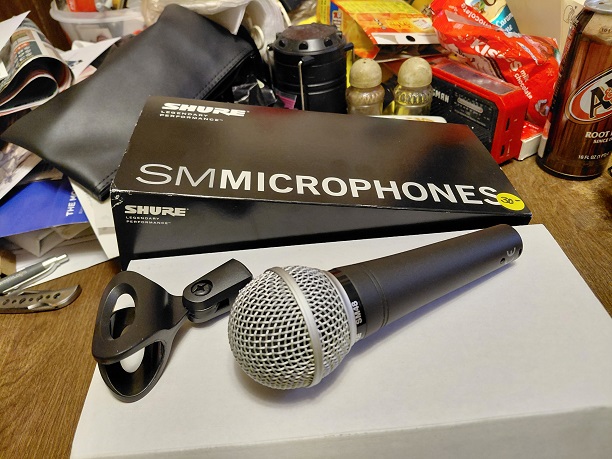
Besides components, RS sold guitar and mic cables, mic stands, mixers, small PA systems, amplifier tubes and microphones. I am not even going to go into the radios, stereo systems, computers, and alarm systems that were available. As for microphones, RS’s higher-end mics were actually made by Shure, so you got a good quality dynamic mic that was comparable to the SM48 but cost a lot less. Just before the company’s downfall, it did sell actual Shure mics on its shelves. They also had books on electronics, either general instruction and theory or how-to booklets to build simple circuits.

RS was my second home. I knew a bunch of the sales people by first names. I even dated a sales girl (unfortunately, that was 18 of the worst months of my life, but I digress). The print catalog was a pseudo-bible, and I remember having a card to get a free battery every month. There was a store about two miles away from my boyhood home, and another three stores within a short drive. Today, the closest store (and that is just an authorized outlet store) is over 30 miles away.

Times changed, and RS did not change with them. Probably half of the people that I knew growing up had a Tandy computer as their first PC (including me), but the company never bothered to pursue expanding on that product sales. The same with televisions, radios, and other consumer electronic equipment. Best Buy beat them to it, and RS basically became a cell phone store and not much else.

Today, I do a lot less electronics tinkering. I can make some simple repairs and part replacements to electric guitars and amplifiers, but technology has overwhelmed me. To secure the parts to build a decent distortion pedal for a guitar from electronics outlets will cost you two- to three-times more than buying a mass-produced one from Guitar Center or Sweetwater. The educational experience of building something like that does not exist with today’s young musicians. Even those that are choosing to use vintage equipment shy away from learning something about the circuitry.

RS was a great resource for me, it was the right place at the right time. Perhaps I should have forced myself to delve deeper into the technology, but I looked at it more as a hobby than as a career. That was probably the situation for thousands of others like me. And that was what may have put some of the nails into Radio Shack’s coffin.

Chew on it and comment.

Design a site like this with WordPress.com
Get started