Categories
Bluegrass Music Music Instruction Songwriting

SEMBMA Bluegrass Kids Showcase/Songwriting Thoughts

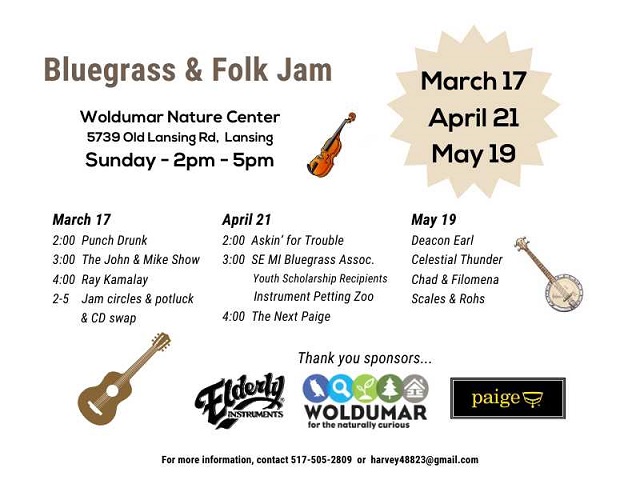
It occurred to me that I forgot to post my thoughts about the Southeast Michigan Bluegrass Music Association’s 2025 Michigan Bluegrass Kids Showcase held on October 19 at the Woldumar Nature Center in Lansing. In short, it was a good time had by all.

The first hour was dedicated to the SEMBMA scholarship sponsored students performing tubes that they have worked on with their instructors, as well as a few past recipients showcasing their now professional-quality skills.

The second hour was held by the Edgar Loudermilk Band, who although from Georgia, have continually been supportive of Michigan bluegrass and the work SEMBMA has done to promote it in the area. Edgar has been a friend for years, and it is always a pleasure to converse with him when he is in town. The band gave a great free performance to those attending the kids showcase.

The third hour was special, in that Edgar and his band hosted a jam session with the kids as well as some adults attending a local jam session in another room of the building. While it was rough aroudn the edges, everyone seemed to have a good time, especially the younger musicians getting a chance to perform with a well-known bluegrass band.

My unfortunate incident involved my camcorder. I had numerous problems with it the last few times that I used it. I finally figured out the video end, but the audio has always recorded with a distortion, no matter if I use the built-in microphone or one of my many other pro mics plugged in I need to perhaps make some kind of attenuator to limit the signal, but as it is, the audio volume is low. Another job to work on during the winter.

For more information on the event, along with go to the article from Bluegrass Today: https://bluegrasstoday.com/2025-michigan-bluegrass-kids-showcase/ .

I will be heading to Nashville next week for a few days. I have a songwriter session scheduled, and hope to snag at least one more while I’m there. If not, I know I will find something to do down there. I have reached that point in my songwriting tenure that I need to definitely do more networking and co-writing with others outside of what is immediately available locally.

Co-writing with David Morris and Dawn Kenney proved to be my most fruitful, with “Something About a Train” winning the Merlefest Chris Austin Songwriting Contest, the IBMA Songwriter Showcase, and being recorded by Valerie Smith. But that was 10 years ago, and not much has happened since. I have done some co-writing over the internet and through mail communications, but nothing that has been breakthrough, although it has been positive. I tried to do some networking at SPBGMA last year, but it was much more limited in possibilities than what is available at the IBMA conference. I still have no real intention of attending IBMA next year, so I need to take alternate steps.

What I need to do most is be more aggressive in introducing myself. I have the business cards, as well as CDs and thumb drives with some demos. I can easily had them out and walk away, hoping that the artist/manager/publisher will take a chance, but I need to PR myself better. The next few days will be spent researching available resources in Nashville that I can at least get my foot in the door.

I’ll be here next weekend, then leaving Monday, so my report will be in two weeks.

Chew on it and comment.
Categories
Music Instruction Old-Time Fiddle

Applefest 2025 / First Guitar Lessons

Last week I went to the 2025 Michigan Old-Time Fiddler Contest, held annually at the Huron Township Applefest in New Boston. I’ve gone to this contest for years and have blogged about it many times. Last year, only two contestants showed up to compete, and I thought that it could not be worse than that. Well, this year proved me wrong.

Yes, only one person showed up to compete. Dave Langdon, who has participated in the event many times and is well-known in the state’s old-time fiddle base, was the only competitor. He received the $200 first-prize award after going through the expected contest performance of playing a waltz, schottische, jig and reel. If I would have known, I would have brought my fiddle (which I haven’t picked up in months), hacked my way through four tunes, and still made second place and gotten $100 pocket money.

Speaking with Jim McKinney of the Michigan Fiddler Association, he stated that each year it gets more difficult to have competitors, as this time of the year finds fiddlers doing fall dances and other activities. It also seems hard to find younger people interested in the old-time fiddle tunes. From my experience, this is completely true, as I talk to young fiddlers and parents that won’t commit to heading down to this festival for a few hours.

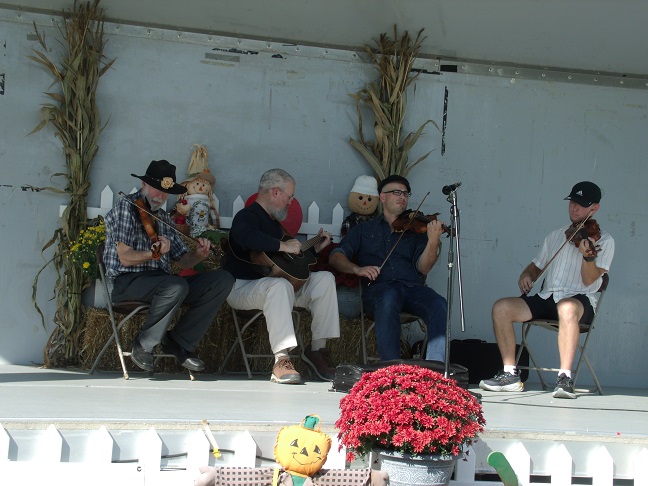
To save the day, host Tom McKinney and contest judge Trae McMaken joined Dave on stage for a jam session to use up the time allotted for the competition.

GEDSC DIGITAL CAMERA

I have a co-worker that is interested in learning guitar, and I told her that I would let her try out some of the acoustic guitars that I have for sale to see if she would like to purchase one. Out of curiosity, I went on YouTube to see what videos were available on the search “Beginner Guitar Lessons.” Of course, a number of videos popped up, but as I went through watching them, I noticed that pretty much all of them have no concept of making the easiest way possible to learn basic chords.

Anyone who has started out on guitar knows that there are a few relatively easy chords, such as G and C, that will get the student learning simple folk songs. About half of the “beginner” videos I watched showed the first two chords to try as Em and Asus2. Yes, these are easy to finger on the fretboard, but there are very few songs that a beginner can regularly practice with them.

Go going back to the G and C chords, one of the reasons that these are popular is that playing these two chords can open up a world of simple folk and popular songs to play. I found some videos implementing the G chord as the first chord a beginner should learn, but another problem I saw is that these instructors are making the student finger across the entire fingerboard and strumming all six strings. I remember from my experience over 40 years ago at first learning guitar chords that it takes a long time to perfect even the open G chord, as placing the pads of the fingers correctly without muffling strings is a difficult task for a beginner to acquire.

Next weekend I will be in Lansing to help out at a musical instrument “petting zoo” that the Southeast Michigan Bluegrass Music Association sponsors throughout the year. When I show young kids how to play a guitar and get a good sound from it the first time, I take the instructional route that I learned from a book that I had years ago – that you do not need to pluck all six strings of the guitar to get a good chord sound. With that, you don’t need to reach across the fingerboard to with your whole hand and start off uncomfortably to try and get a good sound. These are young kids often looking for instant satisfaction, so making them contort their hands will only dull their interest.

Instead, I show them that since the guitar’s 2nd, 3rd and 4th strings are tuned to a G chord, they can strum just those three strings to play a chord, and if they want to change the chord, they can just drape a finger across another fret, holding down those three strings, and strum just those three stings again. I also show them to finger the 1st (high E) string at the 3rd fret with the ring finger and strum the four strings to make an even bigger sounding G chord. If they are motivated by that, then we can work on just those four strings to finger a C chord with two fingers. If they become comfortable and motivated enough, I can show them a simple folk song such as “Tom Dooley” to let them know that it is possible to play a complete song in a matter of minutes.

If they are still interested and motivated, that is when I talk to the parents with recommendations of instructional books or teachers, and that once these basic shapes of chords is perfected, the student can expand on implementing the 5th and 6th strings. The idea is to get the student motivated to move on for the next task, NOT to make the first task hard enough to not want to move forward.

I won’t even bother showing any of the videos that I saw on YT for beginner guitar lessons, as watching them just irritated me. I plan to stick to my method when showing youngsters the guitar. I know that not every kid who I show these simple chords on a guitar will stick with it, but in my experience, it did brighten some young eyes when they strummed that chord and it didn’t sound bad.

Chew on it and comment.

Categories
Bluegrass Music Music Instruction

Bluegrass University in Kentucky for Youth

I caught this article on the Bluegrass Today website a few days ago:

This program at the Leeds Center for the Arts in Winchester, Kentucky is intended to help middle- and high-school students with learning and performing bluegrass music. The program will take place one evening per week, and is headed by Jayd Raines and Zach Combs, two long-time touring bluegrass musicians.

I have not had a chance to fully check out the syllabus or content yet, but it sounds like a fantastic venture. Equal amounts of fun, learning and discipline, and capture teenagers at the most productive age while gitting them away from the iPhones and tablets for at least one evening per week.

For years, I have always wanted to do such a program in my area. Back around 2000, a friend and I found the perfect building to start a non-profit music education program. The building had a sign on the front that read “Americana Music Studio.” The history of the building was that a Polish immigrant couple after World War II moved to the area and converted the building to a studio that the husband would teach piano and violin, while the wife would instruct ballet. There were practice rooms and a small recital room. Eventually, they passed on, their children had no interest in pursuing the work, and the building’s neighborhood began to crumble around it.

It would have been perfect for our idea. Teaching kids folk, bluegrass, and other roots-music, like a miniature Old Town School of Folk in Chicago. Unfortunately, we could not find financial backing, and the building was eventually sold to a medical clinic.

As you may already know, recently I have been working hard with the Southeast Michigan Bluegrass Music Association to reward scholarships to kids aged 12-18 so that they can receive live or online instruction of bluegrass and other roots-oriented music on stringed instruments. However, we are not as fortunate as areas like Kentucky and the Carolinas where bluegrass music is part of life, and young people pick it up naturally. Since the scholarship program started a few years ago, we have really only sponsored about a half dozen kids. While most of those kids have continued to pursue the music, a few have lost interest, just like any other hobby for kids after a while.

As SEMBMA is a non-profit organization, we have to be extremely concerned on how we use the scholarship money. We have received many applicants, but some have been not what we are striving to fund. Once parent asked if we could provide funding so that the child could record a CD. Another requested scholarship help for a student learning electric rock guitar. We have broadened our scope a bit to help interested youngsters by providing instruction in folk and Celtic, but we also have to limit it at a certain point.

I have posted an advertisement for the scholarship on the local Craigslist. The only response that I have gotten in the past few months has been someone who is 35 years old and requesting money. Really? I also post flyers at music stores around town, but the Association gets very few bites.

Last week at the Charlotte Bluegrass Festival on Saturday morning, SEMBMA set up its “petting zoo,” where we put out guitars, banjos, mandolins and dobros for kids to try out. It is great to see young ones picking up instruments and learning an easy chord, then an easy song. While most kids are there as a pseudo babysitting service for parents to drop them off for an hour, one or two kids do take an interest in playing a stringed instrument. With Billy Strings performing on Thursday, it is great to see younger people getting involved in bluegrass music.

But at this time, it seems that we need more. If parents and grandparents are into bluegrass music, they need to show their kids and grandkids how fun bluegrass music really is. Get them off of the iPhones and interacting with other kids face-to-face by jamming together. Show them not only the younger successful artists like Billy Strings, Sierra Hull, and Wyatt Ellis, but some of the rising unknown bluegrass musicians that are all over YouTube. Schools have music programs, but they are dedicated to orchestra and marching band music. A motivated teacher may be smart to start up a Folk and Bluegrass Music Club (similar to a Chess Club or Drama Club), teaching instruments, jamming, and maybe showing videos of bluegrass performances.

I leave you with a video of my favorite 14-year-old fiddler, Hollace Oakes. At this year’s Abingdon Fiddlers Convention in Virginia, she recently took 1st Place in the Adult Old-Time Fiddle competition, 2nd Place in the Adult Bluegrass Fiddle competition, 3rd Place in the Youth Mandolin competition, 3rd Place in the Adult Flatfoot Dance competition, and her band Denim & Plaid won the Youth Band Bluegrass competition. This is what I would love to see with another hundred 14 year olds!

Chew on it and comment.

Categories
Bass Guitar Music Instruction

Bad Recommendations for Beginner Bassists

I read an online article this week posted by Ultimate Guitar online entitled “Best Songs for Beginner Bass Players” (https://www.ultimate-guitar.com/news/lessons/best_songs_for_beginner_bass_players.html). The article listed a dozen or so rock songs that had bass lines that were familiar to most listeners. The problem that I had with the article was that only a handful of the songs listed could qualify for practical to learn for beginning bass players.

I have been playing bass guitar for over 40 years, and have taught bass playing for probably a total of 10 years. I will be the first to admit that I am no Jaco Pastorius, but I can definitely hold my own in almost any situation, save jazz or classical. As I looked down the list provided in the article, I found myself shaking my head, concluding that the person who wrote the article, david89zenum, had no real clue on what is important to a beginner as well as the right material with which to start off.

The first song listed was “La Grange” by ZZ Top. As I started reading the article, I pretty much agreed with that selection, as it is a pretty basic blues-rock groove, with the bass following a simple I-minor III-IV note progression. After that listing, it became confusing at best. There were a few bands/songs with which I was not familiar, and there were a few choices that I would agree with:

“Blitzkreig Bop” – The Ramones
“Smells Like Teen Spirit” – Nirvana
“Bad Moon Rising” – Creedence Clearwater Revival

After that, I would have to disagree with a lot of the choices. Now, there were some artists listed that seem to be here to try and be politically correct, such as Taylor Swift and Salt-N-Pepa. I am not even familiar with the songs from those artists, so I could not tell you what the bass lines entail. However, if they have any similarities to the songs I will discuss in the following paragraphs, this article is way off the mark.

“Billie Jean” by Michael Jackson – The bass line on this hit is fantastic to say the least, but it is also very complex for a beginner. It requires a lot of movement of the fretting fingers, even though the hand stays relatively in the same area of the neck. Give it a few months.

“Phone Booth” by Robert Cray – Cray is a great blues guitarist that likes to push the boundaries of the classic blues progression. Even the article author admits that this song is not your typical I-IV-V blues progression. So why teach it instead of having the student perfect the standard progression first? Note that there was no standard blues song listed in the article.

“Under Pressure” by Queen – Like “Billie Jean,” it is another song with a bass riff that needs some time and strength in both hands to perfect.

“Seven Nation Army” by The White Stripes – Same thing. A great bass line (although this was actually recorded with a guitar and an octave divider pedal), but it has some quirky movement to it. This means that the “beginner” bass player needs to work hard on timing as much as getting the right notes.

“I Got You (I Feel Good)” by James Brown – This is one of those classic R&B songs that had a fantastic bass groove. The thing is, the player never played the exact line twice. There were very slight changes with each passing of the bass lines in each verse. Definitely not a beginner song.

“Sunshine of Your Love” by Cream – Jack Bruce laid down some fantastic bass lines in Cream, as it was almost required when the band is really only a trio. The bass line on this song is immediately recognizable, but like many others already listed, it requires a lot of fretting hand/finger movement.

I was surprised that the article listed no songs by classic rock bands such as The Beatles, The Rolling Stones, The Kinks, or The Animals, all who have songs with memorable bass lines. Heck, Chas Chandler of The Animals laid down some amazing bass work on classic rock songs such as “We Gotta Get Out of This Place,” It’s My Life,” and “Please Don’t Let Me Be Misunderstood.” However, I would never recommend any of those songs to a beginner. Moreover, if the author is going to list James Brown, then why not list something from Motown? James Jamerson was THEEE bass player, and while most of his work is pretty busy on the fretboard (and remember, all of that speed plucking on the strings was done with only one finger), he did lay down some easy lines from which to learn.

Here is my list of a few songs for an actual beginner bass player to work on in order to learn the basics as well as being an integral part of a band. The thing is that the bass player should not only learn the notes, but also timing, working with the drummer, and know what fits well in the song (NOTE: Some of the early songs were recorded with a standup bass, so the recordings do not have great bass response):

“Maybellene” – Chuck Berry
“Ain’t That a Shame” – Fats Domino
“Get Rhythm” – Johnny Cash
“My Girl” – The Temptations (James Jamerson)
“Can’t Buy Me Love” – The Beatles
“Not Fade Away” – The Rolling Stones
“You Really Got Me” – The Kinks
“Can’t Explain” – The Who
“Rock and Roll” – Led Zeppelin
ANYTHING from the Rockpile album Seconds of Pleasure (Nick Lowe on bass)

With anything from Paul McCartney (The Beatles), Bill Wyman (The Rolling Stones), and John Entwistle (The Who), you can hear how their bass playing improved from the early band recordings through the 1960s.

Chew on it and comment.

Categories
Bluegrass Music Music Instruction

SEMBMA Youth Scholarship Showcase: Afterword

Last Sunday, April 21st, the Southeastern Michigan Bluegrass Music Association held its showcase of the Youth Scholarship recipients at Woldumar Nature Center in Lansing. It was great to see the four students perform, and even better to see a great turnout for an audience. I tried once again to video the event, and while the video itself was good, the audio going into the built-in microphone was terrible. Hopefully I can get the hang of this camcorder someday.

I had mentioned this showcase a few weeks ago (https://luegra.design.blog/2024/03/09/sembma-youth-showcase-april-21st/), and was glad that it was a moderate success. SEMBMA member Marcia Bailey also brought a few instruments for interested kids to try out at the Association’s “petting zoo.”

What made me pleased the most was that the four students are really passionate about improving on their playing. Eleven-year-old Dominic impressed me the most with his off-the-cuff knowledge of old-time fiddle tunes that he was warming up to. Belinda is another 11-year-old fiddler that I first saw at the Michigan Old-Time Fiddlers Contest back in 2022 and worked hard to get her parents to apply for a scholarship. She has a great teacher in Keala Venema, who is a well-known fiddler in the western part of the State. Thirteen-year-old Henson was performing standard banjo tunes in the style of Earl Scruggs. Lydia was also performing on banjo, but I was really impressed by her strong vocals for a girl of 14.

The four joined their instructors for a jam session at the end of the performance. It was great to talk to Keala again, as well as talk to some of the parents about how proud they are of the students. I was really glad to see Lydia jamming with some of the older musicians at the session going on downstairs.

I hope that between seeing these performers, as well as testing out some instruments in the petting zoo, that we can see more young people interested in taking up an instruments and pursuing music as a dedicated hobby or even an eventual career. I was able to talk to one mother who was really interested in getting her son involved, as he plays violin at school but is more interested in bluegrass and folk music than classical.

For more news about the event, you can visit the Bluegrass Today website where SEMBMA president Bill Warren posted some of his photos (https://bluegrasstoday.com/woldumar-nature-center-monthly-jam-in-lansing/). There’s one of me with a really small guitar. It says that I am part of the jam session, but I was really only tuning the thing for the petting zoo.

Chew on it and comment.

Categories
Bluegrass Music Music Instruction

SEMBMA Youth Showcase April 21st

Well, the Southeast Michigan Bluegrass Music Association will get to showcase some of the young talent we have been supporting with scholarship funds over the past year. Anyone in the southern part of the Lower Peninsula of Michigan is encouraged to keep the afternoon of Sunday, April 21st open.

The Woldumar Nature Center in Lansing hosts folk and bluegrass bands monthly during the spring and summer. On April 21st, they are presenting SEMBMA’s Youth Scholarship Recipients, showcasing the talent and progress that these youngsters have made over the past year. These students were either tutored at one-on-one sessions with an instructor, or received online instruction from a professional bluegrass musician.

As readers may know, I have been an avid supporter of young bluegrass musicians. It goes beyond praising people like Billy Strings, Molly Tuttle, Wyatt Ellis, and Carson Peters. I enjoy seeing very young kids take an interest in playing a musical instrument, especially stringed instruments, and maturing as great players. Being on the SEMBMA Scholarship Committee, I have not only posted flyers up at music stores as well as ads on Craigslist, but I have scouted out events such as the fiddle contest atApplefest in New Boston, Michigan for young players that show promise. SEMBMA has money for these young, motivated musicians to continue on instruction, as part of the organization’s philosophy is to promote bluegrass music in the area by supporting young musicians.

There are not a lot of venues or scheduled events in the area that offer opportunities for people, especially youngsters, to show off their talent. Open mic events are usually offered at bars on a weekday evening, and acoustic music is usually glossed over for electric rock and blues. Even folk and acoustic open mic shows are geared more toward the songwriter crowd. Bluegrass festivals have plenty of parking lot jam sessions, but attention by the attendees leans more toward what performers are on the main stage. Even so, these festivals are beginning to disappear one-by-one due to financial concerns.

The Woldumar Nature Center is a fantastic place for all to visit. While its main purpose it to serve as a nature preserve for everyone to enjoy, it is appreciated that the Center provide other activities such as the Folk and Bluegrass Jam shows. I hope that other people appreciate what Woldumar is doing to give the community so many opportunities for education and entertainment, and I hope to see other places around Michigan to provide such activities.

Again, the SEMBMA Youth Scholarship Recipients showcase is Sunday, April 21st at 3:00 pm. The Woldumar Nature Center is at 5739 Old Lansing Road in Lansing. I hope to see you there!

Chew on it and comment.

Categories
Bluegrass Music Music Instruction

Bluegrass School Instruction?

I came across another article this past week regarding teaching music to children. This one is from a blog that is posted on the Alfred Music website (https://www.alfred.com/blog/tips-starting-elementary-guitar-program/). Alfred Music is similar to Hal Leonard and Mel Bay, in that they produce hundreds of books and videos on musical instrument instruction. However, its focus is much more toward educational programs, covering a wider variety of instruments (strings, woodwinds, brass, percussion, etc.), and setting up actual teacher/student paths.

The blog brings up some interesting thoughts for teaching guitar-centric curriculum to younger students. Some say that it is hard for a young person to learn guitar. The author states that he has had continual success with young students. My thought is that getting them to be interested in the instrument at a young age is the best bet for continued interest, not just as a hobby but perhaps as a possible profession. The struggle is getting young students to be disciplined in practice and progressing. As I mentioned in an earlier blog, distractions are aplenty, mostly coming from social media and video games. Playing video games is easy, but the teacher (or parent) needs to instill the idea that there is no long-term satisfaction with winning a video game, yet progressing on a musical instrument has tons of rewards.

The Alfred blog looks at setting up an actual guitar instruction classroom. It mentions the initial (and follow-up) cost of having everyone in class secure a guitar. It is very unlikely that in a class of about 25 elementary students, every one of them will afford a decent acoustic guitar, and it is even more unlikely that someone like Billy Strings will donate guitars to a school (https://bluegrasstoday.com/billy-strings-donates-guitars-to-all-the-students-at-his-former-school/). Thinking way back to my elementary school days, the music program consisted of everyone in 4th grade being taught basic instrumental music theory by purchasing a cheap recorder/flutophone (which one or two students’ parents even passed on), learning the basics, then moving on to some regular instrument such as trumpet, snare drum, violin, etc. While I wanted to pursue drums at the time, my parents only gave me one choice – play the old saxophone that my brother ditched, or nothing at all. After two years, I lost interest in it completely. I took an interest in guitar (particularly, bass guitar) at 15, played in my cousin’s oldies band, and went from there, much to my parents’ dismay.

The blog suggests that to cover some costs, the teacher/students/parents could resort to fundraising. Now this blog was written in 2018, pre-pandemic, and these days, people a lot more conscious of where their money goes. If anything, considering setting up such a project will require a lot a research. First, seeing if it is feasible – if enough kids would be interested in such a program in one classroom. Personally, I think that it would be unlikely, but perhaps an after-school project for an entire school would work.

Interest may also be gathered by presenting a music performance at the school by a local or touring bluegrass band. A lot of bluegrass bands have an educational program. The best initial place to find out this information is when Bluegrass Unlimited magazine publishes its Annual Talent Directory (https://bluegrassunlimited.com/article/2022-talent-directory/). Bands will note in their listing if they provide educational programs. While most kids will probably be fidgety during performance, there will most likely be a few that will take interest in learning an instrument. Maybe a few will not be interested in guitar but another instrument like bass, banjo, mandolin, or fiddle.

There are a few other suggestions within the Alfred blog to look over that I will not cover here. I recommend reading the article. If serious about starting a music program within a school, you may consider securing the instructional books that Alfred offers entitled Sound Innovations for Elementary Class Guitar (https://www.alfred.com/sound-innovations-elementary-class-guitar-overview/). I am certain that a quality basic program in elementary school can lead to a bluegrass-oriented program in middle or high school. If I could turn back my personal hands of time and stuck with using my high-school teaching degree, I would have been motivated to set up some form of bluegrass/folk music club at the school at which I was working. As one can see form my past blogs, I am very interested in getting young people to be interested in performing acoustic music, particularly bluegrass music.

Chew on it and comment.

Categories
Bluegrass Music Music Instruction

Keeping Young Bluegrass Musicians Motivated

Last week, this article popped up on the Google search page: https://www.guitarworld.com/features/how-to-keep-your-kids-interested-in-playing-guitar . As expected with Google and its spying, I get a lot of articles related to music, and most of them I tend to ignore. However, this article piqued my curiosity, and after reading it, saw that it had some good information.

While the article leans toward young electric guitar players and keeping them interested in continuing to play, the information presented can be used to motivate young musicians of any instrument, including bluegrass instruments. Young people get interested in the fun of playing guitar, mandolin, or fiddle, especially when they see other young bluegrass musicians on stage getting a lot of attention. However, convincing them that regimented practice is what makes success, and informing them that flashy playing doesn’t just come in a few minutes, can be difficult. Moreover, there are a lot of other distractions, including video games and social media. The article makes some great suggestions, so let’s go over them an cover how this can work with bluegrass youngsters.

Take them to a gig – Especially during the summer, bluegrass festivals abound. While most seem to be in the mid-east and south of the US, there are many spread out in the northeast, mid-west, and western parts of the country. Add to that folk and old-time fiddle festivals that also showcase instrumental talent. One can stay for just an afternoon or evening, or camp out for the extended weekend. These events give the chance for the youngster to see a number of bands/artists, and bluegrass festivals have that treasure of the band members talking and shaking hands directly with their fans. What could a young musician value more than talking with someone playing the instrument that he/she is starting on? Moreover, many of these festivals have instrument workshops for amateurs to learn a few tricks from the professionals. Do some internet searching for music festivals in your state.

Buy a new piece of gear – What bluegrass musician doesn’t have a capo? Or get the kid a new, better strap. Pay attention to how he/she is playing. Perhaps instead of guitar, let them try a mandolin, or bass. Check with perhaps getting some sort of “jam” recording or video so that he/she has a virtual band to practice with.

Keep the instrument accessible – Instead of putting it in the case after practice, have it on a stand so that it can be easily seen and picked up to practice with at odd times.

Online lessons – In-person lessons always seem to work the best, but they are not always convenient. YouTube, of course, has tons of free lessons, but there are also web sites like ArtistsWorks that have big-time bluegrass guitarists, fiddlers, banjo players, and mandolinists offering in-depth lessons for a subscription. Again, pay attention to what the student needs, then ask around.

Learn with them – An excellent parent/child bonding is to both be learning the instrument at the same time. You can actually learn from each other.

Introduce them to other musicians – As stated earlier, band members at bluegrass festivals totally appreciate their fans, and will spend hours after a performance talking to people, signing CDs, and taking photos. So many of these artist will be flattered to know that a youngster is learning the same instrument, and will usually sit for a few minutes to show a technique or give the kid a guitar pick as a souvenir. Bluegrass musicians are so easily approachable. One of the fun things about staying at festivals overnight are the jam sessions happening as someone’s trailer. It is not uncommon for a person that you just saw on stage earlier come walking up to join in. Also, pay attention to bluegrass bands that have younger players. Cherryholmes was a great family band years back, but today one can see The Petersens, Williamson Branch, and the Cotton Pickin Kids show up at festivals.

Set some fun challenges – Find some songs that might be just a wee bit more difficult than what is currently being worked on, then present them in a short while. Perhaps implement some different types of music into the bluegrass fold. Billy Strings does this a lot, yet still keeps it near the bluegrass idea.

Find the right amount of encouragement – Follow all of these previous concepts, but don’t suffocate the kid, nor push them into hating music. Remember that all kids are different, even within one family, and it is possible that while one child may be a banjo prodigy, the next sibling could not care less about music and wants to play baseball instead. Ask other parents of musically inclined children what has worked for them, and try those ideas out. Just keep tabs on what works, and always be positive with the student’s progress.

Hopefully some of these thoughts will help parents with bluegrass students keep them motivated and produce the next Billy Strings, Molly Tuttle, or Sierra Hull.

Chew on it and comment.

Categories
Music Instruction

When I Used To Teach Bass Guitar

As I continue to clean out my house to sell it off (probably some time next year), I continually come across stuff that makes me think back to my younger days. A few days ago, I came across a load of guitar and bass instructional books. I used to teach guitar and bass as a sideline, but that faded away as family issues overtook my time.

As for guitar, I was not much better than teaching beginner stuff. Open chords, timing/tempo, simple bluegrass/country/blues lead work, and recommending someone else if the student wanted to go further. In most cases, it was the student that lost interest after a few lessons. With bass guitar, I provided more experience. While I was very basic when it came to slap bass and fretboard tapping (I am still an amateur when it comes to that stuff), I loved stressing the importance of the bass within the band. Knowing the root of the chords, where to move comfortably along the frets, feeling the beats, setting the groove without being flashy and obnoxious, and being a reliable anchor were part of my syllabus.

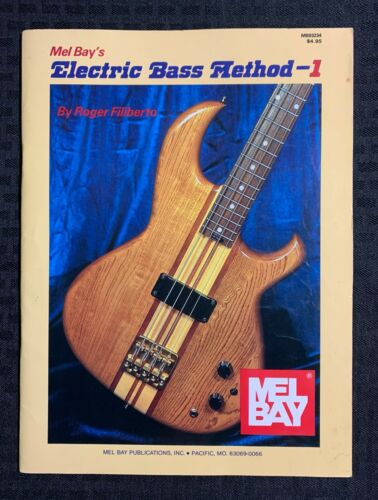
While I was not big on teaching theory and more about playing by ear and feel, there was always one bass guitar instructional book that I felt was essential. Mel Bay’s Electric Bass Method–1 by Roger Filiberto. Mr. Filiberto was a stringed-instrument teacher in the New Orleans area from the 1940s until his death in 1988. He wrote this book, originally titled Mel Bay Presents The Electric Bass, back in 1963 when the bass guitar was relegated to either a lackluster guitarist or an upright bass player that needed to expand his/her worth. This was just before Beatlemania, so when that hit, the bass guitar became cool like Paul McCartney. Thus, this book became extremely popular.

I remember getting a copy around 1981 when I got my first bass. The original editions had a pink cover with 60s-era drawings. By the 1980s, when the title changed, the cover sported a photo of a modern-style bass. However, the inner pages had not changed. They still showed Filiberto playing weird Hagstrom bass with strange controls, as well as graphics that were definitely not computer-generated. The thing is, this book provided (and still provides) a wealth of information to the beginner bassist. Looking through it now, probably 10 years since I last opened it, I still see how valuable the lessons are, especially with basic note and sight reading.

I wish that I still had my copy of this book
The newer version

I also found a few other Mel Bay bass books. The company put out a Value Line of instructional book/CD combinations back in the 1990s that unfortunately they have discontinued. These were geared more toward specific styles of music and consisted of just a few pages of examples to copy. These usually sold for less than $10.00, and the funny thing is, I have seen them going on eBay or Amazon for a lot more, or being sold out fast.

One other book that I found was The Everything Bass Guitar Book. This was one of those “Dummies” type of books that were popular a few years back. While it did provide a decent amount of instruction, much of the book is dedicated to other factors related to the bass guitar, including famous players, what type of bass/amp to purchase, practice tips, and how to audition for a band. In other words, the book for someone who says to him/herself, “I want to be a bass player” and doesn’t know where to start. I probably picked this book up at a cheap price just for the heck of it.

Which leads me to my next thought. Whenever I was teaching bass or guitar, or just talking to someone about practicing their instrument, I would always recommend that, if you were at a rummage sale or used bookstore and you came across some instructional books or videos on the cheap, buy them! While I wouldn’t pay full price for a video on heavy metal guitar if I’m playing bluegrass music, if there is a video in the bargain bin for a buck or two, go ahead and get it. Watching the video, you may learn a thing or two about your current playing. I have a library full of books and videos for guitar, bass, banjo, fiddle, mandolin, and dobro that I can always reference if need be. And it didn’t cost me that much.

While my teaching days are pretty much over, I still enjoy seeing younger people, or even older people starting out, having fun learning a musical instrument. The pandemic forced a lot of people to stay at home and, in turn, find new things to do like learn a musical instrument. I hope that most of them chose to continue to play now that we can get back out and mingle with other people.

Chew on it and comment.

Design a site like this with WordPress.com
Get started