Categories
Musical Instruments

Do Not Buy Cheap Guitar Gigbags!

After finishing my Ambertone guitar, I ordered a low-cost gigbag for it, as I was not expecting to take it out for playing, it was just going to be stored in the corner of a room for a while, perhaps to be sold when I needed a few bucks. I purchased a Chromacast electric guitar gigbag from either eBay or Amazon (I can’t remember), got it a few days later, and put the thing in my spare bedroom.

That was about a month ago. A few days ago, I wanted to do some finishing work on the Ambertone (basically, lining the body cavity with copper shielding, I’ll cover that in a future blog) and pulled the gigbag out of the corner. As I was unzipping the bag, I found that the flaps were not opening up properly. Then I started feeling a sticking as I opened the bag a bit more. Sure enough, the inside of the gigbag had adhered to the guitar itself in a number of places on the front and back of the body.

The inside of the gigbag was made of a really cheap vinyl, not cloth that I find on most other gigbags. Now I knew this wasn’t a great gigbag, not much better than a heavy-duty trash bag with a zipper and pocket on it, but I would think that it would at least not stick to the guitar finish after only a month.

Years ago, I pulled my Peavy T20 bass out of storage. It had been in its hardshell case for a few years without opening, and was in a closet that did not have great temperature/humidity control. The foam padding had stuck to the guitar and strings, and it took me a full day to clean it off. This Ambertone situation was quite similar, only that it had been in the bag for only a month, and the bedroom was temperature and humidity controlled.

Anyone who works with guitars a lot knows that vinyl does not work well with various lacquers used on guitar finishes, especially older guitars and mandolins. This is not supposed to be the case with polyurethane finishes. In fact, I googled “vinyl and polyurethane guitar finish” and found very little stating that there was a risk. Anyway, I spent about an hour last night with Goo Gone and a plastic paint scraper getting the residue off. Some spots required a little bit of elbow grease.

I have other gigbags around the house, and I checked the lining on them. Almost all had some form of cloth lining. I may have talked about this before in a previous blog, but there was a time (remembering Mars Music again) when you could get a quality gigbag for around $10.00. Yeah, they were most likely made in China or Vietnam, but they served the purpose. Today, gigbags are more the norm than hardshell cases, fully padded and with some durability. Of course, one can expect to pay well over $60.00 for a decent bag. When the guitar is not even worth that, why pay that much?

Well, in this case, I know that I shall invest a little more for a gigbag. Even if the guitar is not worth much, investing in a gigbag for more than $40.00 should be considered. If purchasing in-store like at Guitar center, open the bag up to see what the interior is made of.

Chew on it and comment.

Categories
Bluegrass Music Musical Instruments

US-12 Yard Sale 2025/SEMBMA Picnic 2025/Misc.

This weekend was the US-12 Heritage Longest Yard Sale, so I took Friday off from work and did the drive. This year, I started driving west from Dearborn, but as expected, the set-ups really weren’t available until I reached Saline. I went as far as Allen, Michigan and turned around. Of course, I had to hit Randy’s BBQ in Brooklyn, MI for the famous Godzilla Sandwich (Google it!).

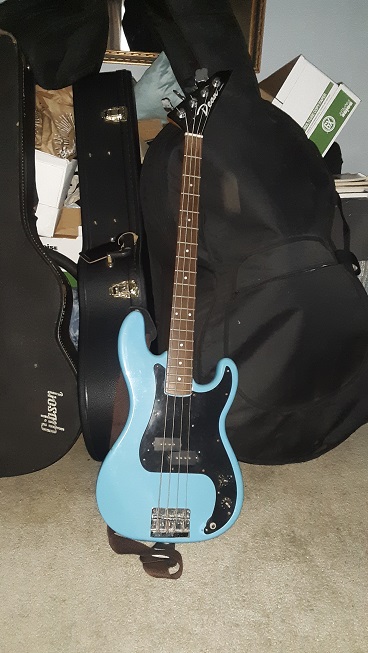
I didn’t get many bargains, as there was not a lot offered as far a music-related stuff. I got a gig bag and an empty Gibson hardshell acoustic guitar case, but the only real bargain (maybe) was a Dean electric bass.

I purchased it on the way back home and didn’t really look at it closely. For what I paid ($60.00), just about any cheap bass would be a decent buy. Once I got it home, I took a better look. The neck, body, and hardware are definitely a Dean model, but it looks like the pickguard and pickup were replaced with a generic setup, which doesn’t properly fit the body. I’ll most likely patch it up in places (like removing some stickers on the back of the body) and sell it off.

The Southeast Michigan Bluegrass Music Association had its annual picnic and Hall of Honor ceremony Saturday. Not much to talk about here, only that we are still in need of young pickers to receive scholarships. Two current recipients showed up for the afternoon jam session, along with a few older members. I have never been much of a jamming enthusiast for myself, but I know how others enjoy it.

I received a nice email from my friend Sister Clare Marie of the Sister Servants of the Eternal Word convent in Alabama (https://luegra.design.blog/2020/08/07/nuns-performing-bluegrass-and-diversity/). It seems that they are in need of some more material. Looks like I need to get finished with some of my incomplete bluegrass gospel songs.

This morning I got the new Billy Strings/Bryan Sutton live CD. I cannot wait to throw it on the player and give a review, which will come probably next week. Also, I got the call that my Cirrus guitar is finished, so I’ll be picking it up next weekend.

Short and sweet for this week, Chew on it and comment.

Categories
Acoustic Guitars Musical Instruments

Signature Series Guitars: Are They Worth It?

Earlier this year, Martin Guitars released not one but TWO Billy Strings Signature Dreadnaught guitars, a D-28 and D-X2E. Both have the designs from and backing of Strings himself, and have many similar features while obviously differing in others.

Both guitars have a slightly shorter 25-inch scale, which Strings wanted instead of the 25.4 inch scale, basing it on Tony Rice’s Santa Cruz guitar, along with a 1.72-inch nut. The remaining features on the D-28 are based on Strings’ 1940 model that is his main instrument. This includes the rosewood back/sides, herringbone trim and bone nut/saddle. The D-X2E features a built-in pickup, soundhole string tuner, and high-pressure laminate back/sides. As expected, the prices are drastically different, with the D-28 going for about $3,799.00 and the D-X2E at about $899.00.

Signature series guitars have been around for decades, and Martin is not the only manufacturer to participate. Fender, Gibson, Ibanez, and others have produced numerous signature models. Martin has put out models name plated with artists such as Elvis Presley, Eric Clapton, Johnny Cash, Ed Sheeran, and Judy Collins among others. These are usually in limited edition amounts, and in many cases, become more valuable as the years go by.

However, are they worth it, just because they have a famous guitarist’s name on the label? That is highly debatable. In most cases, the features consist mostly of cosmetic differences. It seems to be a decision for purchase between a player (who will be sweating, picking, and grinding into the fretboard every day) and the collector (who will most likely never play it and just store it for investment purposes). But I highly doubt that getting one will make you play exactly like the artist.

In the case of the D-X2E model, the standard model goes for about $699.00 at various outlets, and an internet search shows them going for as little as $449.00 used. The $200.00 extra for the new Billy Strings model will include the shorter scale and the built-in tuner. Looking at prices for various used Martin X models, they tend to stay the same over the years, if not lowering a bit. I was fortunate enough years ago to sell my DXM model for the same price that I paid. Actually, I see that the DXM is going for more than I paid nowadays, but this could be that the model was still being made at the Nazareth, PA factory. Today’s X models are mostly being produced in Mexico. With Strings’ name on it, we can only wait to see if there will be any collector value on it. However, both Martin and Strings have stated that this is meant as a roadworthy guitar that will see a lot of picking.

As for the D-28, just about all models through the years have gained value, as long as they are well maintained. Prewar models can easily go for over $100,000.00, even if not in tip-top shape. A new model will go for about $3,000.00, give or take a few hundred dollars. The few features on the Strings’ model may not justify the nearly $3,800.00 price tag, but again, while a few players with money to burn may consider buying it, the majority of purchasers will be the collectors.

There’s no doubt that Strings has had an amazing impact on the guitar world, especially in the bluegrass field. I am sure that he has inspired hundreds of young people to pick up a guitar and start forming chords. I do see the D-X2E being a decent seller for Martin, and even the D-28 selling some to collectors. As much as I love and respect Strings, would I consider purchasing one of these models? Highly unlikely, unless I got an unbelievable bargain on one. My acoustic guitar arsenal is already packed. I have my treasured 1991 Martin D-28, the Sevillana 2208, and the Blueridge BR-OS that serve as my most-played models, along with a Blueridge BR-OM that has a pickup installed in case I do any solo performances. Add to that a few Yamaha and Jasmine acoustic guitars that I have gotten at garage sales and have fixed up to sell off. I also have the Cirrus dreadnaught that I am having specially built for me with a shorter scale, similar to these Strings models. So another acoustic guitar in the house is right now out of the question. But I won’t say no to anyone wanting to gift me one!

Chew on it and comment.

Categories
Bluegrass Music Musical Instruments

The Music Link Closure: Are Tariffs to Blame?

The big news in the bluegrass instrument field this past week is the closing down of The Music Link Company (https://themusiclink.com/), producers of Recording King guitars and banjos along with Loar mandolins. While this news has not been covered in regular news, and not even much in the music industry news, it has been widely discussed on bluegrass-related chat groups and podcasts.

The company employees were handed their termination papers on July 7, with only a few office staff remaining to clean things up. One of those employees, Greg Rich, helped establish The Music Link in the US while working with instruments coming out of China through the AXL factory. He currently owns the trademark names of Recording King and Loar, and at this time, there is no word on if these brands will continue to be produced.

Recording King and Loar had proved to be quality instruments at generally affordable prices, especially for bluegrass jammers looking for something that can hold up better than beginner acoustic guitars, banjos, and mandolins. I have a Loar Honey Creek F-style mandolin I purchased about a year or so back (https://luegra.design.blog/2024/01/20/so-why-did-i-buy-another-mandolin/) that I totally love because of its warm bite when playing chords. I have played Recording King acoustic guitars and have been impressed for the price going, especially the Dirty 30s line. Basically, these brands were in direct competition with the Blueridge/Bristol guitars and Kentucky mandolins marketed in the US by Saga Music.

While the current tariff war going on between the US and other countries, particularly China, may seem like the main reason for this closing, Rich has stated that it was only the final straw, as poor management through the past decade is mostly to blame. And while tariffs can be to blame for the rising cost of guitars in recent times, it is hardly the main reason, as prices have been rising over the past few years and tariff laws have not fully gone into effect, if at all.

Over the past few years, plenty of brick-and-mortar music stores have closed down for good. Sam Ash is probably the most well-known of this dilemma, with hundreds of mom-and-pop independent stores also closing across the US. There are a lot of factors. During the COVID shutdown earlier in the decade, stores were forced to shutter by local health ordinances, while people being shut in their houses were looking for something to do. Thus, they ordered instruments from the internet, and companies like Wal-Mart and Amazon, as well as music-specific online companies like Sweetwater, flourished. Fender and Gibson soon got into the online-order business (that is how I purchased by Fender Meteora a few months back [https://luegra.design.blog/2025/06/07/the-fender-meteora-has-arrived/]) and have continued this sales process with success, even with the pandemic scare long over. Adding to that, a lot of those sales during COVID are probably being sold on Craigslist or at garage sales because now people are back outside and have lost interest in learning to play a guitar, so the used market is a bit saturated.

Bigger music stores like Guitar Center have had to revamp their sales strategies (https://luegra.design.blog/2025/03/16/guitar-center-times-they-are-a-changin/), and the only smaller music stores to continue tend to be ones that have a great reputation with customer service and repair history. Online companies like Glarry have risen their prices gradually even before the COVID pandemic. When I purchased the GT502 acoustic guitar about five years ago, it was $45.00. Today, the guitar sells for $90.00. All of the company’s products have gone up drastically over the past few years. When I purchased the guitar, the internet was filled with positive reviews of the Glarry products for the price. Now, I rarely see any mention of Glarry in any musical instrument chat groups.

So far, products from Saga Music have not seen too much of a rise in price since the end of the pandemic. That is not to say that they have not become more expensive. I have seen the price of Blueridge acoustic guitars nearly double in the past decade. For example, I purchased a Blueridge BR40 about eight years back new for around $225.00. Today I did a search online, and the cheapest price I could find was $399.00. The more expensive models have seen a similar jump in price. This is most likely why Saga brought in the Bristol brand to try and get the beginner customers.

As for the DIY kits that I have taken an interest in recently, there has been little change in price, although there have been a very slight increase. Moreover, I do not see the big discounts in brands like Glarry and Ktaxon instruments on Amazon that I saw about a year ago. Also, a recent search on Wish.com for “electric bass guitar” produced about one-fourth the results that were there a year ago, and prices jumped about 25%.

So will the tariffs have a big impact in the near future on foreign-made instruments in the near future? Only time will tell. I believe that there will For a feature interview with Rich, go to https://bluegrasstoday.com/greg-rich-talks-banjos-and-the-demise-of-the-music-link/.

Chew on it and comment.

Categories
Musical Instruments

Getting a Kid Interested In Music — On the Cheap!

Christmas is coming up fast, and it is always tough thinking of gifts to get someone, especially children, that they can use for more than a day, may be interested in using long term, and are somewhat age appropriate. If you know me, I always recommend something involved with music. Getting a youngster interested in music will benefit in the long run with creativity, attention development, and as some scientific studies show, can help in school with studying and learning.

However, investing in a musical instrument can be expensive, and as many parents know, it may result in a guitar, clarinet, violin, or piano never being used and eventually gathering dust. So how does one get a child, or even an adult, interested in playing music on the cheap?

The Five Below stores that appear in numerous strip malls and shopping centers around the country may be a quick oasis. A lot of us already know how reliable these stores can be for last-minute gifts such as T-shirts, candy, toys, and other unique items. While I was in one a few days ago to find another Christmas item for my brother, I noticed that it had a few musical items that may pique the music curiosity of some children, and of course, the items won’t break the wallet.

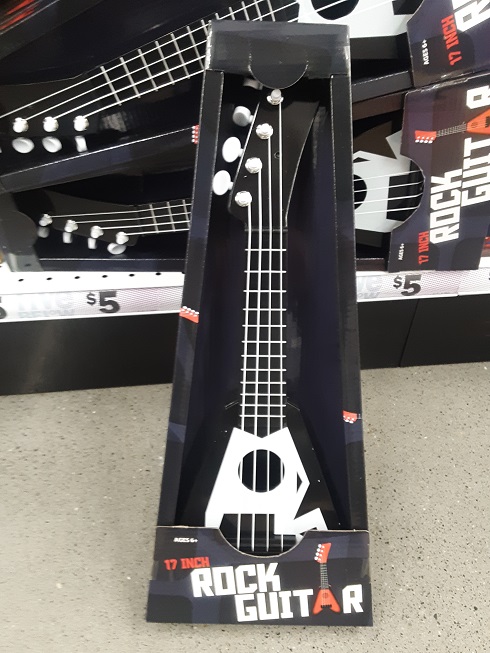
First, there are a number of different ukeleles available, usually plastered with cartoon characters or designs that more attention was paid to than the actual quality of the instrument. Now I am not a big fan of ukeleles, but they made a big surge of interest a few years back, and many people started picking them up to learn on. The ones available at Five Below are hardly pro instruments, and they will probably get banged around against walls and furniture more than plucked. Moreover, the features such as tuning gears and strings are not high-quality, so don’t expect it to stay in tune or sound good at the outright. However, it may get a youngster interested in a string instrument, and if enough attention is paid, a better ukelele, or even a small guitar, violin, or mandolin may be in order soon enough.

The miniature keyboards have been around for decades, thanks to companies like Casio, and have been useful musical tools for hobbyists and pro players alike. I still have one that I purchased probably 30 years ago and I still play around with. Thanks to advanced technology, mini keyboards that would have been pushing $100.00 back in the 1980s are as inexpensive as $5.00 at Five Below. They usually have a half-dozen different sounds that can be engaged at the push of a button, and also come with a simple drum machine built in so that one can play to a rhythm pattern. These little items are always great to get a child interested in creating music, and even adults tend to have fun playing with them. Heck, back in the days when I was an electronics geek, I would re-wire these things to be able to plug into a guitar amp or PA system so that a band’s keyboard player had one for his/her arsenal.

If one doesn’t mind a lot of pounding with hopes of having the next Ringo Starr or even Buddy Rich in the family, there is the simple drum set. This consists of usually three drum heads, a rudimentary cymbal, and a pair of small drum sticks. This is not a Tama or Ludwig professional drum set to be sure, but for hundreds of dollars less, it may get a child interested in percussion once he/she gets involved in a music program at the elementary school.

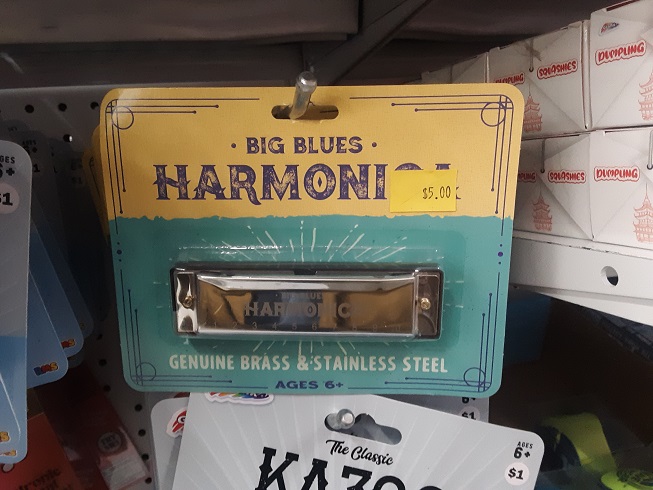
Finally, there is the old standby, the harmonica. It was my first musical instrument, and I still have a few that I play when I get a creative idea going. My brother, who was never really into playing a musical instrument, has started playing around with one in his 60s. We know that these instruments have been around since the American Civil War, and soldiers in every war since then relied on them to bring a little bit of musical comfort when resting near the battlefield. They are pretty easy to learn on once one understands the pattern of reeds in each hole. While professional harmonicas can run several hundred dollars, simple ones can be had for, yes, $5.00 at Five Below. This instrument has always been a go-to gift for anyone who has even a slight interest in music.

Of course, there are many videos on YouTube that can instruct beginners on these or any other instruments that are on hand. And if for some reason the child loses interest in the short time, there is not a lot of money lost.

Chew on it and comment.

Categories
Musical Instruments Old-Time Fiddle

Longest Yard Sale/Old-Time Fiddler Covention 2024

Apologies for being a day late, but this weekend was the one that I visit both the US 12 Longest Yard Sale and the Michigan Fiddlers Association Old-Time Fiddlers Convention.

Friday was the day for the year sale. While they advertise it going from Detroit to the western border at New Buffalo, things don’t start to really show up until after Saline if you travel west on the road. Nothing for knick-knacks this year for me, but I did pick up a few music bargains.

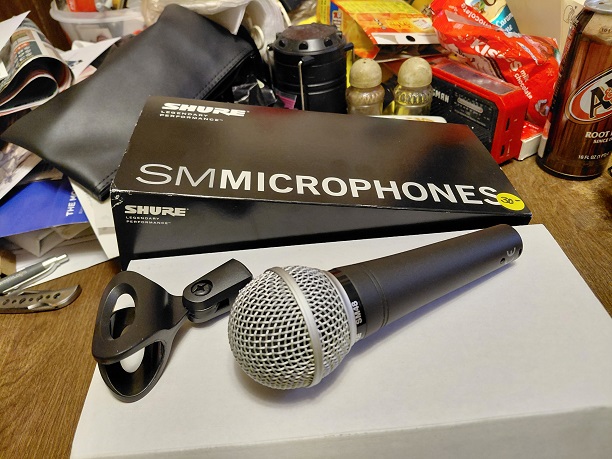
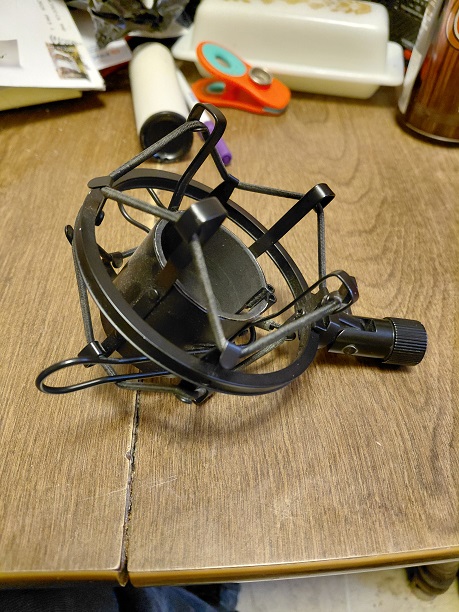
  • MXL 770 large-diaphragm condenser microphone. I really have no need for one of these, as I just sold off a similar one last year and have an older MXL model that I still keep. However, it was a good price, and it was never used, with a shock mount still wrapped up in plastic. I am sure that I can re-sell it and make a few dollars.
  • Kustom KLA 10 guitar practice amplifier. Again, I have a few small practice amps already, but I picked it up for next to nothing. These are pretty good, reliable little amps, as Kustom has been putting them out for years. I will probably do a review on this next week.
  • Jasmine by Takamine S-35 acoustic guitar. I did an overview of my experiences with Jasmine guitars in a previous blog (https://luegra.design.blog/2023/09/30/jasmine-guitars-the-good-as-well-as-the-bad-and-ugly/). This particular guitar was made while Jasmine was still a part of the Takamine company. These are high-quality beginner guitars that can hold up to models costing a lot more (these go for about $100.00 used), and it came with a high-end Road Runner case/gig-bag. I paid $60.00 for the package, which is nearly what the gig bag cost new. The guitar was hardly touched. The seller told me that he purchased it for his daughter in high school and she lost interest rather quickly. When I got home, as I was cleaning out the gig bag, I found some lyrics that the girl must have written while she was still interested in playing and performing. Very cliché lyrics about breaking up with a boyfriend, but I had to smile that she at least tried to write a song. I have another S-35, and I will look at selling at least one if not both in the near future.
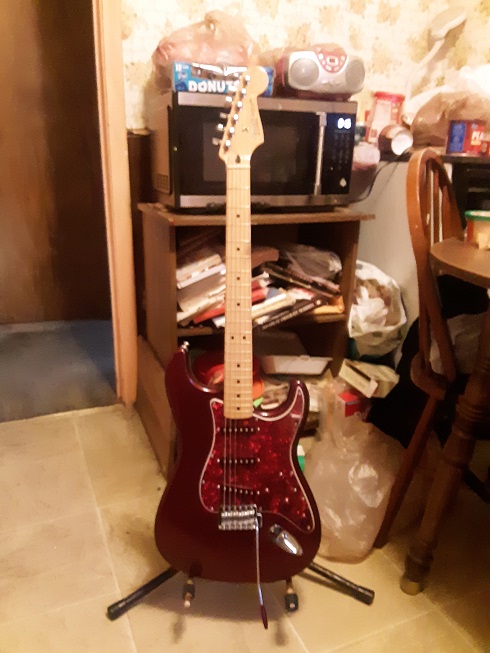
  • 2002 Made in Mexico Fender Stratocaster. Despite being over 20 years old, it still had the cellophane on the pickguard and wammy bar cover. All I can figure that it sat for all of that time because the nut is cut too low on the B string, so the original owner never bothered to fix it. That’s a $20.00 job if I do it myself, probably $50.00 or so if I get a shop to do it. We shall see if I budget my time, and it’s not like I have to do it right away. I still got a decent deal on it, and while I don’t play electric guitar much, I know a deal when I see it.

There is not a lot of music equipment available along the strip of sales, mostly clothes, old toys, and possible collectible antiques. But I have been going every year since before COVID, and I will surely take the day off from work to go again next year.

Saturday I spent a few hours at the Old-Time Fiddle Convention in Hastings, Michigan. While this is not a big event, those that attend for the three days are extremely loyal fiddlers interested in old-time music and jamming with others. I probably could have more time there, but traffic accents and construction took a lot of my Saturday morning time. I caught the end of the Sing-Along workshop by Glen Warners, then watched the Michigan Fiddle Tunes workshop hosted by Dave Langdon. Dave is a great old-time fiddler, playing left handed. However, his instructional skills are less than satisfactory. While the class worked on two simple fiddle tunes, and most everyone there were competent with the tunes, Dave tends to just play a part of the tune and then have everyone join in. There is very little discussion on notes, and he doesn’t even give a count to start the song, he just jumps in and expects everyone to catch what he is doing. There were a few instances that students had to point out that he wasn’t following the sheet music verbatim, but said that he had his own style. Fortunately, everyone in attendance was very friendly and appreciative of the workshop.

I was able to make a simple video of the Langdon workshop with my older video camera (I’m still having problems with the video camera I purchased last year, and the instruction manual is all in Chinese, so I still have a lot to learn with it). I will post it on my YouTube page later this week.

I would love to see more people at the convention. Unfortunately, Hastings is not that easy to drive to, and people interested in old-time fiddle music are usually going to hit more popular events such as Galax in Virginia. The MFA doesn’t do much to advertise the event either, so attendance depends mostly through word-of-mouth from previous attendees. I have chatted this event up to many other bluegrass musicians and fiddlers, but just about everyone feigns interest. I do plan on going next year, as well as hitting the old-time fiddle contest in New Boston this October.

Chew on it and comment.

Categories
Bluegrass Music Musical Instruments

Tidbits #6: Hand Massager, Instrument Prices, Meeting Other Bluegrassers

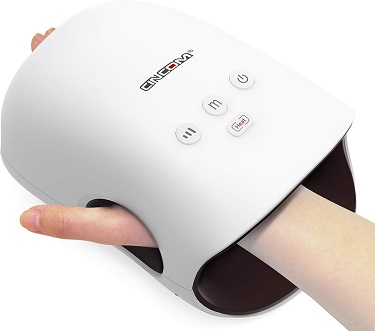
During the guitar workshop at the Charlotte Bluegrass Festival last month, some of the discussion centered on hand therapy, such as caring for aches and pains from carpal tunnel and other discomforts. Dalton Harper stated that one of his therapeutic reliefs is an electronic hand massager. They are about the size of a cantaloupe cut in half, and you put your hand in the device for 10-15 minutes for stress relief on your fingers and palm. These devices range from $25.00 to over $100.00 on Amazon, and Dalton recommended paying for the better quality models.

When I got home, I checked Amazon, and found one on sale for around $80.00. I got it in this week, and tried it out. Wow! I thought that it would merely vibrate around on your hand. No, this contraption squeezes, pushes, and rubs your hand and fingers the way that a masseur would work it. On the model that I purchased (Cincom CM-026H) has two different modes of massaging, three different intensities, and optional heat. It is USB rechargeable, and even comes with some disposable gloves in case you put on hand cream beforehand.

I get carpal tunnel in my hands from typing at work, and the first finger on my left (fretting) hand is starting to get arthritic. I have used a small hand warmer on it for temporary relief, but this hand massager made it feel good for hours afterwards. I highly recommend any musician starting to feel some aches in the hands to get one of these items.

Ever since coming back from Charlotte and helping out at the kid’s petting zoo, I have been checking out prices for guitars, mandolins, fiddles and dobros for beginners. Guitars are pretty easy to come by for under $100.00, as well as mandolins. Of course, these will not be great quality instruments, but with the right setup, they are easily playable. Fiddles can be more hit-and-miss. The one that I purchased from Glarry last year turned out to be a great buy. However, I have seen ones that were higher priced that what I paid that sound horrible. Moreover, fiddles need a lot more work setting up than a guitar. You could spend $100.00 for a student violin, then spend more than that just to get it in playable condition.

Then there are the dobros, or resonator guitars. The cheapest that I saw for a beginner model was over $200.00, and that is one with a rounded neck, more suitable for playing like a regular guitar. They can still be played lap-style, but you will have to get an extension nut available at Elderly Instruments or on eBay for about $10.00). In fact, for the absolute beginner, a good alternative may be to just get a regular acoustic guitar and use one of these nut extensions until an actual dobro can be purchased. As for a true square-neck dobro, expect to pay over $500 for a beginner model. I figure that with all of the interest in learning a musical instrument during COVID, prices for guitars and other instruments would go up just like everything else with inflation. With sommer here, I’ve been driving slow past yard sales to see if there are any guitars or violins no longer being played that I can snage for a cheap price. Of course, the US 12 World’s Longest Yard Sale is coming up in early August!

Finally, here’s a unique story. A friend of mine was hit by a car while riding her bike earlier this week and was checked into the hospital a few blocks from my house. When I went to see her, a male nurse named Chris took me to her room. He saw that I was wearing one of my many bluegrass-themed T-shirts, and it turned out that he is a fan as well, which he plays mandolin and hits bluegrass shows when he can. I gave him my number, and we’re hoping to get together soon to do some jamming. Bluegrass fans are few and far between, so it was a pleasant surprise to find another one in the strangest of places.

Chew on it and comment.

Categories
Musical Instruments

Whatever Happened to the Roadie Rench?

I have had this gig-saving tool for probably three decades now. I’ve misplaced it a few times, but have always recovered it somehow. When I have had it available, it always went with me to any gig that I was playing, and I still take it when I go to bluegrass shows, just in case a performer needs to use it. I mentioned it in a blog back about two years ago (https://luegra.design.blog/2022/02/19/musicians-gifts-from-non-musicians/).

The Roadie Rench was extremely popular back in the 1980s and 90s. It was made by a company called Blackstar out of San Dimas, California. It is situated like a Swiss Army knife, and holds a phillips screwdriver, a straight-slot screwdriver, a string cutter, and hex keys for 1.5mm, 2.5mm, 3mm, 0.050″, 5/64″, 3/32″, and 5/32″. From my years of experience with this tool, it has saved the day in many situations.

It is NOT the everything tool. Moreover, it is not what a luthier would have at his shop arsenal. As the name implies, it is meant for gig and jam session emergency repairs. It has its faults, to be sure. It does not have a wrench for tightening either tuning gear, pot, or jack nuts. Of comments that I have seen, some have complained that it does not have a nut driver for Gibson necks. My only REAL personal complaint is that the string cutter is not great. It will cut wound strings on guitars, but has a tough time cutting both plain strings and heavier bass guitar strings.

With that said, for anyone with Fender guitars or guitars with the Floyd Rose-style tremolo systems, it does the quick fixes when needed. This tool was meant for the guitarist to keep in his/her pocket or gig bag instead of lugging around a bunch of tools that may never get used anyway. To be honest, one should have a good set of guitar repair and maintenance tools at home, and should check out all of the equipment for functionality before leaving the house to a gig.

Since the Roadie Rench came out, there have been a number of copycats manufactured by other companies such as Jim Dunlop, D’Addario and GrooveTech. These multi-tools have even improved on the original Roadie Rench by including said nut wrench and Gibson nut driver. Some even include a small ruler (I assume for measuring string height). But it was the Roadie Rench that started it all!

Back in April, as I was using the Roadie Rench at the SEMBMA Youth Scholarship Showcase on some instruments in the organization’s “petting zoo” (https://luegra.design.blog/2024/04/26/sembma-youth-scholarship-showcase-afterword/), I got to thinking that I don’t see the tool advertised much any more. I decided to do some Google searches, but came up nearly empty. An actual search on “Roadie Rench” pulls up adverts for the other similar tools, and a few old listings on Reverb and Zzsounds that show the pre-owned RR has already been sold. A search on “Blackstar” only comes up with a guitar amplifier company out of the UK. A search on “Blackstar San Dimas California” came up with only one possible lead, a LinkedIn profile of someone who supposedly owned the company until 2007. I messaged that person, so hopefully I will get some information in the next few weeks.

If you can find a Roadie Rench used somewhere for a few bucks, I recommend buying it. If not, consider snagging one of the copycats through Sweetwater or Guitar Center. They are a worthwhile first-aid kit for string musicians at a gig. Also, consider buying a full set of screwdrivers, the proper nut driver, a few wrenches, pliers, wire cutters, and some other necessary guitar maintenance tools to keep at home for regular guitar maintenance, as well as the book Guitar Setup & Maintenance by Chad Johnson (Hal Leonard Publishing ISBN 978-1-4584-1824-1) for reference.

Chew on it and comment.

Categories
Musical Instruments

Ktaxon: The Latest Cheap Guitar Brand

Last week, I blogged about a guitar kit that I got from a company called Ktaxon through Amazon.com (https://luegra.design.blog/2024/05/19/inexpensive-guitar-kits/). The kit was cheap, but it also had its flaws, especially with the rough wood texture on the body and neck. I decided to do a little more research on the company.

It seems that Ktaxon is a company in China that does not specialize in any one area. They sell furniture, kitchen appliances, hardware, luggage, and toys along with musical instruments. If you go to its website (www.ktaxon.com) and click on the Musical Instrument tab, most of the items that pop up are from the Glarry line of guitars and basses. In fact, they even post the reviews of the Glarry models that also appear on the Glarry website (www.glarrymusic.com).

There are some instruments shown that are listed as Ktaxon, but do not have any logo or Ktaxon wording on the guitar headstocks. Moreover, there are also other musical instruments, such as violins, percussion, and keyboards, that are similar to the Glarry line. This information makes me assume that Ktaxon musical instruments are built at the same factory as Glarry stuff. Looking at the photos, the guitars and basses have the exact same appearance on the headstock, with only the name Glarry appearing on that brand’s equipment.

The real difference seems to be price. The Ktaxon models tend to be cheaper than Glarry in most cases, a few dollars more with other cases. I can only assume that either the Ktaxon models are Glarry rejects, or that Ktaxon got a better wholesale deal with the factory. You may remember that I wrote about the Glarry GT502 acoustic guitar back in 2020 (https://luegra.design.blog/2020/03/02/glarry-gt502-good-first-acoustic/). At the time, this guitar was priced at $45.99 including shipping. That guitar now goes for $89.99, double the price!

Ktaxon appears to be not dealing with acoustic guitars, but it is selling the same violins as Glarry. There are also guitars and basses that Ktaxon does not have on its website that are beings sold under that name on Amazon.com. They look like Glarry models, but are again missing the nameplate on the headstock. The Ktaxon guitar kit that I purchased a few weeks ago does not appear on the Ktaxon website, so I assume that Ktaxon only sells more sellable items on the website, and hocks “clearance” items on Amazon.

From reviews I have seen on YouTube, the Ktaxon basses are what is expected from a cheap bass. Not that great, but useable for the price. I have been considering purchasing a short-scale “Fender Bronco-style” bass put out by Ktaxon only sold on Amazon for $59.99 mainly to see how good it would be for the beginning young student. If I do purchase one, I will definitely post a review here and possibly on my YouTube channel.

Keeping it short, I have a lot of other stuff to do this weekend for Memorial Day.

Chew on it and comment.

Categories
Lutherie Musical Instruments

Amnon Weinstein RIP

On Friday of this week, I learned of the death of Amnon Weinstein at the age of 84. He was a luthier living in Tel Aviv and had run his violin repair shop there since 1986 when he took over the business with the passing of his father. Like his father, the trained his own son to become a luthier as well. He was known internationally for his repair work, but it was his special work over the past four decades that brought him his highest acclaim.

Amnon’s parents left Lithuania (part of the Soviet Union) in 1938 and moved to then Palestine. They left almost all of their relatives behind, most of whom would perish in concentration camps during the Holocaust. His father was a violinist, but found better work as a luthier, and trained Amnon to do the same. He did not know much about his relatives that died in the Holocaust, as his mother was very subdued about that information.

In the 1980s, as he started taking an interest in learning about his ancestry, a survivor of Auschwitz came to his shop for a violin repair. As Amnon took the violin apart to assess damage, the body had ashes inside. It turned out that this man had played the violin at the camp to prisoners that were being led to the gas chambers, and these ashes were remnants from the air near the crematoriums. It moved Amnon so much that he went on a quest to locate violins that had been played by Jews either imprisoned or used as slave labor.

The book Violins of Hope by James A. Grymes covers the stories of these musical instruments, as well as what happened to the owners. Amnon restored over 60 of these violins, and founded an organization, also called Violins of Hope, that loans out these instruments to professional musicians to perform with at concerts and educational programs. His work was highlighted in a 2016 PBS documentary.

I happened to come across the above-mentioned book through a clearance house and ordered it. The stories within the text of prisoners, slave laborers, and resistance fighters who relied on the violin to provide comfort was so moving, I was brought to tears. While I have read dozens of books on various aspects of World War II, including the Holocaust, this book was especially moving, due to my love of music as well.

The Violins of Hope collection has toured all over the world and has received enormous praise. Amnon’s work in restoring violins that were close to disintegrating from age and lack of care is extraordinary. I implore you to read more about Amnon Weinstein in this New York Times article (https://www.nytimes.com/2024/03/21/arts/music/amnon-weinstein-dead.html), as well as find a copy of the Violins of Hope book. You will learn how important music is to a culture, even in the the most tragic of times.

Chew on it and comment.

Design a site like this with WordPress.com
Get started