Categories
Acoustic Guitars

This Dreadnought NEEDS to come to the U.S.!

I network with a lot of musical instrument sales and distributors in Asia, especially China, through LinkedIn. I have been keeping an eye on many of the guitars that they are marketing. There are a few of them that have piqued my curiosity, and I have stayed in contact with these reps to find out if they will be shipped to the US.

One rep from Deviser Guitars in China named Cherry and I have stayed in contact for over a year now. Recently, the company started making a solid-top dreadnought acoustic that, from the photos, appeared to be a quality product. The Sevillana 2208 “looked” like it could compete with other mid-line dreadnoughts, but a lot of stuff coming out of Asia is a gamble.

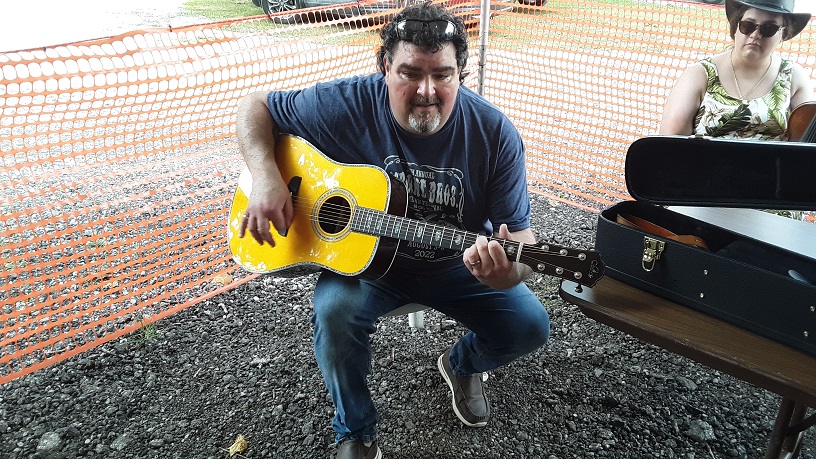
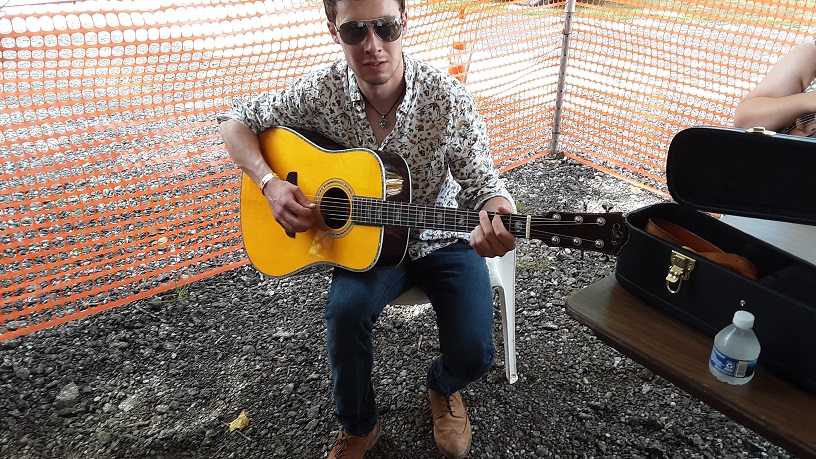
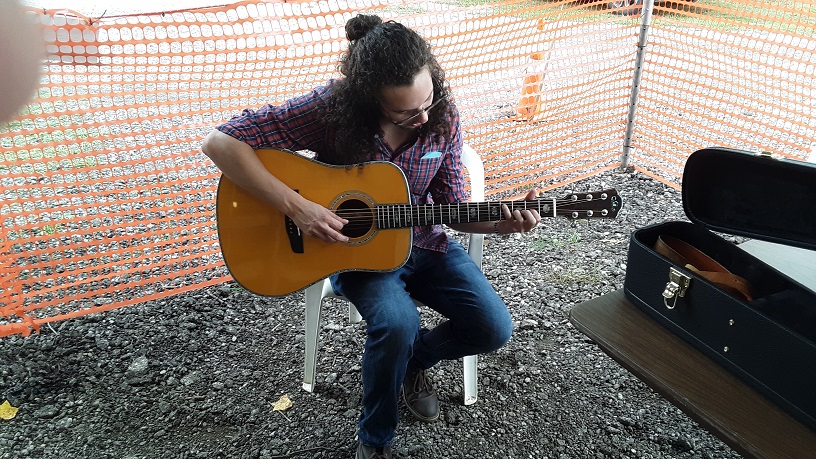
I worked with Cherry a bit, and last week, a 2208 was on my doorstep. HO-LEE-COW! This thing is amazing to say the least! Solid top and sides, bone nut and saddle, abalone binding, and a fantastic tone! This guitar would fit in with any bluegrass situation. I did a quick side-by-side test against my Martin D-28, and this 2208 stood up to it!

The only fault that I had was that there was no pickguard. As long as I have played in the bluegrass community, I have never seen a Martin without a pickguard. Cherry informed me that the standard for its company is to ship without a pickguard, but one can be installed at the factory. I do plan on installing one myself on this, preferably a tortoise-shell style.

I have stayed in contact with Cherry regarding getting these guitars to the US, providing her with contact information on wholesale distributors here as well as possible marketing options. From what she tells me, this guitar would retail in the US for about $1,149.00. In my experience with playing and pricing acoustic guitars, that is a good deal, as a sale price would probably bring it down to under $1,000.00. Martin doesn’t have a guitar near that price in its Standard series, and the 2208 has a way better tone than any Martin X series guitar. Blueridge guitars (made in China and distributed through Saga) has a number of comparable guitars in price, but not in tone!

Deviser markets mostly lower-cost guitars, ukeleles and accessories, but I have yet to see them in the US market. This Sevillana line (there are other models, mostly with unique slopes in the lower bouts of the body or strange cutaways) is geared toward more professional players. This 2208 would be a welcome addition in the bluegrass market, particularly with players who cannot afford a Martin or upper-tier Taylor. I cannot see why a US distributor has not looked into this yet. Perhaps Deviser should consider going the route of Glarry and handle its own distribution and sales in the US with strictly mail order.

I hope to have a video review of ths 2208 on YouTube before the end of summer, and plan to take this guitar to a few bluegrass festivals and let some other guitarists try it out. I do feel that there are buyers out there – they just need to be aware of it being available!

Chew on it and comment.

Categories
Comedy Music Industry

Bil VornDick/Larry Storch RIP

This past week, a stalwart in the bluegrass community passed away. Someone who was better known for being behind the mixing board. Bil VornDick had spent over four decades getting the most clear acoustic sounds from instruments as an engineer and producer.

He started work with Marty Robbins and Loretta Lynn back in the late 1970s after graduating from Belmont University, and helped bring in the new acoustic sound in the 1980s, working with Marc O’Connor, Bela Fleck, Jerry Douglas, and Alison Brown to name a few. After working with Alison Krauss on her first two albums, he continued to work many newgrass-style artists, including New Grass Revival, Peter Rowan, and the Country Gentlemen. He also worked with a number of mainstream country and bluegrass artists, including Marty Stuart, Trace Adkins, Del McCoury, Sweethearts of the Rodeo, and Rhonda Vincent.

His work totaled 40 Grammy nominations and nine wins. He produced the critically-acclaimed Clinch Mountain Country, which showcased Ralph Stanley singing duets with Bob Dylan, George Jones, Gillian Welch, Patty Loveless, and Vince Gill among others. He also campaigned to save the famous RCA Studio A in Nashville from demolition.

I talked with Bil a number of times. I interviewed him for an article on a Jom Lauderdale album he was producing, and met up with him a number of times when the IBMA World of Bluegrass conferences were still in Nashville. He was always laid back, and was very open about his techniques on engineering in the studio. He will definitely be missed by so many bluegrass and Americana artists who relied on him to get the best sound on record.

Comedic actor Larry Storch passed away Friday at the age of 99. This guy could portray any character needed. He was an amazing actor to say the least. Probably one of the most underrated actors ever. His list of film and television appearances, as well as cartoon voice-overs, is endless.

However, he is probably best known as Corporal Randolph Agarn in the 1960s television comedy F-Troop. That series only lasted two seasons, but each episode was a gem. His dialogue interplay with Sergeant O’Rourke (played by Forrest Tucker) was comparable to any great comedy team. He was the butt of many jokes on the show, and would dress up in any costume to make sure that the scene would get the greatest laugh. His comedic greatness was great in dialogue, physical slapstick, and facial expressions.

I have always loved his work, and always thought that he was not given his dues, often taking lousy roles in cheap horror movies and sub-par television shows in the 70s and 80s. True fans of the Golden Age of Television knew of his talent, and that talent can never be replaced.

Chew on it and comment.

Categories
Bluegrass Music

Missing in Action: The Bill Monroe Docudrama

What ever happened to the making of that Bill Monroe docudrama?

That thought came across my mind a few days ago. If you don’t remember or haven’t ever heard about it, back around 2012, there was in the works a movie that was going to tell the life story of Bill Monroe, based on the book Can’t You Hear Me Callin’ by Richard D. Smith. The film would star Michael Shannon as Monroe, with appearances by Tim Blake Nelson as Lester Flatt and Ricky Skaggs as Uncle Dave Macon. T-Bone Burnett and Ronnie McCoury were picked to head the musical direction, and even Uncle Pen’s fiddle would be featured as an instrument in the soundtrack.

The news was applauded in the bluegrass community, and even a rudimentary trailer was made (of which I cannot find a copy on YouTube or any other website), but just as fast as it was announced, the drawing board disappeared. An article on the Bluegrass Today website in 2019 stated that work was still in progress for the film, but nothing has been heard since from Hollywood.

It seems that a story like Monroe’s is too boring to the masses. That is because very few really know his story. This is a guy who created a style of music that is still viable today, yet was also an adulterer, was prejudiced against younger bluegrass performers (he refused to work on the Nitty Gritty Dirt Band’s Will the Circle Be Unbroken album, which later became one of the best-selling country/bluegrass albums of all time), and had dozens of musicians leave his band for various reasons, but mostly due to his poor payments to them. His relationships, both personal and professional, were the makings of a classic soap opera.

Yet this man is still held in the highest regard in the bluegrass community, like a demigod. I advise anyone to read either the book mentioned above, or one of the many other biographies on Monroe to see what his life was like. Just the story of how his prized Gibson F-5 mandolin was destroyed by an intruder (most likely a past mistress who sought revenge) into a thousand pieces, and the Gibson Guitar factory literally took each toothpick-sized piced and carefully put the instrument back together.

Monroe is just one amazing character from the bluegrass realm that deserves a docudrama made about him. There are so many others whose lives would make a great Hollywood movie:

Doc Watson: He became blind at the age of two, yet he was still able to do chores such as chop wood at his homestead, and tuned pianos on the side. He first played electric guitar in a Western swing band, but was discovered by musicologist Ralph Rinzler, who convinced him to tour the folk circuit playing fiddle tunes on an acoustic guitar. He toured with his son Merle starting in the mid-1960s, and appeared on the above-mentioned NGDB album, which revived his career in the folk and bluegrass communities. His son was killed in a tractor accident in 1985, and he established the world-famous Merlefest music festival two years later. He received seven Grammys, the US National Medal of the Arts, and a doctorate from Berklee College of Music before his death in 2012.

The Carter Family: AP Carter, his wife Sara, and her sister Maybelle (who was married to AP’s brother) began performing together in the mid-1920s. It was their travel to Bristol, Tennessee in 1927 to record for Ralph Peer (who also recorded Jimmie Rodgers at that same session period) that they became legendary. AP would travel the entire Appalachian area to find relevant folk songs that he copyrighted, and the sisters would perform then as a duo, with AP occasionally adding background vocals. Maybelle’s style of “scratch” guitar picking would influence thousands of guitar players in later years. AP’s long time away from home led to Sara having an affair with his cousin, which lead to a 1936 divorce and the dissolving of the band in 1944. Maybelle would continue to perform with her daughters Helen, Anita, and June, would appear on the NGDB album mentioned above, and many of the band’s songs have become staples in bluegrass, country, and Gospel settings.

Dave Evans: An amazing bluegrass singer and banjo player, he performed with a number of popular bands in the 1970s. His life changed dramatically around 1989 when, after an incident involving his son being shot at by some troublemakers, he took the law into his own hands. He was convicted of assault by a court that would not provide him counsel, and served six years of a ten-year sentence. During that time, he gained the respect of his fellow prisoners with his soulful singing and songwriting, and would return to the bluegrass stage upon his release until his death in 2017.

I can think of a few others, such as Roy Lee Centers, Carter Stanley, and Hazel Dickens, that deserve more than just a brief documentary. Hollywood is too much into the cash-cow filmmaking of superhero continuum and fast-and-furious car chasing garage. The docudrama Walk the Line about Johnny Cash was successful enough that it should have motivated more films similar in structure.

I leave you with a clip from a live Dave Evans performance. Dig that voice!

Chew on it and comment.

Categories
Bluegrass Music

Today’s Live Sound Engineering Ain’t What It Used To Be (Or Am I Just Getting Old?)

This past Thursday, my buddy Ken and I went to see Bela Fleck and his My Bluegrass Heart touring band at the Detroit Opera House. Bela is a living legend on the banjo, and his touring band is the cream of the crop as well, with Sierra Hull on mandolin, Michael Cleveland on fiddle, and Bryan Sutton on guitar among others. Special guests who warmed up for the show were dobro master Jerry Douglas and mandolin god Sam Bush.

First, the good parts. Having Douglas and Bush warm up with their respective touring bands was phenomenal! Both are beyond professionals as far as musicians, and know how to talk to their audiences. Bush always looks like he’s having fun on stage, and has no problem making light of bad situations, such as when his fiddle was feeding back too much to play properly. Both he and Douglas were on their game as far as soloing, and their band members were just as supportive.

The same can be said about all of the members in Fleck’s troupe. No screw-ups during solos, and everyone worked with each other. One of the personal highlights for me was when Fleck pulled out John Hartford’s banjo to play on a beautiful song. Anyone who knows me knows that I am a John Hartford fanatic, and his banjo has a very distinctive bassy tone that I have never heard from any other five-string.

Now comes my disappointments with the show:

  • Way too long on a weeknight. I’m getting old, and probably 3/4 of the crowd there was hovering around my age as well. The show started just after 7:30 pm, but Ken and I left at 10:30 barely able to keep our eyes open, so we missed the all-star jam at the end with Douglas and Bush joining the band. Those who stayed surely got their money’s worth, but I just cannot sty up late any more on a weeknight, knowing that I have a rough day at work the next morning.
  • Lousy sound mix. I am not sure that the Detroit Opera House is meant for that type of music. Douglas’ and Bush’s bands were mic’d as well as running direct into either amps or the mixing board. Fleck’s band all just used microphones. Either way, everything sounded muddy and awash. The electric guitar in Douglas’ band sounded like a blanket was covering the amp. When Fleck and his band came on stage, the mix was horrible! It was like the sound engineer did not have a clue. Now granted, Ken and I were in the upper balcony, and it could have been mixed for the main floor seating, but there was no clear distinction between soloists and backup playing. I was watching Sutton and Hull, and both of them had the smarts to back off from the mic when not soloing. Still, it was getting stressful to listen to!

Both Ken and I used to do live sound work for bands years ago, back when you manually adjusted volume and EQ by sliding or turning knobs on a mixing board. Most live shows today use computer tablets to adjust levels, which I have find to be a terrible alternative to the ear. Good sound engineers have certain “touch” to the sliders that work. Moreover, many times I feel that the engineers don’t adjust to the rooms. During a soundcheck, the room is usually empty, save the musicians and engineer. However, once the room fills up for the show, the crowd makes the room acoustics totally different. The bodies soak up a lot of the high end of the sound, and reverberations are a scramble from the main floor to the reflections near the ceiling. I truly think that today’s sound engineers do not study the science of acoustics, and just go for one sound, hoping that nothing feeds back.

My ears got burned out years ago doing live sound, and I quit as soon as I realized that all bands sounded the same to me. I would occasionally help out my friends at Rock City Eatery when they had a band play at their restaurant, but that was as a favor and not as a job. Plus, as Ken commented to me at the show, I do not miss doing the roadie work of winding cables and pulling up duct tape from the stage. I know that live sound engineering is not an easy job, but to be good at it, a person has to study it and practice just like a musician has to practice his/her instrument.

Her is a clip from that show someone in the audience recorded (which, by the way, they asked people not to do).

Chew on it and comment.

Categories
Folk Lifestyle Folk Music

Quitting My New Job/Appalachia/The Pressley Girls

A few weeks ago, I talked about getting a new job at a law firm doing writing and editorial work. Well, after two days, I quit that job, and fortunately, my old job took me back.

The old saying, “If it sounds too good to be true, it probably is” was the case for this one. It turned out that I would be doing more research, especially phone calls, and on the second day, I was sent to work from home and expected to use my personal phone for business work. Uh, I’m not going to have some angry client have my personal phone number and calling me in the middle of the night ranting. This was another lesson learned.

I should have figured out that it was a questionable job when they called me back only an hour after I took the writing test. The firm was probably looking for any warm body that responded to their initial requests. Alas, it was partly my fault for falling for the trap too easily. You live and learn, and I have lived a long life but still haven’t learned enough. My advice is to approach each new job opportunity with caution. I am way too old and have been through enough crap at jobs to keep taking it. While my current job is not the type of work I prefer doing, I am surrounded by good people, so that makes up for a lot of it. I walked back into the office on Friday, and dozens of people were hugging me and welcoming me back. That mean a lot.

Now on to music stuff …

While I have lived in the Detroit area all of my life, and I don’t think that I could ever permanently leave the city life, I do have a love for learning about life in the Appalachia area of our country. I recently came across two YouTube channels that have been on my watchlist for a few weeks now. The first is Celebrating Appalachia. Tipper Pressley is an award-winning blogger that invites viewers into her life, showing us how to garden in the hilly land as well as how to prepare popular and traditional dishes for breakfast and dinner. So many of the recipes are mouth-watering, to say the least! She has also spent a lot of time documenting the lifestyle of her area in Appalachia, especially curating the language of the locals. The slang and phrases of the people in the area is poetic in so many ways, and while some of it is familiar, much of it is strangely beautiful to hear.

Tipper is also documenting the history of her hometown of Brasstown, North Carolina, particularly of its musical heritage. This leads to the second YourTube channel you need to check out. Tipper is the mother of twin girls, Corie and Katie Pressley. They are known in the folk and bluegrass community as The Pressley Girls. Checking out their YT channel shows them performing a number of old-time fiddle and folk tunes, as well as clogging and dancing. They also post entertaining videos of their everyday life, whether it be thrift shopping, making soap, or hiking. All of the videos highlight their vernacular, which is musical in itself. The girls have that unique Southern charm, and you will enjoy every minute of their adorable videos.

Chew on it and comment.

Categories
Bluegrass Music

A Look At Bluegrass Jam Tracks

In the arsenal of books, videos, and recordings that I have for practicing guitar, bass, mandolin, and fiddle, I have two CDs that I have used on-and-off for a while. The first, Band In The Pocket! #4: Country/Bluegrass seemed to be an afterthought by the company that put it out (Five Feathers Music), because most of its CDs were geared toward rock musicians. This CD has 10 selections, and they are generic arrangements of tunes ranging from Zydeco to alt-country to Gospel. There is really only one bluegrass selection on this disc – a breakdown backing track in the key of C.

The other disc is a bit more useful. Let’s Jam: 23 Country & Bluegrass Jam-Along Tracks (Watch & Learn Inc.) is more evenly divided between country styles and bluegrass. While the country arrangements are again generic, the bluegrass tracks are songs that are standards in jam sessions, such as “Nine-Pound Hammer,” “Old Joe Clark,” and “John Hardy.” A few of them are presented at two different speeds for beginner and intermediate practice. Unfortunately, I don’t think that this CD is available any more from the company (www.cvls.com) but you may find a copy used through eBay or another source.

I have talked previously about the three bluegrass jam videos available from Pete Wernick’s website (www.drbanjo.com), which are pretty good to follow along. Moreover, YouTube will always have some video that one can jam along with. Along with a number of instructional videos, the Bluegrass Unlimited YouTube channel regularly posts jam tracks of popular bluegrass songs in the most familiar key, and you can control the speed of the video for your own comfort (https://www.youtube.com/channel/UCxNYVomNcDI-5mrOy3KgoHA).

One online resource to check out is GrassTrax (www.grasstrax.com). For each song offered, one can select a recording with a particular instrument removed from the mix, be it guitar, bass, banjo, fiddle, or mandolin. The bundle package will include the selection played at various speeds so that the student can gradually build up playability at the normal speed. While a number of bluegrass standards are offered, there are also some more modern bluegrass songs available, such as “1952 Vincent Black Lightning” and “Wild Horses.” Note that each download of a track will cost $1.99, but if you are on the email list, GrassTrax sends out a monthly free download from a song of its choosing. I have a few of these downloads on my computer, and I guess my only complaint is that the key is not always the same as either the most popular recording by a bluegrass artist or the most common at jam sessions.

Post-pandemic bluegrass jam sessions are not that plentiful. Add to that the cost of gasoline (at the time of this writing, a gallon of regular unleaded fuel is about $5.25 in Michigan), and it is becoming more difficult for bluegrass musicians to get together to jam. These jam recordings are helpful, but nothing beats working with other live musicians to feel the spirit.

Chew on it and comment.

Categories
Musical Instruments

It’s a “Mini Me” Guitar!

Another short but sweet blog.

A few days ago, I received an email advertisement from a novelty company called Axe Heaven Store (https://store.axeheaven.com/). This is a company that makes miniature copies of famous guitars, including ones used by Slash, The Beatles, and Jimi Hendrix. The advertisement sent to me was showing the store’s recent addition: a copy of a B.C. Rich Warlock model used by a character on the Netflix television show Stranger Things.

Not my cup of tea, but the thing does look professionally made, not some mass-produced piece of crap. I decided to check out the website, and along with dozens of rock-oriented miniature guitars (and even drum kits), they have a few acoustic related miniatures. There are a few D-28-style guitars, a banjo, and a mandolin! Unfortunately, these seem a bit more amateurish in manufacturing, although the Gibson Hummingbird does look like they put the time in to making it look realistic. By the looks of things, Gibson may have a licensing deal with Axe Heaven.

I would love to see a miniature replica of Bill Monroe’s road-beaten F-5 mandolin, or perhaps a true, more to realistic miniature of Earl Scruggs’ Gibson Grenada, or maybe even Jerry Douglas’ Signature Beard dobro. I would consider buying one of thise and putting it on my desk at work instead of a family photo (since I really don’t have a family).

I leave you with a great guitar face off recorded a few years ago with Josh Williams, Andy Falco, and Chris Eldridge.

Chew on it and comment.

Categories
Bluegrass Music

New Job: No Festival Time

Well, in two weeks I start a new job! It is a job that I have been wanting for probably 20 years. I will be doing what I do best, writing and editing, for a well-known law firm here in the Detroit area. The lawyer that I interviewed with was really impressed with the writing test that I did, so much so that the HR rep called me about two hours later to offer me the job.

Great! However, this means that for the next six months or so, I will not have any vacation time. It’s not like I’ve been able to take any time off for the past two or three years anyway because of COVID. Yeah, I was laid off for nearly a year, but I couldn’t go anywhere. Festivals were cancelled, and no hotels were open if I wanted to travel. The only time that I had off was two weeks in October when I actually had COVID, and I spent 20 hours each day sleeping.

So this summer, I will be missing some festivals that I planned on attending. The Milan Bluegrass Festival this year is a five-day event, and I am hoping that I can at least hit the Saturday shows. I also hope that I can hit the Hillsdale Old Time Fiddlers Convention in mid August for that Saturday. However, that is about it, most likely will be until after Christmas.

Bittersweet indeed. However, I have gotten used to not having vacation time or any time to myself, for that matter. Caring for my 89-year-old mother is a full-time job in itself. I get very little help from my sibling, who is retired and is always on vacation himself. I have stated previously that I am attempting to sell my house and move back to mom’s so that I can take better care of her. I have had very little time to even clean that place up. I still have lots of music equipment to get rid of.

I know that I will never retire, I will most likely work until I am in the grave. However, I would like at least a few days to myself once in a while. My last “vacation” was September 2019, and that was volunteer work at the AmericanaFest. Since then, any day off I have had has been used to do car repairs, doctor’s visits or take mom to her doctor. I just means that I have to look way ahead for restful opportunities and plan accordingly.

As an aside, I appreciate the recent rise in hits both at the Luegra blog site as well as my YouTube channel (https://www.youtube.com/channel/UC0ID9z7AR8-0WWGDM-TrsIA). Your checking in and comments are greatly appreciated.

Chew on it and comment.

Categories
Musical Instruments

Guitar Straps: That’s Why I Make My Own

This past week at the Songwriters Anonymous meeting, I was listening to a conversation between two other members. One was talking up a storm about his new leather guitar strap that someone in Ohio made for him that was emblazoned with his nickname. When asked how much it cost, the reply was $200.00. The other person walked away, saying, “I’ll just stick with my Fender one.”

You have to figure, for $200.00, one could actually buy a decent back-up guitar, or a decent beginner mandolin, or a good electric guitar effects pedal (or two), let alone cover the high cost of gasoline and food these days. One can get a cheap woven/vinyl adjustable guitar strap for about $10.00 these days. However, I have never had good long-term luck with those, being that they wear out quickly, and if the vinyl should come in long-term contact with a guitar finish, it can actually damage it.

My first true leather strap that I purchase probably 30+ years ago cost about $25.00. It was pretty basic, no frills or stitching, but it was better than the woven/vinyl types. I put some strap locks on it, and after a while, I noticed that the weight of the locks along with the guitar was tearing the leather to uselessness. The leather was pretty thin, and I saw that real quality leather straps were twice as thick, but they were at least $50.00, a lot at that time for me.

At the same time, I was also doing Civil War reenacting. At an event that I attended which had a number of different time periods participating (Civil War, Native American, French & Indian War, War of 1812, etc.), one of the sutlers there (sutlers are people that sell period clothing and accessories for the reenactors) that catered to Colonial America reenactors was selling large pieces of leather hides, which many use to make leather accessories such as pouches or moccasins. It gave me an idea, and I purchased a few long pieces for a decent price.

When I got back home, I traced one of my thin leather guitar straps on a sheet of cardboard, then cut that template out and used it to trace and cut out straps from this thicker leather. From the original pieces that I bought then, I probably made about 10 leather straps with a cost of less than $10.00 each. Since then, I have kept an eye out for bargain leather remnants at other events or on eBay to continue to make more straps. I have even kept the sizeable scraps for end pieces on my mandolin straps (I’m not sure if I mentioned it before, but I have learned to weave leather laces to make mandolin straps, which I sell on Craigslist). I have my own leather straps on all of my guitars, banjo, and mandolins, and have given other out as gifts and even sold a few.

My first strap is still with me after about 30 years. It holds up my Martin D-28, and shows its age with a number of scuffs and sweat marks. However, it still does the job, and has probably outlasted 10 or more cheaper straps. I’m not willing to pay a high price for something that I can make myself for a lot less cost with the satisfaction that I did make it myself.

Chew on it and comment.

Categories
Folk Music

Trae McMaken’s Michigan Fiddle Website

Trae McMaken is not necessarily a household name with Michiganders or area fiddlers, but he probably should be. A fiddle enthusiast and Michigan history buff since childhood, he has been combining his two loves over the past few years to make sure that the story of fiddle music in Michigan will not be forgotten.

Trae recently started up an educational website called Michigan Fiddle dot com (www.michiganfiddle.com). The site takes a look at Michigan folklore and how much fiddle music has had an impact on the state. In the Introduction page, he cites that fiddle music played in the past few centuries around Michigan has many ethnic influences. Because the state was continually a location for commerce, from fur trading during the 18th century, logging and copper mining in the 19th century, and the automobile industry of the 20th century, so many people came to the area from many foreign lands and brought their music with them. One characteristic of Michigan fiddling is the stress on use of the music for dance, with less flowering and ornamentation and a dedication to keeping a beat for the dancers.

The site includes many papers and articles written by Trae, as well as links to articles and recordings related to Michigan Fiddlers over the past century. He has assistance from a number of state fiddlers and historians to supplement his work. One such person, Jim McKinney, I have known for a number of years, and have supported his and his son’s work at the annual Michigan Old-Time Fiddle Championship held at the Huron Applefest in New Boston every October.

When one thinks of old-time fiddle music in America, thoughts usually go to the music of the Appalachian Mountains, the hills of Kentucky, or the plains of Texas. Michigan rarely gets a notice. Henry Ford loved fiddle music, and Beaver Island off the west coast of the northern Lower Peninsula has always had a strong fiddle presence. I am keeping this week’s blog short, as I would want you to instead spend some time checking out Trae’s site dedicated to Michigan old-time fiddling (see above link). Also check out this video of him performing some Quebecois music for the dancers.

Chew on it and comment.

Design a site like this with WordPress.com
Get started