It is getting depressing that, every week, it seems that I am writing a personal eulogy for some musical artist that passed away the previous week. This past week was no different, but hurt a bit more because of the band the man was in as well as how long it took for the internet press to announce the death.
Rick Buckler was the fantastic drummer for the British punk-rock band The Jam. He passed away at the age of 69 on February 17. Unfortunately, I did not learn of his passing until a few days ago. This is the sad state of the modern press, especially with the speed that news can travel on the internet. Music news outlets like Rolling Stone are too worried about what today’s stars are wearing now instead of teaching today’s youth about where the music came from.
Buckler was an amazing drummer to say the least. Coming out of the mid-1970s British punk-rock boom, The Jam was not the typical three-piece unit. While most trios were just making basic beats and heavy distorted guitars with Neanderthalic thumping bass lines, The Jam gave groove to its speed. I have already praised the work of bassist Bruce Foxton in a previous blog (https://luegra.design.blog/2024/04/06/underrated-punk-rock-bassist-bruce-foxton/). Buckler made the drum kit an actual third musical instrument, not just the sound of someone banging on garbage cans. His fills were perfect, and he accented guitar and bass lines with perfection. Great examples are the band’s songs “In the City” and “Down In the Tube Station At Midnight.”
As the 1970s moved into the 1980s, The Jam’s sound matured, being influenced less by punk attitude and more into The Beatles and Motown. Buckler’s drumming style moved right along with the stylings, from the simplicity of “That’s Entertainment” to the R&B textures of “Town Called Malice.” One could be floored by Buckler’s continuous drum roll in “Funeral Pyre.”
Sadly, guitarist/vocalist/songwriter Paul Weller chose to disband The Jam in late 1982, which shocked Buckler. He didn’t speak to Weller for over 20 years, despite a number of public photo and television exhibitions dedicated to the band that they both made appearances. He performed in a few other bands in the 1980s and 1990s, some being semi-tribute bands to the original The Jam. By the year 2000, he pretty much retired from the music scene to become a carpenter and cabinet maker.
The Jam was one of my first loves of the punk-rock movement. They didn’t dress the part, instead going for the suit-and-tie look onstage that was heavily influenced by the 1960s bands The Who and The Kinks. As a bassist, I was enamored by Foxton’s bass playing, and as a frustrated hack drummer, I was blown away with what Buckler was doing on his kit. While I would have loved to see a Jam reunion, it was not in the cards. For Buckler, I am glad that he was able to leave his love of drumming behind and take on another love of woodworking.
Thank you, Rick Buckler, for giving me some of the best musical memories in my youth.
I just got the news this morning that David Johansen, the lead singer for the band the New York Dolls, succumbed to cancer on February 28 at the age of 75. While I was never a big fan of the band, I do realize how much of an influence it had on the oncoming punk rock scene in England, as well as the cult following it had on the wild New York music scene of the mid-1970s.
The band was out to make a statement. They combined R&B rhythms with straight-ahead overdriven guitars and overpowering drums and bass. Their songs were about rebellion, not politically but socially. With that, the members decided to dress to shock, wearing women’s clothing and makeup. The result was indeed shock value, but perhaps for the wrong reasons. Music critics loved the music, but art and entertainment critics looked at it as campy parody. Johansen was often compared to an exaggerated version of Mick Jagger.
The band produced a few albums, and had a memorable single with “Personality Crisis,” but quick, ill-directed fame had the members diving heavily into drugs, which caused the demise. The band broke up in 1975, but would be listed as influential to many bands after that, including the Ramones and the Sex Pistols, as well as graphically influencing dozens of hair-metal bands in the 1980s.
Johansen was too much of an entertainer to just walk away from even the dimmest of spotlights. He also enjoyed listening to jazz vocalists and cocktail lounge music, so around 1980 he took on the pseudonym of Buster Poindexter and performed lounge music around New York City. The persona became a hit, and with early MTV programming taking him and his videos on, including songse like “Hot, Hot, Hot!” and “Is That You, Santa Claus?”, Johansen received much of the recognition that his talent deserved.
He also delved into acting, appearing as the Ghost of Christmas Past in the Bill Murray comedy Scrooged, and co-starring in a remake of Car 54, Where Are You? Johansen’s over-the-top personality fit in with so many comedic roles that he performed, he could have easily worked in the acting end of showbiz a lot sooner than he did.
In the early 2000s, he announced that he was being treated for cancer. In 2004, at the urging of Morrissey, he partially reformed The Dolls for a performance in London. Year by year, members of the band had passed away, with this reunion including only three original members. Johansen was the last remaining living member.
I am currently finishing up reading a book entitled Please Kill Me by Legs McNeil. It consists of interviews with musical artists and scenesters from the late 1960s (Iggy Pop, MC5, Velvet Underground) through the 1970s (the Dolls, Patti Smith, the Ramones, Television) and how the drug-infested, crime-riddled, crazy music scene of that time had an impact on what was to come with the punk-rock and new-wave movement that was to come in the late 1970s/early 1980s. There are a number of quotes from members of the Dolls, and in just a few pages, one can see that the band imploded on itself due to drugs and personality differences. I recommend the book to anyone interested in the rock music movement of that time period.
Sleep well, David. While you may not have had the same impact as the Beatles or the Rolling Stones, you definitely were an influence on the music that was to come after you.
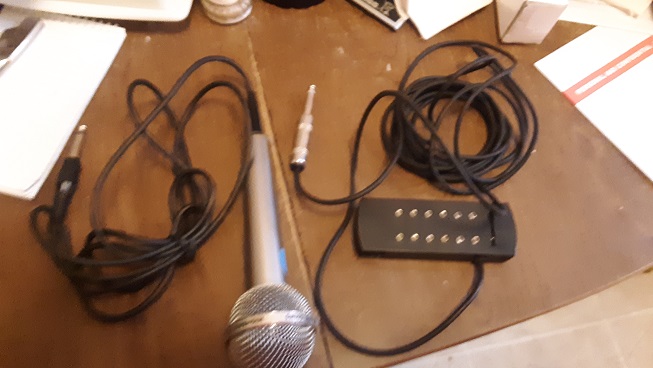
I went to the Livonia Amateur Radio Club Swap Meet this morning. I go every year, and while 90% of the items on sale is related to ham radio, I like to look around to see if there is any guitar/audio stuff I can get cheap, especially vintage microphones. I did pick up an old Radio Shack omnidirectional mic for the collection, as well as a Dimarzio acoustic guitar pickup, both for a few bucks each.
I also picked up an emergency radio, one that powers on solar or hand crank. You never know if you will need it if the power goes out.
I just wanted to cover three bluegrass-related YouTube channels that I came across recently. The first is World Bluegrass Day. This channel has been around since 2012, but for some reason, I only became aware of it recently, despite the number of times I have done searches on YT for bluegrass videos. Over 250 videos of bluegrass performances, interviews, and mini-documentaries are here, all of which are great to watch. One of the most recent uploads is “Jimmy Martin’s Wedding Video (1988).” It’s over an hour long, and the ceremony is strange to say the least. The bride looks young enough to be Jimmy’s daughter, and all of the Sunny Mountain Boys, along with J.D. Crowe and a few other musicians, stood in as his “best man.” More time was spent by Jimmy talking about his touring history than his bride. From what I recollect, Jimmy was never officially married, so this may have been a stunt. Anyone out there want to elaborate? Anyway, the channel is at https://www.youtube.com/@WorldBluegrassDay .
Cody M. Music is another channel that has been around for a while, but I only recently found it. Cody is a graduate of East Tennessee State University of its Old-Time and Bluegrass Music Program. He posts videos of acoustic guitar reviews and beginner lessons, including numerous shorts on easy licks and rhythm patterns. Some of the short lessons are slowed down to half speed so the viewer can learn it a bit more easily. Cody is using this channel to promote his online teaching program that you can purchase as a subscription. Some people wanting to improve on their bluegrass guitar playing may want to check this channel out at https://www.youtube.com/@codymmusic .
Southern Legacy is a true bluegrass supergroup. The members have been in numerous other bands, and get together occasionally for touring. Members include mandolinist Don Rigsby, banjoist Ron Block (of Alison Krauss & Union Station fame), and Josh Williams, my favorite flatpicker, whom I did a previous blog on (https://luegra.design.blog/2023/09/23/josh-williams-bluegrass-instrumental-genius/). The talent here is phenomenal, and I hope that they will be releasing some material soon. They are the cover story of the March 2025 issue of Bluegrass Unlimited. While there are a number of videos of this band performing on YT, they also have their own channel at https://www.youtube.com/@SouthernLegacyMusic .
So I wasn’t planning on watching the Super Bowl last Sunday, as I figured that the officials would make sure that the Kansas City Chiefs would be victorious (boy, was I wrong), so I surfed channels for a few minutes, about to give up on TV, when I saw that TCM was showing My Fair Lady.
This is my absolute favorite musical. With a good Broadway musical, the story, while important, should not be as memorable as the music that accompanies it. People leaving the theater or done watching the movie should be whistling or humming a song from it afterward. My theory on musicals is this: One good song – OK, it has its moments Two good songs – It may be worth watching again Three good songs – It is definitely something worth watching again Four or more good songs – A definite classic that you watch every chance that you get
With My Fair Lady, it goes beyond that in my opinion. Let’s start with the storyline. Based on the play Pygmalion by George Bernard Shaw, a pompous and arrogant professor of phonetics named Henry Higgins takes on a gentleman’s bet that he can convert a low-class Cockney flower girl named Eliza Doolittle into someone presentable to royalty. There is constant arguing and comical drama between the two, but in the end, he is successful. The conflict at the end is that Eliza is no longer recognized by her companions in the marketplace, and she feels lost, as Higgins acts as if his victory means he is done with his “project.”
The big difference in the play and the musical is, in Pygmalion, Eliza leaves Higgins, possibly to marry a male suitor Freddy. In My Fair Lady, both Higgins and Eliza have a change of heart and she returns to him, perhaps not romantically but to serve in some form of companionship.
Now for the musical. It originally opened on Broadway in 1956, with Rex Harrison as Higgins and Julie Andrews as Eliza. The storyline by Alan Jay Lerner was excellent, but even more beautiful were the songs, especially coming from the voice of Andrews. The score was written by Lerner and Frederick Loewe, which critics loved and audiences loved even more. At the time, it was the longest running musical on Broadway, and saw wonderful responses from US and British tours.
In 1964, a film version was produced, again receiving numerous accolades and awards. Harrison returned to his role as Higgins, but the part of Eliza was portrayed by Audrey Hepburn, in my opinion, the most beautiful woman that has ever graced the Earth. Even when she is a filthy poor flower girl, Hepburn’s beauty shines through, so when she is seen in her Ascot Gavotte dress or her gown for the Embassy Ball, she is amazingly gorgeous. The downside of this was, as Andrews was not in the film and the producers of the film were not confident with Hepburn’s vocals, most of her singing parts were overdubbed by the golden voice of Marni Nixon (who overdubbed the female singing for many film versions of Broadway plays).
There is a lot of trivial history surrounding the film, especially with the choice of Hepburn over Andrews for the movie version, which I will not get into here. I welcome you to go to IMDB.com and read some of the posted items. For such a production as this, one can guarantee that there would be a lot of conflicts and debates going on.
However, I am here to blog specifically about the music. This is a musical that definitely falls under the “four or more good songs” category. Many of you will probably recognize a few songs from the soundtrack but not realize that they were from the play. Of the many great songs in the production, there are at least six that I can think of that have become standards in the catalog of Western music, ones that professional singers still perform and have even become sing-alongs at schools and campfires:
“Wouldn’t It Be Loverly” “With a Little Bit of Luck” “The Rain In Spain” “I Could Have Danced All Night” “On the Street Where You Live” “Get Me to the Church on Time” “I’ve Grown Accustomed to Her Face”
These are absolute standards for any singer to be familiar with and wish to perform. I personally have sang all of them hundreds of times to myself, as well as some of them a few times to audiences or as audition material. These are the type of songs that you recognize when just the first three or four notes are played, and it seems everyone over 40 knows the chorus.
For the film, the producers brought in Stanley Holloway as Eliza’s father Alfred P. Doolittle, the underachieving dustman. Holloway played the part in the original Broadway play. Like Harrison as Higgins, Holloway MADE that part! No one could have done it better. He also performs two of the most notable songs, “With a Little Bit of Luck” and “Get Me to the Church on Time.” I could watch the film if only for his two performances. Classic in every sense!
If those aforementioned standards are not enough for you, there are many more songs within the production that people will fall in love with:
“Why Can’t the English?” “I’m an Ordinary Man” “Just You Wait” “Ascot Gavotte” “Show Me”
There’s a reason that this musical has had revivals as recent as 2019 in the US and 2022 in West End London. It is beyond a classic musical – it is textbook direction to what every musical produced after it should be compared. I recommend that you watch the film, go see the play if it is in your area, and pick up a copy of the soundtrack, be it the original Broadway cast or from the film. Your heart will have never received better medicine from a musical. I literally well up with tears of joy when I hear one of these songs if I have not heard them for a long period of time.
As you know, two weekends ago I was in Nashville for the SPBGMA conference. While the conference ends on Sunday, I like to stay an extra day to get some work done while I am there, usually co-writing with someone in town. Unfortunately, my co-writing friend got sick, so she had to cancel. I figured it was a lost day, so after doing some driving around town, I headed back to my hotel for a quick nap before dinner.
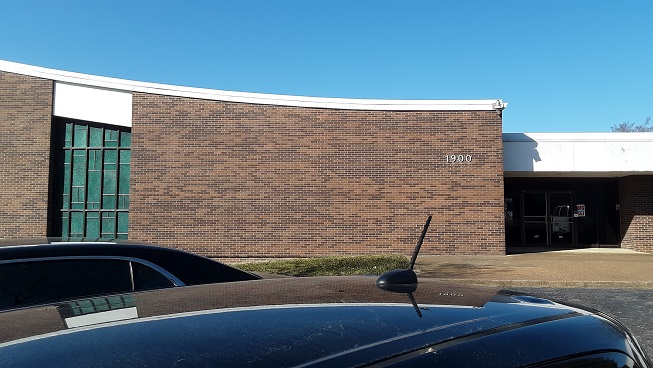
There’s a strip along the road near my hotel where there are a number of small industrial businesses, and a block off of this road (Elm Hill Pike) is the Gibson Guitar factory, where they make most of the electric guitars. About a half mile from my hotel amongst these businesses is a building that looks like a 1950s era church. I had not paid any attention to it before, but on this particular day, there was a sign outside that read “GUITAR SALE.” I was not about to let this slip away, so I pulled into the small parking lot and headed for the front door.
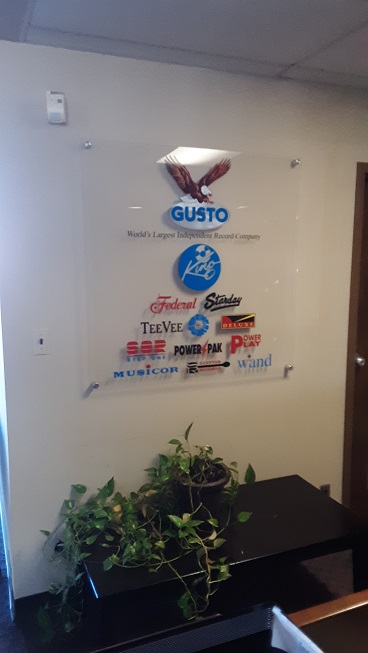
As I walked in, there was no one around, but my eyes caught a large sign on the wall by what looked like a reception desk, that displayed a number of old record companies, including Gusto, King, Starday and Federal. These were all labels from the 1950s through 1980s that had some of the best bluegrass, traditional country, and R&B acts on their rosters. On an adjacent wall was a number of gold records from the likes of Red Sovine and Marty Robbins.
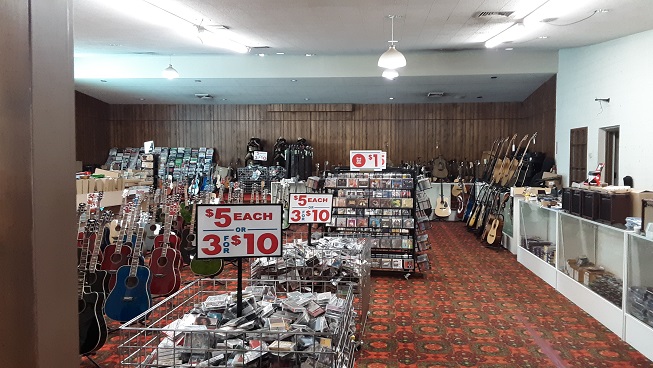
Wow! I had just entered a little piece of Heaven! Soon, a gentleman named Garry came into the lobby and showed me to a room that was all that I could hope for. There were racks of CDs, cassettes and vinyl, along with rows of guitars, ukeleles and other musical instruments. Some of the CDs were marked down to $1.00! I had to pinch myself to see if it was real! I texted my buddy Ken and told him that this was the type of place we would be running.
As for the guitars, most of them were the Urban brand, which is a make sponsored by country artist Keith Urban. When he started this brand, he was contracted with Yamaha to make the guitars, so the older models included the Yamaha tuning fork logo along with the URBAN name on the headstock. More recent models have an eagle on the headstock with the name, so I am not sure if they are still made by Yamaha. If they are, the price tag of $99.00 would actually be worth it, but I have way too many guitars in my house right now and am actually looking to get rid of a few, so I passed on those. They had some Urban practice amps priced decently at $39.00 and $49.00, but again, I don’t need any more practice amps.
Other musical instruments included some Jay Turser electric guitars that were priced at about what the going rate is on Reverb and eBay. The ukeleles were reasonably priced at $39.00, but I am not a fan of those. There were a few banjos that were priced above what I would pay. The counter display cabinet had some accessories, so I picked up a three-pack of harmonicas for my brother for $20.00.
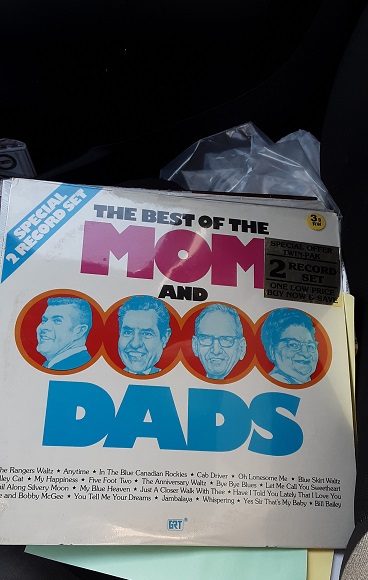
Then I turned my attention to the records. The vinyl was all $5.00, and I picked up a Charlie Rich album issued on Sun Records, one album by The Whites, and a Pickwick Records reissue of an old Bill Monroe album. I don’t have a turntable right now, but I could not pass these up. I also got an album called The Best of the Mom and Dads. This group was a quartet of older people that played old standards that old people would waltz to (did I say “old” too many times?). They used to advertise this album on late-night TV, and my brother and I as kids would laugh at the commercial. So of course, I bought the album as a gift for my brother as a joke. He got the joke.
I didn’t bother with the cassettes, as I don’t have a good player, and at $5.00 or 3 for $10.00, it wasn’t a deal for me. But diving into the dollar CDs was a treasure trove. Bluegrass albums from Stringbean, Lester Flatt, Reno & Smiley and Carl Story, as well as some compilations and instrumentals. Country albums from Cowboy Copas and Hank Thompson. R&B and blues albums from James Brown, Freddie King and Big Joe Turner, as well as some great compilations. All of these were reissues of albums that were on the above-mentioned labels. If I would have had more cash, I would have spent it!
I talked with Garry for a bit, and he told me that his current company, IMG Retail, oversees the end-marketing of the remaining stock from the labels. The company purchased the church in the 1980s to use as a warehouse for the music items. I made the recommendation that he consider contacting SPBGMA to set up a small table in the exhibit hall at next year’s conference, considering that the warehouse is only a half mile away from the hotel and he could easily unload a lot of the bluegrass CDs there.
If I get a few days to spare as vacation in the next few months, I am definitely planning to hit Nashville again and visit the warehouse. I plan on doing some research on Urban guitars to see if Yamaha is still contracted to manufacture them. If so, it might be worthwhile to pick up a few acoustics and re-sell them.
If in Nashville and interested in checking out this place, the IMG Retail warehouse is at 1900 Elm Hill Pike. Garry says that he currently plans to be open Monday-Friday 10am-4pm.
Last week I was in Nashville for the SPBGMA conference. Once again, I had a great time! I will be hitting there again next January, hoping to make even more connections. As I did last year, here are some of the good and bad points about the conference and Nashville:
QR Code Parking – I see some cities slowly getting rid of this nuisance, but not Nashville. I hit a downtown garage for 20 minutes and paid $7.00. Later in the weekend, I swallowed my pride and went to Elliston Place (more on that later), and the meter stated $1.75 for one hour. So I scanned the QR code, and then was charged another 68 cents for Travel Fee (my out-of-town license plate?). So now it is $2.43. I am in the restaurant for 20 minutes, and my phone shows a text that my time is almost up! I can see how they sucker people into paying more by this tactic.
Band Competition – There were a few good bands, but the one that I was most impressed with was Lake Side out of Madisonville, TN (www.lakesidegospel.com). The quartet performs mostly bluegrass gospel tunes, and it has some great harmonies. The guitarist for the band is Jonathan Manness, an old acquaintance that I knew from his playing with Valerie Smith & Liberty Pike. It was great seeing him after a number of years. I surely thought that they would place at least 2nd if not 1st, but they came in 5th place. For a list of the finalists, go to the Bluegrass Today website link (https://bluegrasstoday.com/2025-spbgma-international-band-championship-results/).
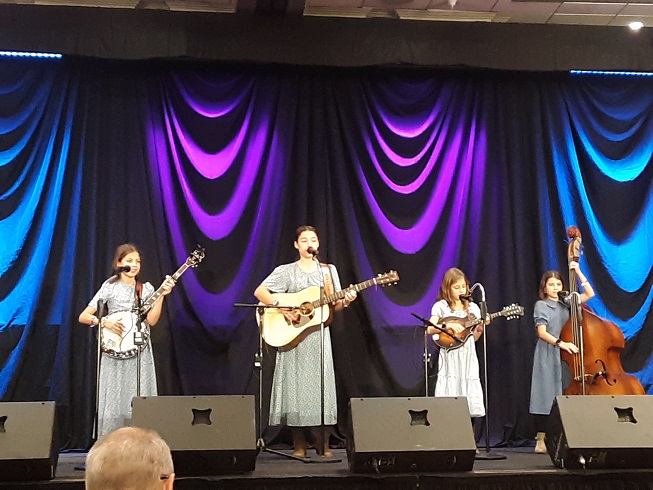
Alaskan Sunnyside Sisters – This band of young sisters was also in the competition, but did not make it as a finalist. Yes, they were still rough sounding and not truly professional, but I absolutely fell in love with them, as did much of the audience. They performed some bluegrass standards, reminding me a lot of The Peasall Sisters who performed for the O Brother, Where Art Thou? soundtrack. They are completely adorable, and are really enthusiastic to get better at their instrument playing and singing. I talked to their mother and told her that I would help in any way that I could to get them better. I also recommended that they listen to Hazel Dickens & Alice Gerrard music for some inspiration and song coverage. They made some good friends at the conference, including Whysper Stephenson, daughter of Larry Stephenson, who was more than happy to jam with them. I highly recommend that you check out some of their videos on their YouTube channel (https://www.youtube.com/@Alaskansunnysidesisters).
Hollace Oakes – I had blogged about this young fiddling prodigy a few months back (https://luegra.design.blog/2024/11/02/two-great-young-fiddlers/). I was hoping that she would show up at SPBGMA, as there are videos on YouTube of her at Galax and IBMA World of Bluegrass. I finally got to talk to her and her father late in the conference schedule, but told them that anything that I could do to help out her fiddling and potential career they should feel free to ask. I told her that it would be great to see her on the band competition stage next year, so hopefully she will be able to form a band to back her by then. She also posted a few videos of the week on her YouTube channel (https://www.youtube.com/@HollaceOakes).
Jamming – As expected, the four days of the conference saw a lot of jam sessions going on in rooms, the lobby and hallways. Because I was doing more networking for my songwriting, I wasn’t able to participate in any true jamming. However, some of what I heard was not only fantastic, but inspired me to write down some song ideas. If you go to YouTube and search “SPBGMA 2025,” I am sure that a few dozen videos will show up showing how great it was. Of course, my old body could not stay up too late to enjoy, so I had my earplugs in when I went to bed earlier than most others.
The Kaintuck Band – So this band was practicing in the room next to mine on Friday. I was in my room thinking that I had not heard any jammers playing one of my favorite songs, “Thirty Years of Farming,” by James King (written by Fred Eaglesmith). Sure enough, God strike me dead, within 10 seconds of that thought, the band next door kicked into it. It was like mental telepathy! Of course, I had to get my shoes on and go to their room and talk to them. Nice guys, the guitarist/singer was from La Grange, KY, where I usually stop on my way to Nashville to have breakfast at the Waffle House. I may have talked about this town before. The Main Street in town has active railroad tracks running right down the center, and there are videos on YouTube showing cars almost getting hit by locomotives. It totally reminds me of Mayberry on The Andy Griffith Show.
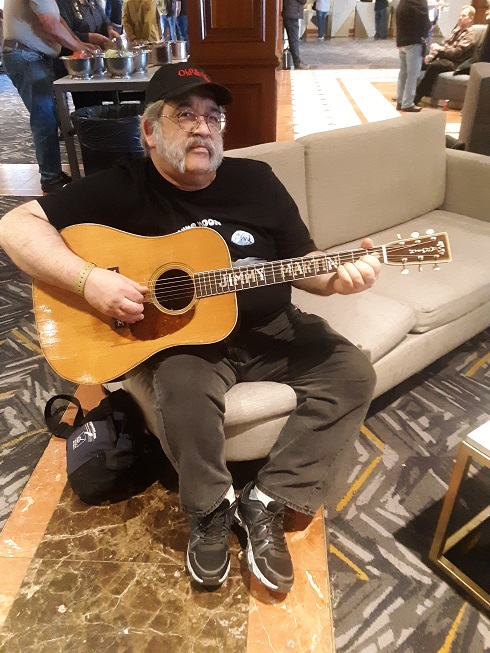
Jimmy Martin’s Guitar – There it was, on a guitar stand in the hotel lobby. I was ready to take a photo of it, but a relative of Martin’s was there, and she asked if I wanted to pick it up and play it. REALLY? I had to! Man, it was like touching a piece of Heaven!
Food – I hit the Waffle House a few blocks away from the hotel every morning. I absolutely love their Signature Bowl, and if you are there, you HAVE to have the waffles at least once! As stated previously, I went to the famous Elliston Place, but it wasn’t the same. It had moved out of its old location in the diner building and built a new, larger restaurant next door. The decor is the same, but not the spirit, The food is still great, but it seems like smaller portions. One thing that hasn’t changed is its selection of shakes and malts. I had a caramel malt, and I was in Heaven! I also visited the famous Prince’s Hot Chicken. There was a location only a few miles from my hotel, but because of construction the entire way, it took me almost an hour to get there. The place has a number of levels of chicken heat, from Mild to XXXHot. I went for the Medium, and one bite of the chicken fingers that I ordered was burning my tongue! Trust me, it was excellent, but if the Medium was that hot, I would NEVER go near anything more hot.
IMG Retail – I am going to do a whole blog about this place and experience next week, but let me say that it was such a fun experience that I plan on going back to Nashville sometime this spring or summer just to re-visit this place.
Bands – Along with the Larry Stephenson Band, other popular bands that performed at the awards show included The Grascals, Junior Sisk, Rhonda Vincent & The Rage, and Nothin’ Fancy. During the week, a number of other bands that performed included Dave Adkins, NU-BLU, Edgar Loudermilk, and my favorite band, The Kody Norris Show. One band that I had wanted to see for a long time was The King James Boys. They are a fantastic bluegrass gospel group, with amazing harmonies. There was a young lady sitting near me that seemed to know every word of every song that they performed. I asked her if she was related to anyone in the band. She said that she was not, just someone that was a big fan of the band. I immediately tagged her as a “Gospel Groupie,” a term that she and the band loved, and have proceeded to start writing a song about the experience.
Sylamore Special – This band won the band competition last year, and tradition is that the winner performs at the closing of the following year’s conference. The band was great back then, but has matured even more to being a fantastic bluegrass band this year. These younger performers have a good chance of being in the high ranks of bluegrass bands within a few years.
Songwriter Workshop/Showcase – I had complained about labeling this event as a workshop last year, and in some of the promotional material, it was deemed a “showcase.” However, some other material still listed it as a workshop. It still consisted of four bluegrass songwriters (Johnny Williams, Jeanette Williams, Donna Ulisse and Rick Stanley) performing some of their compositions to the audience. As I have stated previously, a workshop would be professional songwriters sitting down with aspiring ones and helping them to better their craft.
Well, that was one of my longer blogs, so I will end it there for now. Chew on it and comment.
Well, I’m in Nashville for the SPBGMA conference, and the jamming and shows are already in full swing. I’m taking a few minutes break from the festivities to post this quick blog about Garth Hudson, keyboardist extra ordinaire for The Band, who passed away earlier this week at the age of 87.
He was the last surviving member of the original The Band. He was a musician’s musician. He brought in so many influences to the roots-rock mentality of the other members that they were always in awe of his performance. He tinkered with the arrangements like a hobbyist would tinker with watch repairing (and he did that on the side as well, along with gun and knife collecting, as well as water dowsing). He helped make The Band the true godfathers of the Americana format.
Hudson joined up with Ronnie Hawkins’ backup band The Hawks (as the band was originally known), but his creativity was way too good for Hawkins’ rockabilly persona. If you even has to question what Hudson contributed to The Band’s sound, first start listening to Bob Dylan’s The Basement Tapes. Then, move on to The Band’s albums Music From Big Pink and the self-titled album. His organ work is phenomenal to say the least. However, his peak creativity can be found on the song “Up On Cripple Creek.” Who else would think to run a clavinet through a wah-wah pedal? Those breaks at the end of each chorus really make you think of a Cripple Creek, with bullfrogs barking or someone playing a jaw harp.
Hudson also stepped away from the keyboards and gave some fantastic saxophone work. I always thought of him as a genius of a musician.
I can remember seeing a video in the mid 1980s from The Call of their song “The Walls Came Down.” I was watching MTV, and I remember shouting, “Hey, that’s Garth from The Band! It has to be!” I immediately went out and bought the Modern Romans album, which had Hudson all over the production with his fantastic work.
Hudson was always the quiet one, but you knew that so much was brewing in his head. He had so many hobbies and side projects going, and unfortunately, he had to declare bankruptcy three times due to mismanagement of money, and lost so much of his equipment and personal belongings to fire and theft.. However, what a legacy of keyboard work he has left us to remember him by.
I cannot tell you how much he will be missed, but I will always listen in fascination to The Band’s musical genius, most notably Garth Hudson’s work. I implore you to watch The Last Waltz (I do at least once or twice a year), and get a few albums from The Band and REALLY listen.
Now all five of you are performing together again in that musical practice room in the sky.
Another bluegrass and traditional country music legend has left us. On January 13th, Buck White passed away at the age of 94. At the time, he was the oldest suriving member of the Grand Ole Opry.
Born in 1930 in Texas, White played mandolin and piano around the state, later relocating to Arkansas. He formed the country music group the Down Home Folks, which his daughters Sharon and Cheryl would later join. After an outstanding performance at Bill Monroe’s Bean Blossom Festival in 1971, the band/family was encouraged to move to Nashville. There they worked with Emmylou Harris and Ricky Skaggs, whom Sharon would eventually marry.
In 1983 the band changed its name to The Whites, and became members of the Opry a year later. While they were popular there and on tour, it was the group’s appearance in the film O Brother, Where Art Thou? (where they would appear as a faint imitation of the Carter Family) and its soundtrack that gave them worldwide acclaim. The band toured in support of the soundtrack, as well as the documentary made regarding the soundtrack entitled Down From the Mountain. They would eventually win two Grammys, as well as numerous country, bluegrass, and gospel music awards.
One bright star regarding his passing, the soundtrack to O Brother, Where Art Thou? re-entered the Billboard Album chart at Number 2 today. Note that the soundtrack album won the Country Music Association’s Album of the Year in 2001, and a Grammy in 2002. It also won two awards that year at the International Bluegrass Music Association’s ceremony, and has presently sold over 8 million copies.
My favorite memory of Buck White was when I went to see one of the package shows that was supporting Down From the Mountain as well as the movie Cold Mountain. On previous tours, the shows would have a music or film celebrity to join the tour as a master of ceremony. This particular show in Detroit did not have an MC, so Buck walked out on stage to introduce the first act. No one was paying attention, but I stood up, started applauding and shouting his name. It took about 10 seconds for others to start joining in, but he smiled at me for knowing who he was. I was also extremely pleased to see him come out to buck dance when the band Reeltime Travelers were performing.
As my friend Ken wrote back to me when I texted him about Buck’s death, “All our heroes are dying.” It is true, the legends that have helped create the Americana music format, as well as keeping bluegrass and traditional country music alive when it was low on the totem pole, are leaving us one by one. I thank God that was have been able to at least soak in some of the great music that the legends have given us in a live setting. Buck will be missed by many, including me.
Chew on it and comment. My blog next week may be either short or late, due to being in Nashville for the SPBGMA conference.
I leave for Nashville in less than two weeks for the SPBGMA conference, and I am getting ready in more ways than one. Packing clothes and medicines will get done a few days before, but what I am doing now is getting things done for my networking down there.
I have already posted two new songs on my ReverbNation page, and I may tag on one more before the week is over. I have learned that it is easier and less cumbersome to upload songs on the ReverbNation page and hand out business cards than making a bunch of demo CDs and handing them out. My problem is still getting the nerve to approach artists that I don’t already know.
I really didn’t do any jamming last year, so I plan to try and get into it more this year. I’ll take the Sevillana guitar down with me. Last year I took way too many guitars and a bass with me, and hardly opened up a case let alone jammed. Plus, It takes up way too much room in my small car.
I have already set up some time with one songwriter to hopefully do some co-writing. The conference ends Sunday, but I’ll be sticking around Monday just for the reason of possible songwriting work.
I’m not sure if I will be doing any contacting for article writing. I haven’t heard back from my editor at Fiddler Magazine in a long while. I sent in an article recently, and ever since the magazine went online-only, It has been hard to stay in touch.
I’m also taking down a lot of 12-packs of Vernors Ginger Ale. This is a Detroit staple, and I know a lot of friends down there that crave it and can’t get it in Nashville.
If the weather is behaving, I will probably hit Rosine, Kentucky on the way down and pay my respects to Bill Monroe. It is a time-consuming detour, but I feel it has to be done when the opportunity arises.
Of course, I have to hit the Waffle House, Jack’s BBQ, and I hope to visit another Nashville eatery institution, Prince’s Hot Chicken. The original location is just a few miles from my hotel down there, so I don’t have an excuse. While I’m not a big fan of hot chicken, I do like to try places that are featured on food-related television shows and YouTube channels. I’ve seen some great stories about Prince’s, so it is a must!
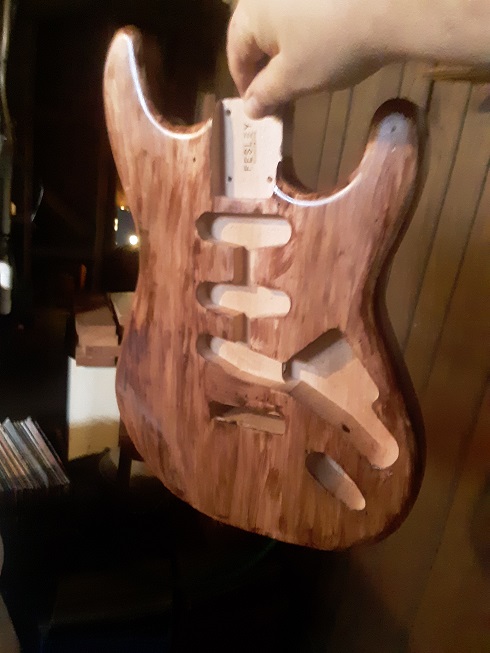
Changing topics, I decided to get started on finishing one of the guitar bodies. I’m starting with the Fesley Strat body, since it was the best set-up already smooth sanded. I buffed it a bit more with OOOO grade steel wool. It is too cold to do spray painting outside, and I don’t have good ventilation for spraying inside the house, so I’m trying my hand at stain/finishing it with a combination stain and polyurethane coating and a brush. It is a lot more difficult to work with than I imagined, as the stain does not seem to go on that even, perhaps due to the polyurethane. I will probably end up doing at least five or six coats and sanding between them. I do like the color that came out. I am using a stain labeled Mahogany, and on the mahogany body, it darkens it nicely. The label says you can do sanding and re-coating after an hour, but I plan to let it dry for a day and see what happens.
A short blog this week, just showcasing three YouTube channels that you may want to check out.
World Bluegrass Day – I am not sure when this channel officially launched, but it was created to celebrate World Bluegrass Day on October 1st. The channel currently has 205 videos dedicated to promoting the bluegrass format. This includes performances from legendary artists, interviews, and short documentaries on related artists and festivals. It is definitely worth it for anyone wanting to learn more about bluegrass, which now during the winter months and spending more time indoors, might be a worthwhile subscription.
Cody M. Music – Cody is a recent graduate from the Bluegrass and Old-Time Country Music program at East Tennessee State University. He’s a multi-instrumentalist, but this channel is dedicated to playing bluegrass guitar. He covers choices in guitars, rhythm patterns, simple solos, and has a thing for covering Billy Strings techniques. Some of his advice and lessons are great, but I find myself disagreeing with a few of his statements and suggestions. I do recommend checking out the channel, as you may pick up some improvements on your bluegrass guitar playing.
Deeslounge615 – I first visited Dee’s Lounge when I was in Nashville last year for the SPBGMA conference. I saw Chris Jones and The Night Drivers one night and Bronwyn Keith-Hynes the next night. The cool thing is that it broadcasts shows at the bar live on its YouTube channel every night a band is performing. If you subscribe to the channel, they will send you a notification what artist is performing that evening, and you have the option of “tipping” the artist through Venmo. Acts include bluegrass, country, roots-rock and folk. If you need a dose of live music but don’t feel like leaving the house because of the weather, this is a great alternative.

 Luegra