I’m starting to get back into doing some small repairs on musical instruments again. I have a Yamaha acoustic guitar that needs some work on it that may take some time, so that one is on the back burner. Currently, I am working on getting a violin back into playing order.
While scanning eBay a few weeks ago, I came across a pink 4/4 size fiddle that needed some TLC. The cool thing was, the seller was actually only a mile or two away from my house. I contacted him to see if I could buy it direct, and we agreed. When I opened up the soft case, I saw that it needed a lot more work than anticipated, but nothing that I couldn’t handle.
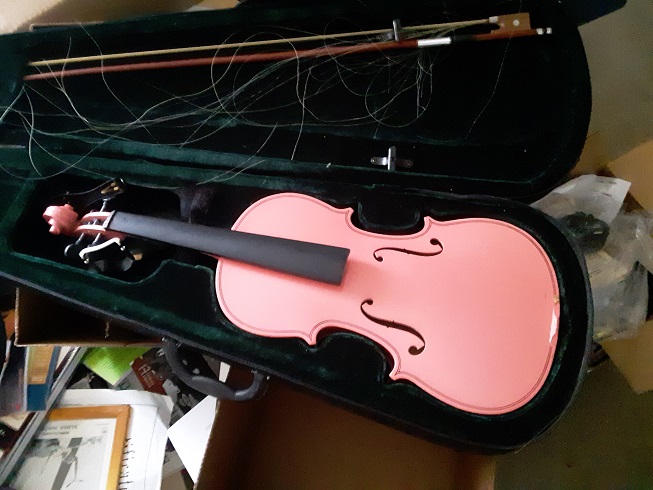
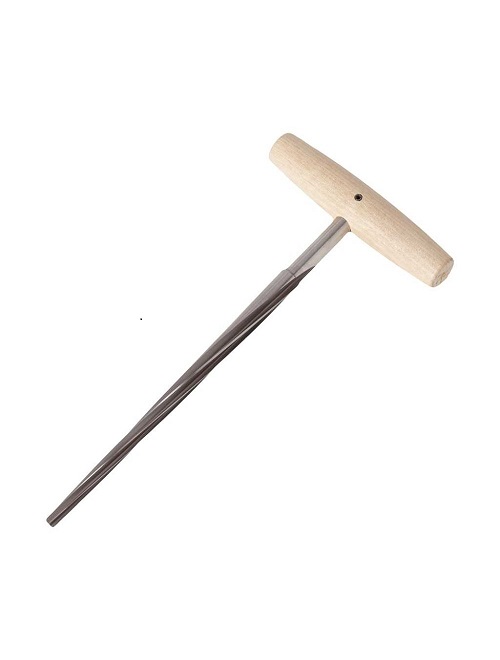
The body and neck are fine, but it was missing the bridge and endpin. The tailpiece and chinrest were there but not attached. The bow was a complete mess and not worth re-hairing, so it will be trashed. I ordered a new bridge and endpin and got them a few days later. The endpin proved to be too large for the end hole, so I ordered a violin peg reamer and got it a few days ago. This tool is a worthwhile purchase for anyone doing work on string instruments, especially the violin family. It is basically a tapered file that slightly widens a hole where a tuning peg or endpin should go into an instrument. I was able to get the endpin here to fit in a matter of seconds with a few twists of the reamer.
The way that the violin is strung up, it relies on each component resting on another to get the best vibration with the wood. With the endpin in place, the tailpiece can be looped over it, but it is not secure unless the strings are attached and wound to the tuning peg. The strings also have to be resting properly on the bridge, which needs to be placed in the correct spot on the top of the body. The bridge is probably the most important part of the actual violin, as it transfers the vibrations of the strings directly to the body, working against the top as well as the soundpost directly underneath inside the body. Bridges found on beginner and student violins are very basic. Professional violinists and fiddlers usually have a luthier carve special bridges that have a certain thickness (as thin as possible), weight, height and curvature to get the best sound.
While I am not concerned with getting a bridge that will cost three or four times as much as what I paid for this violin, I still want to use this as learning experience, so I will be working on making the bridge that I purchased to be better quality than when it came to me in the mail. This will entail thinning the entire piece with sanding, as well as adding a slight curved face to the side facing the neck. Thank goodness that there are a number of videos on YouTube that give some advice on violin repairs.
I already ordered a new bow, just a student one for under $15.00, as again I don’t want to invest too much into this project. I’m not interested in making this thing a professional fiddle, just a playable one that will inspire some young girl to want to play the instrument. It also gives me a chance to learn more about the skill of working on repairing and maintaining stringed instruments, something that I wish I could do as a full time job.
Chew on it and comment.
 Luegra