Musician and writer (both song and print) for over 30 years. Primarily interested in roots music (Americana, bluegrass, blues, folk). Current contributing writer for Fiddler Magazine, previous work with Metro Times (Detroit), Ann Arbor Paper and Real Detroit Weekly, as well as other various music and military publications. As songwriter, won the 2015 Chris Austin Songwriting Contest (Bluegrass Category, "Something About A Train," co-written with Dawn Kenney and David Morris) as well as having work performed on NPR and nominated for numerous Detroit Music Awards.
Back in April, I talked about the youth scholarships that the Southeast Michigan Bluegrass Music Association (SEMBMA) was offering to young students who were interested in studying acoustic music, and how little response the Association had received from kids (https://luegra.design.blog/2023/04/29/youth-scholarships-available-from-sembma/). Well, SEMBMA’s annual picnic and Hall of Honor inductions was earlier this afternoon, and I was able to meet up with head of the Scholarship Committee to discuss the progress.
Prior to this weekend, we were sponsoring only one youth, Dante, on banjo lessons. Our scholarship assistance is helping to pay for lessons from banjo extra ordinaire Kristin Scott Benson, and he has performed on stage with a number of national bluegrass acts, including Appalachian Roadshow and The Kody Norris Show. Money well spent.
Well, the Scholarship Committee has recently received four more applications that we will be considering for sponsorship! One of the applicants is the young girl that I saw perform at last year’s Michigan Old-Time Fiddle Contest in New Boston (https://luegra.design.blog/2022/10/02/the-2022-michigan-old-time-fiddle-contest/). Her name is Belinda, and she is from the Grand Rapids area. It took some time to hunt her down, and her father finally got back to me a few days ago. I was extremely pleased that the family followed up on the suggestion of applying, and from looking at her background, she seem to be highly influenced by old-time music, naming Rhiannon Giddens as one of her influences.
We also received applications from another fiddle player, as well as two youngsters interested in pursuing banjo studies. One of these aspiring banjo players did show up to this afternoon’s picnic and participated in the jam session. While reading the application of the other young banjo player, she listed her three influences as Johnny Cash, Willie Nelson, and the 2nd South Carolina String Band. Wow! There is a name that I haven’t heard in a long while. The 2nd SC String Band goes back to my Civil War reenacting days. They used to perform at a number of national battle reenactments such as Gettysburg and Antietam (maybe someday I will talk more about those days and what I was doing musically then). I am impressed that this young lady not only knew about this band and the type of music that they perform, but claimed it to be an influence.
I am certain that the committee will approve some sort of assistance to all of the new applicants, as they all seem to be determined to learn more about bluegrass, old-time, and other roots-oriented music. It also motivated me to quit slacking off and pick up my guitar again. I do hope that all of them continue to educate themselves on this beautiful genre of music.
I leave you with a classic video from years ago when the Sleepy Man Banjo Boys appeared on The David Letterman Show some years back.
Continuing to clean my house, I found a book that I bought years ago, Banjo For Dummies by Bill Evans. I tried learning banjo probably 15 years ago, but never fully got the hang of it. I can play one or two tunes slowly, but I’m no Earl Scruggs!
It led me to thinking – Why isn’t there any “Bluegrass Music For Dummies” book? Now to be fair, Evans did put out a follow-up book called Bluegrass Banjo for Dummies. Moreover, there have been books entitled Fiddle For Dummies, Mandolin For Dummies, and Guitar Basics For Dummies. This doesn’t even include any similar books from the Idiot’s Guide or Everything Book series. But why not one dedicated to the music format itself?
What motivated me to think about this is that I also found a book in my collection called The Blues For Dummies. A quick Google search shows that there is also Rock For Dummies, Classical Music For Dummies, and Jazz For Dummies. But no Dummies book for bluegrass (or country music, for that matter).
I have a few of these Dummies books, some of which I would not recommend. The World War II for Dummies by Keith Dickson from 2001 implies that it was the United States’ fault that the Japanese attacked Pearl Harbor. But the musical instrument-related books of the series tend to be quite useful. The music history and theory books are also worthwhile for anyone who is a “dummy” and wants to learn more.
Of course, a few co-workers of mine would say that there is no need for such a book, as only dummies would listen to bluegrass music anyway! However, the bluegrass format seems to roller-coaster in popularity every few years. Films like Bonnie and Clyde in the 1960s, Deliverance in the 70s, and O Brother, Where Art Thou? around 2000 helped push interest, and guitarist Billy Strings has made a lot of young music lovers take notice of bluegrass over the past few years.
I had talked about the need for an updated book on the history of bluegrass music in a previous blog (https://luegra.design.blog/2020/09/18/we-need-a-new-or-updated-bluegrass-history-book/ ), Unfortunately, searching both the Dummies and Idiot’s Guide websites have no way to contact the publishers for submitting an idea. It is something that I may pursue in the near future, since I do see a market for such a book. There is a lot of important history with the progression of popular music that relates to bluegrass music, and a Dummies book may help interested parties to “get” what we bluegrass fans already know.
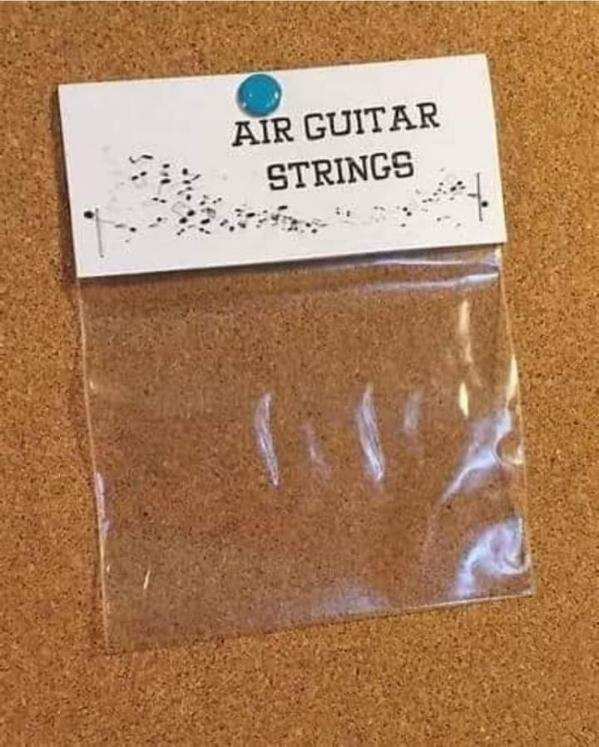
For a laugh, I leave you with a photo that my good friend Gabby sent me.
I stopped my subscription to the hard-copy of American Songwriter magazine a few years back. The articles were getting way too politically left leaning. It was like the magazine was trying to compete with Rolling Stone.
A few weeks back, an online article popped up on my computer entitled “10 Bluegrass Songs Everyone Should Know” (https://americansongwriter.com/10-bluegrass-songs-everyone-should-know/). The article is written by Peter Burditt, who seems to be a regular contributor to the magazine and/or website. However, I highly doubt that he is a go-to person when it comes to bluegrass music. A Google search did not find any credible information on the man, unless he is also a financial consultant or a lacross player.
The article chooses the following as “must know” bluegrass songs:
“Dueling Banjos” – Eric Weissberg
“Man of Constant Sorrow” – Dick Burnett
“Blue Moon of Kentucky” – Bill Monroe
“Will the Circle Be Unbroken” – Ada R. Habershon & Charles H. Gabriel
“Rocky Top” – The Osborne Brothers
“Foggy Mountain Breakdown” – Flatt & Scruggs
“Nine Pound Hammer” Unknown
“With Body and Soul” – Bill Monroe
“Tennessee 1949″ – Larry Sparks
“Tortured Tangled Hearts” – The Chicks/The Dixie Chicks
OK, where do I start?
In the article, Burditt states that these are 10 bluegrass songs that you should know. As a writer? As a musician? As a band? As a listener of bluegrass? He never defines that. In all instances, he is off target. Speaking for myself as a fan, musician and writer of bluegrass music, I only see three songs that are “must-know” contenders: Numbers 2, 3, and 5. These have been standards in bluegrass bands for a number of years. I could even go to say that “Man of Constant Sorrow” has not been a contender until the release of the movie O Brother, Where Art Thou? back in 2000. It was popular with the Stanley Brothers back in the 1950s and 60s before Carter Stanley passed away, but rarely heard until the movie brought it back to life.
Numbers 1 and 6 are instrumental songs, but “Dueling Banjos” is rarely performed by any bluegrass band. It has become more of a novelty song with bluegrass bands, the musicians joking around when tuning up or between-song banter. There are a lot more popular instrumentals that that one, including “Shucking the Corn,” Orange Blossom Special,” and “Back Up and Push” to name a few.
Number 4: “Will the Circle Be Unbroken” is pretty much a folk standard, and yes, many bluegrass bands perform it. However, it is usually as an unexpected encore or when two or more bands get together on stage to perform. So yes, it is one that bluegrass performers should know, but it is not on a regular set list.
Number 7: “Nine Pound Hammer” is better known by its country-picking version from Merle Travis, and is rarely played among bluegrass bands on stage. Occasionally, you will hear it in jam sessions, so, yes, it is one that you should probably know. That is, if you are looking to do some parking lot jams. If that is the case, then there are a dozen or more jam standards that you should know that are not on this list. I recommend checking out Pete Wernick’s website, where he lists over 100 songs that one usually hears at bluegrass jams (https://wernickmethod.org/jam-favorites).
Number 8: “With Body and Soul” is one that I would consider on a secondary list, not necessarily a “must know.” A few bands do this song justice, and it has a unique chorus, if you can get your tenor singer to do some falsetto on the line That’s how she loves me. Because it is not as common as “Blue Moon of Kentucky,” it does make a nice change of pace when a band does a rendition.
Number 9: Larry Sparks is a modern legend in the bluegrass world. He performed with Ralph Stanley after Carter’s passing, went on his own in the late 1960s, and has been giving us great music ever since. Is “Tennessee 1949” a must-know bluegrass song? Again, probably secondary. Incidentally, this was written by Bill Emerson and Pete Goble, not Sparks. However, Sparks always had a good ear for good songs. When he originally released this song in 1987, it was a bluegrass smash hit, and yes, parking lot jammers started including it in their repertoire. A few bands cover it, but it is not as common as the article makes it out to be. This is a good example of the author trying to make out like he is “in the know” with bluegrass music.
Number 10: Really? REALLY? I have NEVER heard this song played on stage by any bluegrass band, nor have I ever heard it in my years of playing at or listening to multitudes of parking lot jams! Even when jamming with female bluegrass singers, they tend to go for tunes by Alison Krauss, Rhonda Vincent, or Hazel Dickens & Alice Gerrard. Way more common tunes include Dolly Parton’s “Coat of Many Colors” and “Jolene,” or Lucinda Williams’ “Can’t Let Go.” Again, Burditt is trying to look like he is “in the know,” while also being inclusive, which is popular with the Left these days. All that it tells me is that he has probably never attended a bluegrass festival.
So what songs would I include in a Top 10 list? Here are a few: “Hard Hearted” – Jim & Jesse “Sunny Side of the Mountain” – Jimmy Martin “Freeborn Man” – Jimmy Martin “Salty Dog Blues” – Flatt & Scruggs “Doing My Time” – Flatt & Scruggs “Rolling in My Sweet Baby’s Arms” – Flatt & Scruggs “Thirty Years of Farming” – Fred Eaglesmith/James King “Dooley” – The Dillards “Angel Band” – The Stanley Brothers “Dark Hollow” – Bill Browning/Mac Wiseman/Muleskinner “East Virginia Blues” – The Carter Family “Love Please Come Home” – Reno & Smiley “In the Pines” – Bill Monroe “Sitting on Top of the World” – Bill Monroe (among others) “Wabash Cannonball” – Mac Wiseman (among others)
As for instrumentals, before “Dueling Banjos,” I would include standards such as “Bill Cheatham,” “Cripple Creek,” “Whiskey Before Breakfast,” and dozens of other old-time fiddle tunes, as well as the instrumental songs mentioned previously. I am also aware of a few Johnny Cash, Merle Haggard, and Gordon Lightfoot songs that seem a lot more common with jammers than some of what is mentioned by Burditt.
I wrote a blog a few years back on bluegrass fake books (https://luegra.design.blog/2020/07/17/a-brief-look-at-bluegrass-fake-books/). I would recommend checking out Bluegrass Fakebook by Bert Casey for some “must know” bluegrass songs instead of going on the opinion of Peter Burditt. He truly seems like he did very little research on popular bluegrass songs and just googled his way through the article.
Here’s another book that I highly recommend, especially if you want to see what the bluegrass music scene was like in the 1960s and 70s. The authors traveled the bluegrass circuit as it was transitioning from the dive-bar circuit to fresh multi-day festivals, and documented the adventure with hundreds of photographs and brief text interludes.
Originally published in 2001, the book has had a number of reprints, mainly due to the historical significance of the photographs held within. There is humor, sorrow, drama, and celebration throughout the pages.
Carl Fleischhauer worked for a number of years as a photo-archivist at the Library of Congress, while Neil V. Rosenberg has served as a professor of folklore at the University of Newfoundland as well as authoring a number of other bluegrass history books. These two knew the importance of the American music format and how it shaped its corner of the music industry. Thus, they embarked on a two-decade journey to ensure that future bluegrass fans would know where the music came from in a visual format.
Chapters include “Intensity,” which looks at the artists dedication to the craft, whether it be Flatt & Scruggs performing at a festival in Ohio or Earl Taylor sweating it out at a bar in Cincinnati. “Destination” captures the results of the authors’ travels throughout the eastern part of the US, particularly festivals in the Appalachian Mountain region as well as bars in Ohio, Maryland, and Washington DC. This chapter also begins to show where bluegrass hid in other spots, such as barber shops, television repair shops, and musical instrument stores. “Transaction” expands on the locations, including recording studios, radio stations, sale tables at festivals, and backstage at the Grand Ole Opry. “Community” looks at the interactions of musicians, as well as the personal communication that bluegrass artists have with their fan base, which is extremely unique in the music industry. “Family,” of course, looks at the multi-generational family bands that have graced bluegrass stages, including Earl Scruggs and his sons, the Lewis Family, and the Stoneman family. Finally, there is “The Monroe Myth” chapter, which takes a look at the Father of Bluegrass’ work with his band, guesting with other bands, as a festival organizer, and his love for his family.
There are so many important photos within the pages that mark important parts in bluegrass history for the time. A wonderful example is the photo collection of guitar legend Clarence White, performing with a new edition of the Kentucky Colonels at a festival shortly before his tragic death. White had just recently quit the rock band the Byrds to perform again with his brothers because he so missed playing bluegrass. Included is also a photo of Clarence talking to future bluegrass guitarist David Grier, then a young boy, and a picture of the White brothers talking to legendary fiddler Kenny Baker during a Bill Monroe performance.
Yes, there are plenty of big-name bluegrass performers appearing in this book, but there are also a number of local musicians that probably never saw any success, but played for enjoyment and passion. That is what makes bluegrass music so unique – that it survives as a true community.
I highly recommend getting a copy of Bluegrass Odyssey. My current copy is so dog-eared from multiple readings that it has a life of its own. If you are a fan of bluegrass music, this book will give you plenty of reasons to enjoy it when you don’t have your instrument in your hands.
I realize that I am about two weeks late on this, but it slipped my mind, and I did want to say a few words about two great bluegrass mandolinists.
Jesse McReynolds passed away on June 23, a few days short of his 94th birthday. I was at the Charlotte Bluegrass Festival at the time when the news came down, and word spread throughout the bands and crowd slowly that afternoon. By the evening, each band that came on stage made a short announcement and dedication.
Jesse performed for over 50 years with his brother Jim as Jim & Jesse. He had a very unique style of mandolin playing. Instead of hard, barking rhythmic strumming and fast single-note leads, he instituted and perfected an arpeggio-style of picking to simulate the picking of a banjo. The duo had a number of hits on the bluesgrass charts, most notably recording an album of Chuck Berry songs in bluegrass style. Jim McReynolds died of cancer in 2002, and Jesse continued on solo, recording with a number of collaborators. He was also a big fan of jam bands, particularly the Grateful Dead, with one of his last recordings being Songs of the Grateful Dead: A Tribute to Jerry Garcia and Robert Hunter in 2010. I had the chance to speak with him briefly at an IBMA World of Bluegrass conference back when it was in Nashville, and he was a true, humble gentlemen.
Bobby Osborne passed away on June 27 at the age of 91. With his brother Sonny, they helped bluegrass gain a foothold in the country and pop music world during the 1960s as the Osborne Brothers with the standard “Rocky Top.” The band was well known for pushing the bluegrass barrier, often plugging in their instruments into amplifiers and having a drummer so that they could compete with country bands at outdoor shows. Bobby was also instrumental in having his high tenor voice serve as the lead singer while harmonies were sung in the lower registers. One of his most memorable vocal songs is “Ruby Are You Mad.” in which he holds a falsetto note often throughout the song for a number of seconds. After Sonny’s retirement in 2005 (he passed away in 2021), Bobby continued to perform with his sons as the Rocky Top X-Press. The band performed regularly on the Grand Ole Opry until Bobby’s passing. I also met Bobby at an IBMA World of Bluegrass conference in Nashville, but not the same year as when I met Jesse. Bobby as well was friendly and humble about his work in the bluegrass field.
What will be missed about both of these mandolin players is their love of bluegrass music, the dedication to the art, and how much of an impact that they both had on players of today. Yes, they were in their old age, but it is always heartbreaking when those that were pioneers in the music industry leave us. Ironically, one of the last recordings that these men did was an album together, Masters of the Mandolin. That might be a good one to hunt out.
Today, I’m going to recommend a product NOT to purchase, unless you can really understand the purpose of it and are willing to ignore all of its faults.
A few weeks back, I picked up the Shredneck Low Rider 4-string bass neck. Mind you, I did not pay full price (thank God!), but got it off of eBay. This is a product for musicians to practice fretting and fingerpicking exercises when it is not convenience to have a regular bass guitar handy, such as at the office, waiting in a car, or other cramped situations (I dunno, doing a constitutional in the bathroom?). The Shredneck is about 18 inches long, has the four bass strings (Note: the company also makes 6-string guitar models) with a nut, bridge and tuners, and a fingerboard that consists of the first six frets of a full-scale 34-inch bass guitar neck.
Have you figured out the problem with this yet? Here it goes – the frets are set up as if this were a 34-inch neck, but the actual “neck” on this item is less than 18 inches. In short (no pun intended), the fretting of these strings will not match the note that is expected. For example, on a regular bass guitar, the frets are set up so that when you press your finger down on the fretboard, it will create the note intended according to the scale of the bass, be it 30- or 34-inch scale. On the low E string, if you press your finger down on the first fret, the F note will sound. The next fret will sound F#, the next fret will sound G, and so on.
However, because of the set-up on this Shredneck, fretting on the E string first fret creates a note somewhere between F# and G. The second fret creates a note somewhere around Bb. The same problem goes for all four of the strings. The fretwork on this product should have compensated for the scale length. Instead, you have some contraption that, when fretted, sound like some weird musical instrument that perhaps Mr. Spock would have played on Star Trek.
The Shredneck also puts normal-gauge bass guitar strings on the piece. The result is that the strings never stay in tune anyways, so even open strings never sound the same way twice. The tuning machines are decent, but if you should pluck a sting a bit hard, you can hear the pitch fluctuate. It sounds more like when you stretch out a rubber band and pluck it, then stretch it back and forth a little to get that wobbly sound.
There is very little positive about the Shredneck other than its portability. I surfed around on YouTube for some reviews of it, but there weren’t much, and most of them are a few years old. The selling point seems to be that you can practice fretting-hand work and finger picking. I would think that you can noodle around on something like this, but how can you tell if you are improving if the notes are not correct according to the fret? It seems unproductive. Even bassist Billy Sheehan, while trying to promote the Shredneck, admits that you shouldn’t listen to what you are doing on it (he introduces it at the beginning, but talks about it more about 3:00 in).
Looking around the internet, there are a few other products that are similar to the Shredneck but do a better job. In conclusion, pass on this!
Sorry that this blog is a day late, but I spent Friday and Saturday in Charlotte, Michigan for its 51st Annual Bluegrass Festival. I had not been to the Charlotte (pronounced shar-LOT) festival in about 20 years, so this was a renewed experience to say the least. Here are a few positive and negative things that I took home with me.
My old age. I’m pushing 60, so there are a lot of things that I could easily do 30 years ago that are impossible today. When I was Civil War reenacting back then, it was nothing for me to camp out in a canvas tent (or if going campaign-style, sleeping out in the open) on rocky ground and finding the nearest tree when nature called. Now, with diabetes and aches almost everywhere, I don’t think that I could spend a night in a trailer, let alone in a tent. Fortunately, there was a reasonably priced hotel just a mile from the festival site. Also, my stomach cannot handle carnival-type food any more, The heartburn-drenched pizza slices and heavy-feeling hot dogs do not sit well with my digestive system. Thank God that I remembered some Pepto Bismol tablets. I’ll be packing my own food next time.
Williamson Branch. This is a family band with husband, wife, and three daughters (along with a non-relative banjo player). They are generally good entertainment, with everyone having good singing voices and satisfactory instrumental capabilities. That is, with the exception of the bassist Kadence Williamson. This girl is phenomenal to say the least! She’s 20 years old, looks much younger, and because of her small stature, she does not play a standup bass or even a full-scale electric bass. Her tool is a short-scale Kala 5-string bass, but what she lacks in size she more than makes up for in her playing. She goes way beyond the root-fifth thump heard on most bluegrass songs. No, she is throwing in some marvelous bass lines into each of the band’s songs, many times singing the lead as well. I was absolutely blown away by her. I am definitely going to work on doing a story on this girl! (http://www.williamsonbranch.com/)
The David Mayfield Parade. I saw David about a dozen years ago when he was with the Avett Brothers. He has also worked with Mumford & Sons as well as Cadillac Sky. This band is more progressive, in the vein of Grassicana, and the material has a slight Gothic feel to it. However, what makes it special is David’s rapport with his audience. He is like a living marionette, jumping around the stage with acrobatic skill, and his banter between songs is amazing. Everything he says has some sort of punchline, but it is truly intelligent humor. The harmonizing of the vocals is a lot darker than what one would expect from a bluegrass band, but I absolutely loved it. A standout song for me was “Blacksmith at Bull Run.” a Civil War ballad that touched me deeply. I will definitely be keeping track of this band. (http://www.davidmayfieldparade.net)
The Kody Norris Show. For anyone wishing to see what it was really like at a Jimmy Martin show, this is the band to see! All four members come onto the stage wearing outlandish Western wear, cowboy hats, boots and all! But they back up their visuals with amazing musicianship. Kody is a great frontman, hillbilly-style singer, and phenomenal flatpicker. His wife Mary Rachel switches between fiddle and mandolin, proving a bluegrass/country expert on both. Hearing banjoist Josiah Tyree perform is like listening to J.D.Crowe back in his younger days. This is a complete show! The band seems to know just about every traditional country and bluegrass song ever written, and can perform them with pure heart. If you see or hear of this band coming into your area, definitely go and see them! (http://www.thekodynorrisshow.com/)
Michael Cleveland & Flamekeeper. What hasn’t already been said about Michael Cleveland. Twelve-time IBMA Fiddler of the Year Award winner, and he just doesn’t stop! Watching him bow his fiddle is hypnotic. His speed and accuracy is indescribable! I don’t know of anyone that has seen Michael and his/her jaw doesn’t drop. He has a great musical sense of humor, and when he plays either “Orange Blossom Special” or “Lee Highway Blues,” The audience goes crazy! Whether you are a bluegrass fan or not, or even if you are a classical violinist, you must witness Michael Cleveland in your lifetime. (https://michaelclevelandfiddle.com/)
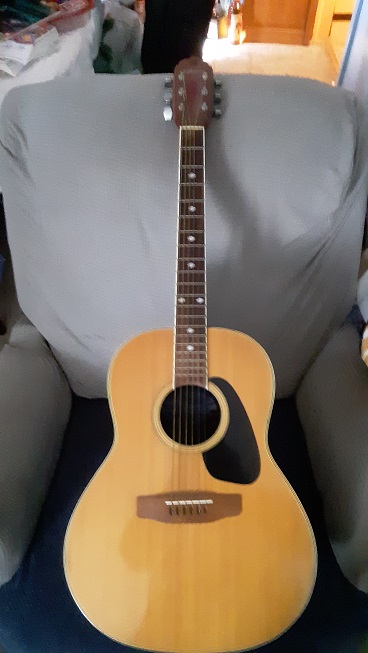
Sevillana 2208. I took the guitar to the festival, not to jam (I don’t do that much any more), but to let a few artists try it out. Those that gave it a strum or two included Kody Norris, Josiah Tyree, David Mayfield, and Jamey Pittman (of the Edgar Loudermilk Band). All were quite impressed with the lower-midrange boom in volume as well as the quality that went into the workmanship. I did a blog about this guitar about a year ago (https://luegra.design.blog/2022/07/16/this-dreadnought-needs-to-come-to-the-u-s/) and am trying to convince the manufacturer in China to market it in the US. Hopefully, if I let them know about these four approvals (as well as a few that I sent them previously), they might take some initiative.
I wasn’t able to attend on Thursday, but hopefully, I can do all three days next year. My schedule is filled at work until Christmas time, so that’s about it for me this summer. I’m still planning on SPBGMA in Nashville in January!
There are a number of us that enjoy looking through coffee-table-style books that consist primarily of photos dealing with a much-loved subject matter. For us, the old adage “a picture is worth a thousand words” holds true. One of my favorite subjects, of course, is American roots music, and I have a number of books in this vein that I completely immerse myself into time and time again. So, along with the occasional “Perfect Song” blogs, I will also write about favorite books related to music, particularly bluegrass and other roots music subjects.
I had done a previous blog back in September 2020 on some interesting books on bluegrass that could use some updating (https://luegra.design.blog/2020/09/18/we-need-a-new-or-updated-bluegrass-history-book/). Now, I would like to talk about an extremely enjoyable pictorial book that I am sure anyone with a love for the history of bluegrass music would value having in his/her personal library. Speed Bumps on a Dirt Road: When Old Time Music Met Bluegrass is a photographic history by John Cohen that looks at a time when the first-generation bluegrass artists were influencing the next generation during the late 1950s and throughout the 1960s. It also visually examines how rural folks in the Appalachian Mountains, with little or no access to radio or television, relied heavily on self entertainment through playing instruments and dancing.
Cohen has been a long-time historian and curator of roots music. Originally a member of the New York City-based bluegrass trio the New Lost City Ramblers, he took to documenting folk and bluegrass music performers with his camera. Around 2017, a researcher for Ken Burns’ PBS documentary Country Music asked Cohen for use of some of his work. It inspired Cohen to produce this photographic masterpiece of bluegrass and old-time music history.
While there are many celebrities featured in this book, such as Bill Monroe, Ralph Stanley, Doc Watson, and Hazel Dickens & Alice Gerrard, much of the book is dedicated to the common folk that used music to escape the drudgery of their life’s struggles. One can see in the faces of these people that there is relief and a little bit of enjoyment from singing, plucking a guitar or banjo, and clogging to a familiar tune. Their surroundings are simple if not poor, they value singing to their Lord, and the youngsters still respect the elders.
There are scenes on old porches, in family houses, in bars, at radio stations, in cemeteries, at auctions, and on early bluegrass festival stages. There are glorious photos of premiere shows at Carnegie Hall, and glimpses of old television shows hosted by Pete Seeger. A chapter is dedicated to Hazel & Alice in the studio with many shots of a very young David Grisman playing mandolin for the recordings. There are also early photos of Clearance and Roland White performing at the Ash Grove in California.
The final pages of the book are of more recent events, but still show how powerful this music impacts the newest generation of musicians. We see both young and old gather for a memorial to Mike Seeger in 2010, and present roots musicians Anna Roberts Gevalt, Elizabeth Laprell, and Nora Brown paying homage to the aging second-generation bluegrass musicians. There are also short essays from Cohen on each chapter (printed in the back of the book so as not to distract from the photos), as well as insights from Alice Gerrard and Marty Stuart.
Speed Bumps on a Dirt Road was published in 2019 and is still readily available at various online resources. It retails for $45.00, but can be had for under $20.00 through a number of used and discount book dealers. I recommend securing a copy before it goes out of print, as many books like this do within a short period of time.
Back in 2003, Bluegrass Unlimited published an article entitled “Single Mic Performance: A How-To.” It covered the basics of a bluegrass band performing live around a single microphone, which was the norm for both live shows as well as recording and radio broadcasts back in the early days of recording and radio. As audio technology improved starting in the 1950s, it became more common for individual instrument/vocal miking.
Starting in the 1990s, some bluegrass bands brought back the charm of single-microphone performances. Bands like Hot Rize, Doyle Lawson & Quicksilver, and the Del McCoury Band would perform with one microphone, or a variation using two mics (one dedicated to the instrument playing a solo). Karl Shiflett & Big Country recorded a few albums using only three mics covering the entire band sound, with two pointed toward the band and a third dedicated to the standup bass. Even today, Billy Strings and his band will perform a short set standing around a single ribbon mic in front of his arena-sized audiences.
The single-mic performance is an art form for bluegrass and other acoustic bands that sounds wonderful when done correctly, so let’s go over some of the ideas that can make this work out for any interested party.
Position: Each instrument, as well as vocals within the ensemble, has its own dynamic. The banjo cuts through a lot louder on its own than the mandolin or even a normal dreadnaught acoustic guitar. Moreover, a tenor voice tends to cut through over a bass or baritone unless the singer(s) know how to control their own volume. In probably 80% or more cases with bluegrass bands, the lead singer is also the rhythm guitarist, with background vocals handled by most of the other instrumentalists. A “U” shaped pattern around the microphone will most likely not sound good, as with each instrument equal distant from the mic will have a lousy level balance. For a five-piece bluegrass band, the most common popular set-up is the “3-2″ pattern, with the lead singer/guitarist center in front of the mic about 1.5 to 2 feet away. Two instrumentalists, particularly ones that offer backing vocals (mandolin, banjo, or fiddle) would stand on either side of the guitarist, close but not bumping, and turned facing the mic as well. Remaining musicians (bass, other lead instrument) would stand behind in the gaps formed between the three members up front, again close but not bumping into other members. This leads to the next consideration.
Choreography: First, when singing, the singer will lean in slightly to the mic for his/her voice to be the focus. As the chorus comes in, the lead singer leans very slightly back, and the two (or more) backing singers will lean in to the mic. This will create a more pleasing “self mix” of the vocals. The more skilled movements come with the instrument solo breaks. The lead singer and upcoming lead instrument need to make the correct move so that they don’t trip over each other. In most cases, I have seen band members move in either a clockwise or counter-clockwise movement. For instance, if there is a banjo solo and the banjo player is standing immediately to the left, the singer/guitarist will step back (with the musician who is in the back giving that person some room) and move to the left where the banjo player once stood. At the same time, the banjo player moves toward the center position in front of the mic. Once the solo is complete, the guitarist and banjoist rotate in the same circular way. This takes a lot of practice (i.e., perfect this before trying it in front of an audience), which also means keeping the headstock of one’s instrument in the corner of the eye so it doesn’t bump another player while moving.
Microphones: While the durable dynamic mics such as the Shure SM57 and SM58 prove reliable in some stage settings, this is not one of them. Dynamic mics do not perform well with distant sounds, since all of the musicians will be standing about 2 feet away. This situation calls for more sensitive mics such as condensers or ribbons. If going the condenser mic route, it should be a large-diaphragm type. The standard of this type is the AKG C414. However, these price well over $1,000. AKG, as well as a few other manufacturers such as TASCAM, Behringer, and Audio Technica, produce condenser mics that are way less expensive, a few priced under $100! While these cheaper mics may not have the warmth of the C414, they do have similar features such as switches for pick-up patterns and bass roll-off. Note that condenser mics require a phantom power supply, usually of 48 volts DC. Most mixing consoles have some form of phantom power, but to be safe, have a stand-alone power supply available. A similar situation goes for ribbon mics. Professional ribbon mics can price over $6,000! However, more consumer-friendly models can be found for under $200. Results are similar to condensers as far as warmth and quality. Passive ribbon mics have a low output, so they require a mic preamp, while active ribbon mics have the preamp built in, but require phantom power. My immediate advice is to contact a reputable sound engineer or the customer service reps at Sweetwater.com for the best choice in a microphone.
Practice, practice, practice!: If you and your bandmates are serious about performing around a single microphone, it takes a lot of practice, just like practicing your instrument. Set up the microphone, and record your practices, then listen to see how each song comes off. This is something no band that wants to sound good should attempt live after only one or two practices. Those bands previously mentioned that implement this mic technique into their live performances work on this tirelessly. Check out single-mic band performances by either attending shows or searching on YouTube.
Two weeks ago, I did a blog on the Mattel Synsonics Drum Machine and how it was my first drum machine that helped me record demos (https://luegra.design.blog/2023/05/20/the-glorious-mattel-synsonics-drum-machine/). Well, that got me to reminiscing about my personal history of home recording and how much things have changed, as well as how stubborn I still am in a way.
When I was a teen and learning electric bass guitar, home recording was still in its infancy. There were a number of reel-to-reel four-track machines on the market, most notably the Teac 2340 and 3340 models. These retailed well over $1,000, and you could never find one used, Add to that these RTR machines were high maintenance, and tape costs were high. Anyone who had one of these puppies, as well as a basic mixer, could make money recording demos for bands.
I was poor, but I made do with what I could. I used my brother’s stereo cassette and saved up for another deck (Detroiters, do you remember Highland Appliance?) that I would bounce recording back and forth between the two decks. I had lots of homemade audio cables, abused my brother’s headphones, and worked with less-than-quality microphones from budget stores. Forget any type of compression or effects, although if I wanted to get creative, I could get some reverb by miking myself in the bathroom. My bible was Craig Anderton’s book Home Recording for Musicians.
Radio Shack, Olson Electronics, and a few mom-and-pop surplus electronic stores in the Detroit area were my hangouts. I built a basic mixer from plans in a electronics book from the library. Recording was done mostly when I had the house to myself, which was a rarity. However, I learned a lot about audio technology and recording techniques during this time.
In 1979, Tascam (a division of Teac) came out with God’s gift to home recording for musicians. The Tascam 144 was a four-track recorder/mixer that used the readily available cassette tapes. It only allowed recording of up to two tracks at one time, but mixdown of four signals into a mono or stereo demo was now easy to do with a machine the size of a small suitcase! It retailed for just over $500, so only the musicians that had some extra cash laying around could get one. It seemed like a novelty until news had it that Bruce Springsteen recorded his Nebraska album on a 144. Suddenly, every songwriter needed one of these machines. Soon branded under the Portastudio name, Tascam later marketed the 244 model (allowing all four tracks to record at once), and the 234 four-track cassette deck.
A company called Fostex, which had developed a somewhat affordable A-8 eight-track RTR recorder, came onto the market with its own version of the 144 that they called the X-15. Very similar in operation as the 144, it also retailed around $500. However, my local music store Wonderland Music would often have “Crazy Clarence” sales, and I got one of these for $299! This was my pride and joy for a number of years.
During the 1980s and 90s, other companies such as Yamaha, Vestax/Vesta Fire, and Marantz offered variations of the home recorders. I secured a few Yamaha four-tracks over the early years. Their first endeavor was the MT-44, which was an actual tape deck that recorded four tracks instead of stereo. It came with a small mixer that, if I remember correctly, had a crappy reverb/echo built in. I got that set used, and gave it to a singer in one of my old bands so that she could record demos. After the X-15, which I sold to another musician, I purchased the Yamaha MT-100. This machine allowed me to record all four track at the same time, so recording band demos became a breeze.
My thirst for home studio recording could not be quenched, so I saved up and purchased the Tascam 238 Syncaset. This machine recorded eight channels onto a cassette tape. This was as big as a normal cassette deck, but had the capabilities to record all eight tracks at once, so band demos were like the pros! Its only drawback was that bleed-over from adjacent tracks was common, especially when recording loud guitars or drums. I also got myself a Fostex 812 12-channel to 8-channel studio mixer. I was able to make some money back by recording other bands’ cheap demos. I also picked up some rack-mount effects at this time to make my recording much more professional. I used this equipment to record a compilation album on my own record label called Boombacoustic!, which consisted of ten local bands performing an acoustic song at a bar in Hamtramck, That CD was nominated for a Detroit Music Award back in 1998.
Around that time, I was contributing articles about recording and building DIY recording projects like simple mixers and direct boxes for a magazine called Home & Studio Recording. I also put out a quarterly newsletter called Home Recording Quarterly that I distributed around Detroit.
Then, digital recording began to take over, and I actually lost interest in following the trend. I stopped recording bands, and because people were interested in digital recording, my knowledge and interest in analog recording was not popular any more. I also saw that getting chrome cassettes for recording was now difficult, so if I wanted to continue to record even my personal songwriting demos, I would have to get with the program. I eventually purchased a Zoom MRS-4 four-track digital recorder. This machine is basically a digital version of the old X-15, but does have a lot of built-in special effects. For mixdown, I have a Tascam DR-03 hand-held digital recorder, which allows me to record in mono or stereo, as well as in WAV or MP3 format.
Cleaning out the house, I found the MT100, the 238 and the 812 board stored away. I will probably sell them off for a less than they are worth, but other than the mixing board, these machines are pretty much obsolete. Heck, the MRS-4 is close to obsolete as well, since the memory cards that it uses are hard to come by.
Last year, while at a large rummage sale in west Michigan, I came across a Tascam Portastudio DP-02CF digital eight-track recorder/mixer. It didn’t have a power supply, so I took a chance on it and bartered down to $25. I ordered a power supply, and it tests out as working. I have yet found time to record any demos on it, as my time cleaning the house is priority. I also still find the ease of the MRS-4 on the kitchen table to be sufficient. However, I hope to get more into recording with the DP-02CF by the end of the year.