Categories
Bluegrass Music

Charlotte Bluegrass Festival 2023

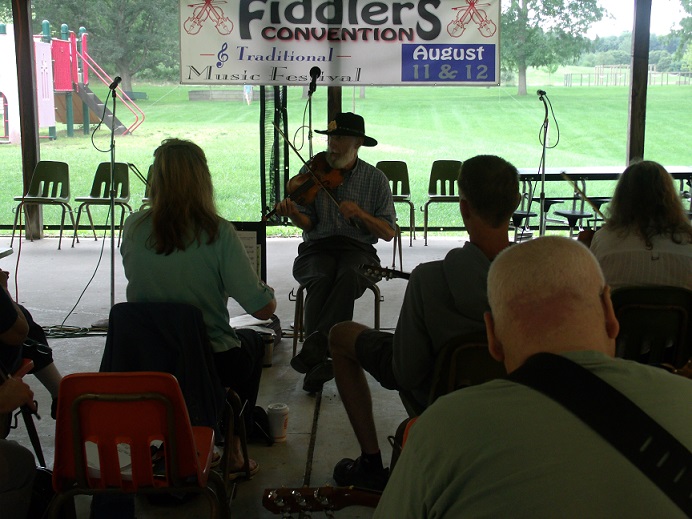
Sorry that this blog is a day late, but I spent Friday and Saturday in Charlotte, Michigan for its 51st Annual Bluegrass Festival. I had not been to the Charlotte (pronounced shar-LOT) festival in about 20 years, so this was a renewed experience to say the least. Here are a few positive and negative things that I took home with me.

  • My old age. I’m pushing 60, so there are a lot of things that I could easily do 30 years ago that are impossible today. When I was Civil War reenacting back then, it was nothing for me to camp out in a canvas tent (or if going campaign-style, sleeping out in the open) on rocky ground and finding the nearest tree when nature called. Now, with diabetes and aches almost everywhere, I don’t think that I could spend a night in a trailer, let alone in a tent. Fortunately, there was a reasonably priced hotel just a mile from the festival site. Also, my stomach cannot handle carnival-type food any more, The heartburn-drenched pizza slices and heavy-feeling hot dogs do not sit well with my digestive system. Thank God that I remembered some Pepto Bismol tablets. I’ll be packing my own food next time.
  • Williamson Branch. This is a family band with husband, wife, and three daughters (along with a non-relative banjo player). They are generally good entertainment, with everyone having good singing voices and satisfactory instrumental capabilities. That is, with the exception of the bassist Kadence Williamson. This girl is phenomenal to say the least! She’s 20 years old, looks much younger, and because of her small stature, she does not play a standup bass or even a full-scale electric bass. Her tool is a short-scale Kala 5-string bass, but what she lacks in size she more than makes up for in her playing. She goes way beyond the root-fifth thump heard on most bluegrass songs. No, she is throwing in some marvelous bass lines into each of the band’s songs, many times singing the lead as well. I was absolutely blown away by her. I am definitely going to work on doing a story on this girl! (http://www.williamsonbranch.com/)
  • The David Mayfield Parade. I saw David about a dozen years ago when he was with the Avett Brothers. He has also worked with Mumford & Sons as well as Cadillac Sky. This band is more progressive, in the vein of Grassicana, and the material has a slight Gothic feel to it. However, what makes it special is David’s rapport with his audience. He is like a living marionette, jumping around the stage with acrobatic skill, and his banter between songs is amazing. Everything he says has some sort of punchline, but it is truly intelligent humor. The harmonizing of the vocals is a lot darker than what one would expect from a bluegrass band, but I absolutely loved it. A standout song for me was “Blacksmith at Bull Run.” a Civil War ballad that touched me deeply. I will definitely be keeping track of this band. (http://www.davidmayfieldparade.net)
  • The Kody Norris Show. For anyone wishing to see what it was really like at a Jimmy Martin show, this is the band to see! All four members come onto the stage wearing outlandish Western wear, cowboy hats, boots and all! But they back up their visuals with amazing musicianship. Kody is a great frontman, hillbilly-style singer, and phenomenal flatpicker. His wife Mary Rachel switches between fiddle and mandolin, proving a bluegrass/country expert on both. Hearing banjoist Josiah Tyree perform is like listening to J.D.Crowe back in his younger days. This is a complete show! The band seems to know just about every traditional country and bluegrass song ever written, and can perform them with pure heart. If you see or hear of this band coming into your area, definitely go and see them! (http://www.thekodynorrisshow.com/)
  • Michael Cleveland & Flamekeeper. What hasn’t already been said about Michael Cleveland. Twelve-time IBMA Fiddler of the Year Award winner, and he just doesn’t stop! Watching him bow his fiddle is hypnotic. His speed and accuracy is indescribable! I don’t know of anyone that has seen Michael and his/her jaw doesn’t drop. He has a great musical sense of humor, and when he plays either “Orange Blossom Special” or “Lee Highway Blues,” The audience goes crazy! Whether you are a bluegrass fan or not, or even if you are a classical violinist, you must witness Michael Cleveland in your lifetime. (https://michaelclevelandfiddle.com/)
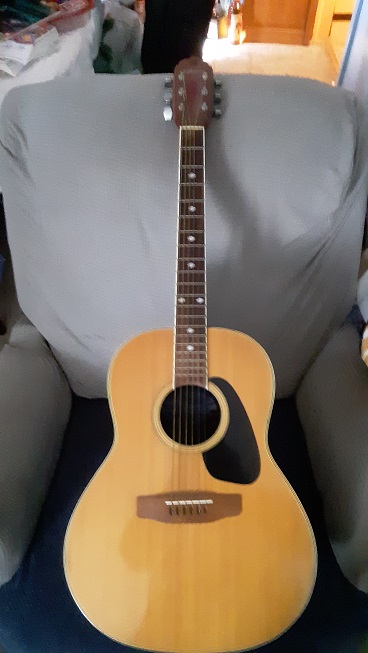
  • Sevillana 2208. I took the guitar to the festival, not to jam (I don’t do that much any more), but to let a few artists try it out. Those that gave it a strum or two included Kody Norris, Josiah Tyree, David Mayfield, and Jamey Pittman (of the Edgar Loudermilk Band). All were quite impressed with the lower-midrange boom in volume as well as the quality that went into the workmanship. I did a blog about this guitar about a year ago (https://luegra.design.blog/2022/07/16/this-dreadnought-needs-to-come-to-the-u-s/) and am trying to convince the manufacturer in China to market it in the US. Hopefully, if I let them know about these four approvals (as well as a few that I sent them previously), they might take some initiative.
Kody Norris
Josiah Tyree
David Mayfield
Jamey Pittman

I wasn’t able to attend on Thursday, but hopefully, I can do all three days next year. My schedule is filled at work until Christmas time, so that’s about it for me this summer. I’m still planning on SPBGMA in Nashville in January!

Chew on it and comment.

Categories
Bluegrass Music

Recommended Book: Speed Bumps on a Dirt Road

There are a number of us that enjoy looking through coffee-table-style books that consist primarily of photos dealing with a much-loved subject matter. For us, the old adage “a picture is worth a thousand words” holds true. One of my favorite subjects, of course, is American roots music, and I have a number of books in this vein that I completely immerse myself into time and time again. So, along with the occasional “Perfect Song” blogs, I will also write about favorite books related to music, particularly bluegrass and other roots music subjects.

I had done a previous blog back in September 2020 on some interesting books on bluegrass that could use some updating (https://luegra.design.blog/2020/09/18/we-need-a-new-or-updated-bluegrass-history-book/). Now, I would like to talk about an extremely enjoyable pictorial book that I am sure anyone with a love for the history of bluegrass music would value having in his/her personal library. Speed Bumps on a Dirt Road: When Old Time Music Met Bluegrass is a photographic history by John Cohen that looks at a time when the first-generation bluegrass artists were influencing the next generation during the late 1950s and throughout the 1960s. It also visually examines how rural folks in the Appalachian Mountains, with little or no access to radio or television, relied heavily on self entertainment through playing instruments and dancing.

Cohen has been a long-time historian and curator of roots music. Originally a member of the New York City-based bluegrass trio the New Lost City Ramblers, he took to documenting folk and bluegrass music performers with his camera. Around 2017, a researcher for Ken Burns’ PBS documentary Country Music asked Cohen for use of some of his work. It inspired Cohen to produce this photographic masterpiece of bluegrass and old-time music history.

While there are many celebrities featured in this book, such as Bill Monroe, Ralph Stanley, Doc Watson, and Hazel Dickens & Alice Gerrard, much of the book is dedicated to the common folk that used music to escape the drudgery of their life’s struggles. One can see in the faces of these people that there is relief and a little bit of enjoyment from singing, plucking a guitar or banjo, and clogging to a familiar tune. Their surroundings are simple if not poor, they value singing to their Lord, and the youngsters still respect the elders.

There are scenes on old porches, in family houses, in bars, at radio stations, in cemeteries, at auctions, and on early bluegrass festival stages. There are glorious photos of premiere shows at Carnegie Hall, and glimpses of old television shows hosted by Pete Seeger. A chapter is dedicated to Hazel & Alice in the studio with many shots of a very young David Grisman playing mandolin for the recordings. There are also early photos of Clearance and Roland White performing at the Ash Grove in California.

The final pages of the book are of more recent events, but still show how powerful this music impacts the newest generation of musicians. We see both young and old gather for a memorial to Mike Seeger in 2010, and present roots musicians Anna Roberts Gevalt, Elizabeth Laprell, and Nora Brown paying homage to the aging second-generation bluegrass musicians. There are also short essays from Cohen on each chapter (printed in the back of the book so as not to distract from the photos), as well as insights from Alice Gerrard and Marty Stuart.

Speed Bumps on a Dirt Road was published in 2019 and is still readily available at various online resources. It retails for $45.00, but can be had for under $20.00 through a number of used and discount book dealers. I recommend securing a copy before it goes out of print, as many books like this do within a short period of time.

Chew on it and comment.

Categories
Bluegrass Music

Using the Single-Microphone Performance

Back in 2003, Bluegrass Unlimited published an article entitled “Single Mic Performance: A How-To.” It covered the basics of a bluegrass band performing live around a single microphone, which was the norm for both live shows as well as recording and radio broadcasts back in the early days of recording and radio. As audio technology improved starting in the 1950s, it became more common for individual instrument/vocal miking.

Starting in the 1990s, some bluegrass bands brought back the charm of single-microphone performances. Bands like Hot Rize, Doyle Lawson & Quicksilver, and the Del McCoury Band would perform with one microphone, or a variation using two mics (one dedicated to the instrument playing a solo). Karl Shiflett & Big Country recorded a few albums using only three mics covering the entire band sound, with two pointed toward the band and a third dedicated to the standup bass. Even today, Billy Strings and his band will perform a short set standing around a single ribbon mic in front of his arena-sized audiences.

The single-mic performance is an art form for bluegrass and other acoustic bands that sounds wonderful when done correctly, so let’s go over some of the ideas that can make this work out for any interested party.

Position: Each instrument, as well as vocals within the ensemble, has its own dynamic. The banjo cuts through a lot louder on its own than the mandolin or even a normal dreadnaught acoustic guitar. Moreover, a tenor voice tends to cut through over a bass or baritone unless the singer(s) know how to control their own volume. In probably 80% or more cases with bluegrass bands, the lead singer is also the rhythm guitarist, with background vocals handled by most of the other instrumentalists. A “U” shaped pattern around the microphone will most likely not sound good, as with each instrument equal distant from the mic will have a lousy level balance. For a five-piece bluegrass band, the most common popular set-up is the “3-2″ pattern, with the lead singer/guitarist center in front of the mic about 1.5 to 2 feet away. Two instrumentalists, particularly ones that offer backing vocals (mandolin, banjo, or fiddle) would stand on either side of the guitarist, close but not bumping, and turned facing the mic as well. Remaining musicians (bass, other lead instrument) would stand behind in the gaps formed between the three members up front, again close but not bumping into other members. This leads to the next consideration.

Choreography: First, when singing, the singer will lean in slightly to the mic for his/her voice to be the focus. As the chorus comes in, the lead singer leans very slightly back, and the two (or more) backing singers will lean in to the mic. This will create a more pleasing “self mix” of the vocals. The more skilled movements come with the instrument solo breaks. The lead singer and upcoming lead instrument need to make the correct move so that they don’t trip over each other. In most cases, I have seen band members move in either a clockwise or counter-clockwise movement. For instance, if there is a banjo solo and the banjo player is standing immediately to the left, the singer/guitarist will step back (with the musician who is in the back giving that person some room) and move to the left where the banjo player once stood. At the same time, the banjo player moves toward the center position in front of the mic. Once the solo is complete, the guitarist and banjoist rotate in the same circular way. This takes a lot of practice (i.e., perfect this before trying it in front of an audience), which also means keeping the headstock of one’s instrument in the corner of the eye so it doesn’t bump another player while moving.

Microphones: While the durable dynamic mics such as the Shure SM57 and SM58 prove reliable in some stage settings, this is not one of them. Dynamic mics do not perform well with distant sounds, since all of the musicians will be standing about 2 feet away. This situation calls for more sensitive mics such as condensers or ribbons. If going the condenser mic route, it should be a large-diaphragm type. The standard of this type is the AKG C414. However, these price well over $1,000. AKG, as well as a few other manufacturers such as TASCAM, Behringer, and Audio Technica, produce condenser mics that are way less expensive, a few priced under $100! While these cheaper mics may not have the warmth of the C414, they do have similar features such as switches for pick-up patterns and bass roll-off. Note that condenser mics require a phantom power supply, usually of 48 volts DC. Most mixing consoles have some form of phantom power, but to be safe, have a stand-alone power supply available. A similar situation goes for ribbon mics. Professional ribbon mics can price over $6,000! However, more consumer-friendly models can be found for under $200. Results are similar to condensers as far as warmth and quality. Passive ribbon mics have a low output, so they require a mic preamp, while active ribbon mics have the preamp built in, but require phantom power. My immediate advice is to contact a reputable sound engineer or the customer service reps at Sweetwater.com for the best choice in a microphone.

Practice, practice, practice!: If you and your bandmates are serious about performing around a single microphone, it takes a lot of practice, just like practicing your instrument. Set up the microphone, and record your practices, then listen to see how each song comes off. This is something no band that wants to sound good should attempt live after only one or two practices. Those bands previously mentioned that implement this mic technique into their live performances work on this tirelessly. Check out single-mic band performances by either attending shows or searching on YouTube.

Chew on it and comment!

Categories
Music Technology

A Brief Look at My Home Recording History

Two weeks ago, I did a blog on the Mattel Synsonics Drum Machine and how it was my first drum machine that helped me record demos (https://luegra.design.blog/2023/05/20/the-glorious-mattel-synsonics-drum-machine/). Well, that got me to reminiscing about my personal history of home recording and how much things have changed, as well as how stubborn I still am in a way.

When I was a teen and learning electric bass guitar, home recording was still in its infancy. There were a number of reel-to-reel four-track machines on the market, most notably the Teac 2340 and 3340 models. These retailed well over $1,000, and you could never find one used, Add to that these RTR machines were high maintenance, and tape costs were high. Anyone who had one of these puppies, as well as a basic mixer, could make money recording demos for bands.

I was poor, but I made do with what I could. I used my brother’s stereo cassette and saved up for another deck (Detroiters, do you remember Highland Appliance?) that I would bounce recording back and forth between the two decks. I had lots of homemade audio cables, abused my brother’s headphones, and worked with less-than-quality microphones from budget stores. Forget any type of compression or effects, although if I wanted to get creative, I could get some reverb by miking myself in the bathroom. My bible was Craig Anderton’s book Home Recording for Musicians.

Radio Shack, Olson Electronics, and a few mom-and-pop surplus electronic stores in the Detroit area were my hangouts. I built a basic mixer from plans in a electronics book from the library. Recording was done mostly when I had the house to myself, which was a rarity. However, I learned a lot about audio technology and recording techniques during this time.

In 1979, Tascam (a division of Teac) came out with God’s gift to home recording for musicians. The Tascam 144 was a four-track recorder/mixer that used the readily available cassette tapes. It only allowed recording of up to two tracks at one time, but mixdown of four signals into a mono or stereo demo was now easy to do with a machine the size of a small suitcase! It retailed for just over $500, so only the musicians that had some extra cash laying around could get one. It seemed like a novelty until news had it that Bruce Springsteen recorded his Nebraska album on a 144. Suddenly, every songwriter needed one of these machines. Soon branded under the Portastudio name, Tascam later marketed the 244 model (allowing all four tracks to record at once), and the 234 four-track cassette deck.

A company called Fostex, which had developed a somewhat affordable A-8 eight-track RTR recorder, came onto the market with its own version of the 144 that they called the X-15. Very similar in operation as the 144, it also retailed around $500. However, my local music store Wonderland Music would often have “Crazy Clarence” sales, and I got one of these for $299! This was my pride and joy for a number of years.

During the 1980s and 90s, other companies such as Yamaha, Vestax/Vesta Fire, and Marantz offered variations of the home recorders. I secured a few Yamaha four-tracks over the early years. Their first endeavor was the MT-44, which was an actual tape deck that recorded four tracks instead of stereo. It came with a small mixer that, if I remember correctly, had a crappy reverb/echo built in. I got that set used, and gave it to a singer in one of my old bands so that she could record demos. After the X-15, which I sold to another musician, I purchased the Yamaha MT-100. This machine allowed me to record all four track at the same time, so recording band demos became a breeze.

My thirst for home studio recording could not be quenched, so I saved up and purchased the Tascam 238 Syncaset. This machine recorded eight channels onto a cassette tape. This was as big as a normal cassette deck, but had the capabilities to record all eight tracks at once, so band demos were like the pros! Its only drawback was that bleed-over from adjacent tracks was common, especially when recording loud guitars or drums. I also got myself a Fostex 812 12-channel to 8-channel studio mixer. I was able to make some money back by recording other bands’ cheap demos. I also picked up some rack-mount effects at this time to make my recording much more professional. I used this equipment to record a compilation album on my own record label called Boombacoustic!, which consisted of ten local bands performing an acoustic song at a bar in Hamtramck, That CD was nominated for a Detroit Music Award back in 1998.

Around that time, I was contributing articles about recording and building DIY recording projects like simple mixers and direct boxes for a magazine called Home & Studio Recording. I also put out a quarterly newsletter called Home Recording Quarterly that I distributed around Detroit.

Then, digital recording began to take over, and I actually lost interest in following the trend. I stopped recording bands, and because people were interested in digital recording, my knowledge and interest in analog recording was not popular any more. I also saw that getting chrome cassettes for recording was now difficult, so if I wanted to continue to record even my personal songwriting demos, I would have to get with the program. I eventually purchased a Zoom MRS-4 four-track digital recorder. This machine is basically a digital version of the old X-15, but does have a lot of built-in special effects. For mixdown, I have a Tascam DR-03 hand-held digital recorder, which allows me to record in mono or stereo, as well as in WAV or MP3 format.

Cleaning out the house, I found the MT100, the 238 and the 812 board stored away. I will probably sell them off for a less than they are worth, but other than the mixing board, these machines are pretty much obsolete. Heck, the MRS-4 is close to obsolete as well, since the memory cards that it uses are hard to come by.

Last year, while at a large rummage sale in west Michigan, I came across a Tascam Portastudio DP-02CF digital eight-track recorder/mixer. It didn’t have a power supply, so I took a chance on it and bartered down to $25. I ordered a power supply, and it tests out as working. I have yet found time to record any demos on it, as my time cleaning the house is priority. I also still find the ease of the MRS-4 on the kitchen table to be sufficient. However, I hope to get more into recording with the DP-02CF by the end of the year.

Chew on it and comment.

Categories
Bluegrass Guitar Bluegrass Music

The Amazing Rebecca Frazier

Everyone who reads this blog knows that I am a big fan of Molly Tuttle’s flatpicking. She is one of the best up-and-comers out there in the bluegrass field, pushing its boundaries as well as paying tribute to its traditions. The media, including those in the bluegrass music fold, tend to promote her as the first female to blaze a trail with bluegrass guitar picking. Almost all seem to forget that there was another female that was doing wizardry on the six-string about a decade ago, and fortunately, is getting back into the music performing after a long semi-haitus.

If you haven’t heard of Rebecca Frazier, then start paying attention. When she was still Rebecca Hoggan, she helped form the Hit & Run Bluegrass Band in Colorado back in 2001. The band pushed the walls of traditional bluegrass a bit that made it stick out among other young bluegrass bands at the time, winning numerous awards and performing on stage with acts such as Alison Krauss, David Grisman, and Hot Rize. Part of the excitement of this band was Rebecca’s amazing flatpicking along with her strong vocals. It was common to see her handling guitar workshop duties at many of the bluegrass festivals that the band attended. She would marry the band’s mandolinist John Frazier, and the pair would move to Nashville.

I was fortunate enough to see Hit & Run at its one-time performance at The Ark in Ann Arbor around 2009 (not sure of the exact year). I also met up with John again at The Ark about a year after where we both attended a Roland White mandolin workshop and John just happened to be in town.

Upon their move to Music City, John took more studio and touring jobs with artists such as Steve Martin, Bela Fleck, and Jim Lauderdale. Rebecca was the first woman to appear on the cover of Flatpicking Guitar Magazine in 2006, and her first solo album When We Fall was recorded in 2012 (she gave birth to her daughter Cora, while recording the album). The album would be declared “Best Bluegrass Album of 2013” by the Bluegrass Situation website.

While John toured with national artists, Rebecca became more of a homebody mother, although she never strayed too far from her writing and performing. She re-formed a new version of Hit & Run Bluegrass Band a few years ago, and over the past few years, due partly to being stuck at home during COVID, she began posting videos on YouTube performing and instructing on bluegrass guitar solos from her heroes Tony Rice and Norman Blake.

A few months ago, I happened to catch a post of hers on LinkedIn, and wrote to her asking about her plans. She is interested in getting out and touring a bit again, so we both are staying in contact, as I told her that I would help her with booking in the Michigan area in any way that I can.

I am so glad to see that Rebecca plans to get back into the bluegrass scene again. She is an amazing talent, and I would advise anyone to search out her solo album, as well as subscribe to her YouTube channel.

Chew on it and comment.

Categories
Musical Instruments

The Glorious Mattel Synsonics Drum Machine!

I’m still cleaning out my house for sale, and while in the attic, I came upon a gem that I haven’t touched (or even thought about) for probably 20 years!

Back in the early 1980s, when it seemed that everyone was trying to develop the next big thing in electronic toys, Mattel came out with a device that still holds a place in many musicians’ hearts. The Synsonics Drum machine was not exactly a toy (although it was highly entertaining), but not a professional drum machine, either, even for its time. While most drum machines at this time were very rudimentary, having pre-set sounds and patterns (rock, disco, tango, march, etc.) with only tempo and volume controls, they were reliable and useful for anyone performing without a drummer live. By the late 1980s, companies such as Yamaha, Alesis, and Korg were producing programmable drum machines that had more realistic drum sounds (There was a popular musicians’ joke at the time: How many drummers does it take to screw in a light bulb? None, they have machines that do it now.)

The Synsonics was different than other drum machines. It had five sounds (snare, cymbal, tom 1, tom 2, and bass), with the bass only working as a sort of metronome, hitting on the ONE beat. The other sounds could be either triggered by striking one of four circular pads (which were sensitive to how hard you hit it with your finger or drumstick) or by buttons at the bottom of the device. Each sound had three buttons that controlled the number of hits the specific drum made per bass drum beat (two, four, or eight). Additional features included an Accent button, which turned the cymbal sound into a hi-hat, a tempo control, and (what proved to be the most cherished by me) Record/Playback/Stop buttons to record a specific drumming pattern.

Back when I was starting out with songwriting, it was always for a band situation. If I recorded a demo that was just guitar and vocals, the rest of the band went their own way with the song, which usually ended up being not what I imagined in my head (just worse!). I was determined to put in a basic idea of the other instruments (especially drums) onto the demo recording.

Now this was early days of home multitrack recording. I couldn’t even afford the basic four-track machines available like the Tascam 144 or the Fostex X-15, which were going for about $500 back in the early 1980s. My “multitrack” work consisted of two stereo cassette decks bouncing back and forth with each other while recording a new instrument or vocal. After four bounces, the first instrument recorded usually had tons of hiss with it, even if Dolby B was used (I’m dating myself!). The Synsonics machine allowed for recording one drum pattern for the 4/4 time pattern, so I could program a basic but distinct drumming pattern for the song I was working on, then play it back to the cassette recorder (along with a guitar or bass). It was a lifesaver at the time for me!

I eventually moved on to get a better programmable drum machine from Yamaha, as well as purchased a number of multitrack recorders over the years. The Synsonics was stowed away, and eventually hidden until a few days ago. I am so glad that I found it, though. I immediately put in 6 “C” cell batteries and began playing with it again!

A little more about the Synsonics. It did not have a speaker, so you had to listen to it either through headphones (using ones with the old 1/4-inch plug) or by wiring it into the AUX jack of your stereo. There was also an older MIDI jack that probably proved useful to anyone doing synthesizer work back them. There was a volume control, and for one of the toms there was a pitch control, so that it could sound like a large bass drum all they way up to a high-pitched tom. There was also a power supply jack if you didn’t use batteries.

When I played and recorded with it almost 40 years ago, I thought that I was limited to the straight-8 4/4 time groove with the machine. If I was recording a shuffle or something in 3/4 time, I had to limit the use of sounds or try to record a pattern and hope that my drum skills would not be sloppy. I just recently learned through internet surfing that, through special holding down of the drum buttons, you could create a waltz, shuffle, or even a syncopated pattern. I wish that I had known that way back then, but as I got this machine used (I’m still not sure how, either through a trade or at a rummage sale), I didn’t have access to a manual.

While it was produced by Mattel as a toy, the Synsonics received high praise from music-related publications, and had endorsements from legendary drummers such as Buddy Rich, Carmine Appice, and Nigel Olsson. I remember it being advertised on local rock radio stations, most likely to entice those younger teens to purchase one instead of a full drum set so that parents wouldn’t complain. It proved to be so popular that Yamaha developed a similar product in the DD-5, which they made for more professional use, as well as being higher in price. Surfing the internet, I see that these vintage drum machines are making a comeback in interest, and are commanding high prices for used ones.

I am so happy to have found the Synsonics again! It helped my though my beginnings with songwriting, and now proves to be a nostalgic item from my early days as a musician. Here’s a classic news report on the $150 item back in the day!

Chew on it and comment.

Categories
Bluegrass Music Songwriting

Pro Connect: Not Just Another Songwriting Contest

This past Thursday, I had the privilege to be a part of a great songwriting get-together. While I have been a member of a local songwriting group here in the Detroit area called Songwriters Anonymous, I am also part of a national group called Songwriting Pro. It is run by Nashville songwriter Brent Baxter, and the concept is to help network songwriters from around the world doing specific genres so that they can showcase, critique and possibly co-write with each other.

One program that is part of Songwriting Pro is a monthly meeting called Pro Connect. Members submit a song that is related to the chosen genre, and 10 songs are chosen for review by a highly respected Nashville publisher. Brent and the publisher will listen to each demo and give honest advice, including good and bad points, suggesting restructuring of the arrangement, and possibly verbal agreements for further promotion of the song by that publisher.

I am not too keen on songwriting “contests,” but this particular session was for gospel music, as the guest was Randy Cox, a popular gospel and Contemporary Christian Music (CCM) writer and publisher. A few years back, I co-wrote a bluegrass gospel song called “Superheroes” that I always though was a hit waiting to happen. I wrote it with bluegrass friends Dawn Kenney and David Morris. We had the late Steve Gulley record a demo with his wife (a different bluegrass demo by Dawn appears on my ReverbNation page: http://www.reverbnation.com/mitchmatthews). We have shopped it around for a while, but have had no bites. I decided to submit it for this particular Pro Connect session, and fortunately, it made the Top 10 choices.

The meeting Thursday night was on Zoom, and Dawn was able to join me on the internet with Brent and Randy. Our song was ninth in line, so there were a few ahead of us. There was not really any bad songs in the bunch. I was a bit nervous mainly because the other songs were much more geared toward CCM, and Randy does more work with those songs. He was extremely helpful with each songwriter, but wasn’t afraid to give harsh criticism, which put off one writer. When “Superheroes” came up, I was glad to see that Randy absolutely loved the song. He was honest in saying that he did not handle bluegrass gospel music, but was so much into the song that he provided a direct contact with a bluegrass record company that he felt would use the song.

Needless to say, both Dawn and I were extremely happy, so much that it motivated Dawn to join Songwriting Pro as well. If anything, it is motivating me to get back into writing full steam ahead, especially with a few bluegrass gospel bits and pieces that I have in my old notebook.

Of course, I got only about four hours of sleep that night, ecstatic that I received some notice on one of my works. Inspiration, as well as recognition, can come when you least expect it. I was not expecting much from this submission, but now I am glad that I did submit, and plan to pay a lot more attention to what Brent and Songwriting Pro have to offer.

Chew on it and comment.

Categories
Americana Music

Perfect Song #9: “The Wreck of the Edmund Fitzgerald” (RIP Gordon Lightfoot)

This past week we lost the great singer-songwriter Gordon Lightfoot at the age of 84. The Canadian troubadour had a huge following from the mid-1960s until his death. His songs were magnificent stories, ones that many people could relate to because Gordon was having the same trials and tribulations in his own life.

Gordon was revered by other musical artists because of his ease to blend folk, pop, blues and country music into amazing songs. Bluegrass guitarist Tony Rice recorded an entire album of Gordon’s songs, and Tony was just one of many that covered his works. While his most popular songs were “Sundown,” “Rainy Day People” and “If You Could Read My Mind,” the one song of his that remains in the hearts of anyone living in the US states that border the Great Lakes as well as Ontario, is his 1976 hit “The Wreck of the Edmund Fitzgerald.” That large list includes me, as we all know very well, that these five lakes have a personality all their own, which can be both beautiful and dangerous.

The SS Edmund Fitzgerald was an iron ore freighter that was one of the largest ships to sail the Great Lakes. During a storm in Lake Superior on November 10, 1975, the ship literally broke into two parts and immediately sunk, killing all 29 crew members. After reading an article on the wreck in Newsweek later that month, Gordon set down to write an ode to the ship, its crew, and the massive lake that swallowed them all.

Gordon kept his lyrics very close to the actual storyline told in the magazine, yet added some very personal touches about Lake Superior (“the big lake they call Gitche Gumee”), as well as what may have been the last thoughts and actions of the crew (“Fellas, it’s been good to know ya”). There is a whole story in this song, just like a short story from Sherwood Anderson or John Updike, and the listener cannot help but hang on to every word to find out what comes next. I implore you to Google the lyrics. It is a fantastic story even without music.

However, the music is just as effective as the lyrics. First off, there are just verses, no chorus. The song moves along just like a ship sailing on the Great Lake or even an ocean — repetitive, no detouring, for a long journey. The mood set is one of that continually rolling along on a large body of water with no sight of land for a long period of time. The chords used in the song are simple but mesmerizing. Starting off with the chord Asus2 (which is basically the A major chord with the B note replacing the C# note, which is very easy to finger on a standard-tuned guitar), followed by and E minor, then a quick G major, a quick D major, then back to the Asus2. That is it, but it is so hypnotic, the listener cannot help but be moved by it.

The song went Number 1 on the Canadian charts shortly after its release, and went to Number 2 on the US Billboard charts. It did not fair that well in other international charts, but it seems understandable. This is truly an Americana song, something that, while there are many tales of shipwrecks in songs throughout the centuries, this particular masterpiece hits hard with those that know the power of the Great Lakes. There isn’t a folk singer that I know from the Michigan area that doesn’t have this song on his/her setlist. I have been to Mariner’s Church in Detroit a few times in November to hear the bell rung 29 times, and once did witness Gordon perform the song there.

I have always loved this song, and in the back of my mind wanted to eventually write about it as a perfect song, but it kept slipping away. It had been rekindled recently when I came upon a beautiful rendition performed by Chris Thile and The Punch Brothers during a broadcast of Live From Here. I present to you both Gordon’s and The Punch Brothers’ versions.

Chew on it and comment.

Categories
Bluegrass Music

Youth Scholarships Available from SEMBMA

Since 2020, the Southeast Michigan Bluegrass Music Association has offered scholarship money to deserving youth ages 12-18 for use with lessons on stringed instruments or vocals (either online or in-person) to help promote bluegrass and old-time music with the younger generation. The COVID pandemic did a lot to get people, especially kids, interested in learning musical instruments since they would be stuck at home. However, SEMBMA has had a difficult time finding qualifying youth for these scholarships, even after many internet blasts and mailings to area music stores and schools.

As a member of the Scholarship/Education Committee for SEMBMA, it amazes me how something like this is is being passed on by qualified students. We have had a few applicants, but most of them have wanted to use the funds for non-educational purposes. We do have restrictions, but if that student can show that they are truly interested in improving on his/her playing of guitar, bass, banjo, mandolin, fiddle, or even singing, and can show us that they are already moving forward in that talent, we will help them without hesitation.

At this time, SEMBMA is helping sponsor one young banjo player named Dante, who is making a name for himself locally at jam sessions and sitting in with various bluegrass bands in the area. We are currently helping to pay for online lessons he is receiving from award-winning banjoist Kristin Scott Benson of The Grascals. She has told SEMBMA how impressed she has been with Dante’s playing and dedication to the banjo.

I remember seeing a young girl performing at the Michigan Old-Time Fiddlers Contest back in October (https://wordpress.com/post/luegra.design.blog/962). I am still kicking myself for not getting her name, as she would be a perfect candidate for one of our scholarships. I have called out to the contest organizers to see if they have information on getting in touch with her.

The International Bluegrass Music Association has long supported youth programs. I had previously mentioned the Junior Appalachian Musicians program, as well as other programs in post way back (https://wordpress.com/post/luegra.design.blog/515). I will definitely be doing more work in locating and recruiting young people into the bluegrass fold and hoping to provide them with needed scholarship money to take lessons. I scratch my head regarding this, as this is “easy money” for the right youth. When I look at the younger talent in the bluegrass field, including Billy Strings, Molly Tuttle, Sierra Hull, Ryan Holladay, and a few others, I would think that there are plenty of other young people wanting to achieve that success.

Anyone reading this and knowing of a youth interested in expanding on his/her bluegrass and old-time string music knowledge, please refer them to the scholarship application on the SEMBMA website: https://smbluegrass.org/scholarships/

Chew on it and comment.

Categories
Bluegrass Music

IBMA 2023 Award Ballots

Well, it’s that time of year again. The International Bluegrass Music Association sends out its first round balloting for the 2023 awards. Since I am no longer a member, I don’t get to nominate or vote, but I am still on the Association’s email list, so I get the announcements. Also, my inbox gets inundated with dozens of emails from artists, managers, booking agents and record companies with “For Your Consideration” in the subject line.

For anyone not familiar with the IBMA’s process, the first round consists of any member can write in anyone that they want for any category (bands, musicians, vocalists, songs, albums) and send it back. The second round usually lists about 10 names in each category, from which you select five. The final round lists five or so nominees, for which you choose one. There are other awards given out during the business days at World of Bluegrass that are usually chosen by the board members, such as the Momentum Awards and Hall of Fame recipients.

I have always been disillusioned by the IBMA awards, much like my apathy towards the Grammys. The mass membership does not critically look at the past year, especially when it comes to the nominations of vocalists and musicians. In each category, easily 80% of the names are repeats from the previous years, whether or not those artists have put out any recorded material during the year. Songs and albums are pretty much current, but that has a lot more to do with how well the record companies and publicists have done their job rather than how innovative that song or recording is.

When I was a lot more involved with the IBMA, as well as subscribing to Bluegrass Junction on Sirius/XM and talking more with artists, I could tell throughout the year who would win an award without doubting myself. I honestly do not pay much attention now. I am glad that some younger artists such as Billy Strings, Molly Tuttle, and my good friend Bronwyn Keith-Hynes are getting recognized without too much prejudice from the traditionalists. However, I was never really interested in award ceremonies, even when some of my work was nominated at the Detroit Music Awards years ago. They may look good on a resume, but personally, I appreciated a positive comment from someone that I didn’t know more than a plaque or statuette.

As for the Momentum and Hall of Fame Awards, that is even more political, so to speak. While I was a member of Leadership Bluegrass, I was part of a small group that was petitioning to get Hazel Dickens to be a member of the HOF. She was already a recipient of the Distinguished Achievement Award back in the 90s, but we felt that she belonged in the HOF due to her extensive work in songwriting. She was finally inducted in 2017 with her early performing partner Alice Gerard, right before I resigned from Leadership Bluegrass due to its political involvement.

I know that the Society for the Preservation of Bluegrass Music in America (SPBGMA) has similar awards at its conference in January, but I have never paid too much attention to it. Perhaps this upcoming year I will, as I do plan on attending the 2024 conference (Please, no family tragedies!). While SPBGMA is not as influential as IBMA, and it does value the more traditional side of bluegrass, I have some faith that SPBGMA values its membership’s thoughts and opinions more than the IBMA. And it has great jam sessions just like IBMA.

Chew on it and comment.

Design a site like this with WordPress.com
Get started