First off, I hope that everyone here in the US had a good and safe Thanksgiving!
So because I do a lot of web searching for both musical instruments and bluegrass-related material, I get a lot of pop-ups on items for sale that (by a long shot) have some connection to these two areas due to my algorithms. I usually just delete them and move on, but recently I got one that piqued my curiosity.
It stated that a bluegrass resonator guitar was on sale for $159.00. Now reso guitars, better known with the bluegrass crowd as a dobro (one of the original manufacturers was a company called Dobro, formed by the Dopyera brothers), are not as “affordable” as beginner acoustic guitars. Even low-end dobros are rarely under $300.00, and many of them are used models. So I clicked on the ad.
It turned out to be what I expected. This was round-neck reso guitar set up for guitar players. Some blues and folk guitarists like to play a reso guitar to get a swampy sound from it, courtesy of the metal cone that replaces where the soundhole would be on a regular acoustic guitar. They have a brighter, more metallic tone, but can be louder than a normal acoustic. Players like to use a bottleneck-style slide on them to get that bluesy slide sound. The brand name is Pyle, better known for high-fidelity and guitar amplifier speakers, so I am sure it is just contracted with them. I am also certain that these are probably made in some Asian country with very cheap labor. The funny thing is, the actual item is listed as an acoustic-electric guitar with built-in preamp.
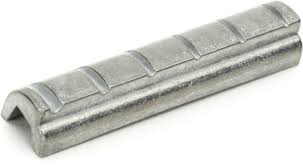
The dobro models that are used by bluegrass players almost always have a square neck. This is for stability, but also serves as a better anchor for a dobro capo. This type of capo, rather than clamping down on the fretboard, rests solely on the strings. The string height on a dobro is much higher than a regular guitar so that the slide will move freely along the strings and not come in contact with the frets (which only serve as a note marker). While it is easily possible to play a round neck by raising the strings at the nut with a special nut (available from sources like Elderly Instruments, Guitar Center or Sweetwater for under $20.00), you are still limited if you want to play upon strings in a different key than the standard G tuning on a Dobro.
Another aspect of a bluegrass dobro player is that they almost always use fingerpicks and a thumbpick, similar to a banjo player. Tut Taylor was one of the few dobro players that used a flatpick, but he is an exception. The finger/thumb combination allows for rolls on the strings like a banjo player, but with the different G tuning than a banjo, the rolls sound much different.
I have seen a few bluegrass dobro players use a round-neck model, but again, they were usually having to stick to playing barred strings when in different keys. Now I am not saying that a round-neck reso guitar would be a good starter model for the beginner, especially if one of those raised nuts is installed over the regular nut. Most beginner dobro lesson books and videos are going to instruct the basics in the key of G anyways.
When I was working at the musical instrument petting zoo at the Charlotte Bluegrass Festival last June, one young girl was very interested in trying out and playing the dobro. I explained to her parents that while the cost of a good dobro may be high, there are many low-cost alternatives for beginners, including converting a regular acoustic guitar with the nut-raiser and playing it sideways like a dobro. In such a case, if the student takes a true interest in playing the dobro, money can be saved up for a regular square-neck model.
I was fortunate years ago to get my hands on a Regal dobro for a very good price. I still have it, and althoughj I don’t play it as much as I would like, it is a great sounding dobro that I use to embellish some demos of mine. If I ever got the time, I definitely would like to work more on it.
The dobro is often thought of as a minor instrument in the bluegrass field. Josh Graves and a very few others were the purveyors, and the greatest dobro player out there today, Jerry Douglas, has helped to promote it in the bluegrass and country music fields more than anyone. It has a unique sound that does change the overall composition of a bluegrass band, whether you like that sound or not. However, it does make a great bluegrass instrument for beginners to consider if not interested in the sometimes complex fretting of a banjo or mandolin, or the coordination of a fiddle. I would encourage parents to offer the dobro up as a possible instrument to play to their children interested in bluegrass.
Chew on it and comment.
 Luegra